

Winter garden containers bring structure and color to your front porch when most plants go dormant. These setups rely on hardy evergreens, berries, and textural branches that hold up through cold temperatures and light snow. Focus on pots that drain well and plants rated for your USDA zone to keep everything looking fresh from December through March.
Mixed Evergreens with Holly Berries
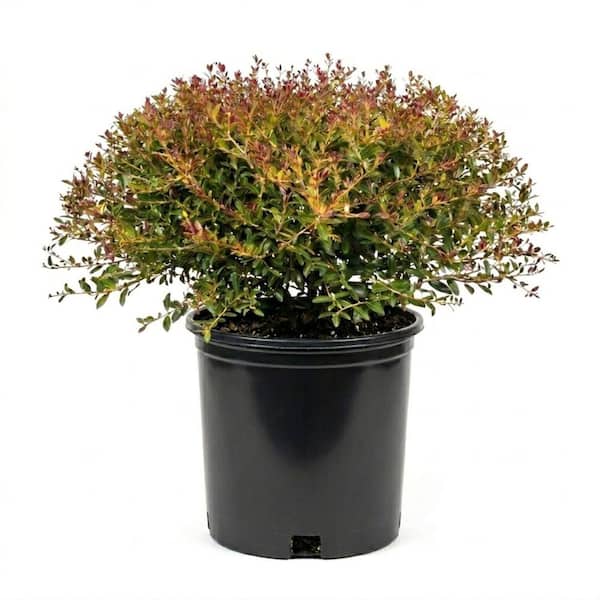
Holly branches add bright red berries that stand out against dark green foliage in winter light. Pair them with pine and spruce clippings in a wide, low bowl so the arrangement stays balanced against wind. Change the water every few days if you use fresh cuts to prevent mold from forming at the base.
Place these containers near your entry steps where visitors see the berries first. The combination stays attractive even after a light dusting of snow because the waxy leaves shed moisture. Choose a pot with at least one drainage hole so roots never sit in ice.
Tall Urns Filled with Birch Branches

White birch logs create vertical lines that contrast with low-growing evergreens at the base. Cut branches to different heights so the display looks natural rather than uniform. Secure the thicker pieces in floral foam or a heavy layer of pebbles to keep them upright during gusty days.
These urns work well on either side of a doorway because the pale bark catches morning sun. Swap in fresh birch every six weeks if the ends start to darken. The look stays simple yet polished without needing flowers.
Cyclamen and Ivy Combinations
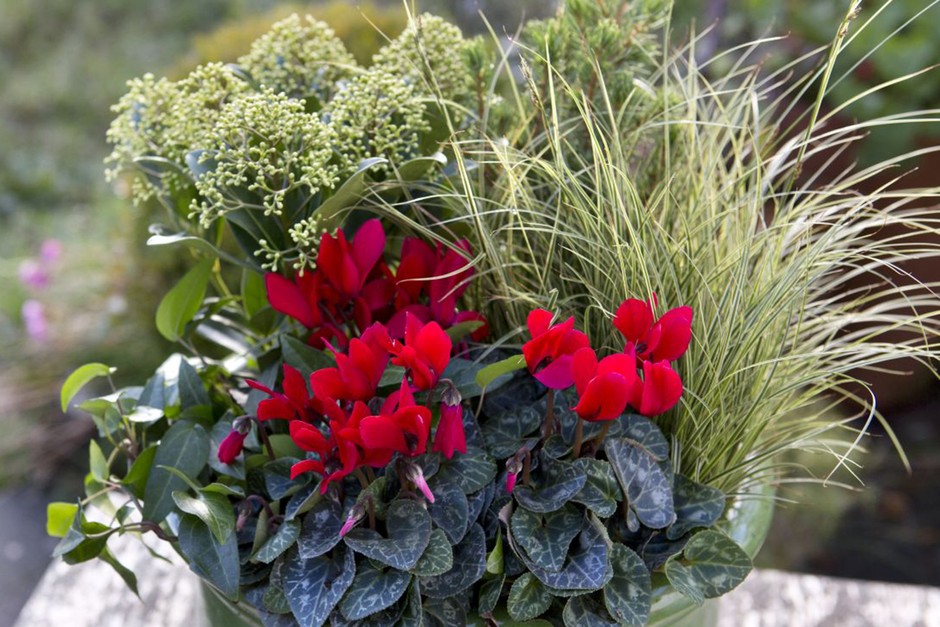
Hardy cyclamen blooms continue through mild winter spells and add soft pink or white tones. Trail English ivy over the edges of the pot to soften the rim and hide soil. Both plants tolerate the cooler temperatures common on uncovered porches.
Position the container where it receives morning light but avoids direct afternoon sun that can scorch leaves. Water only when the top inch of soil feels dry to prevent crown rot in damp winter air. This pairing gives you color without constant replanting.
Boxwood Topiary Balls in Ceramic Planters
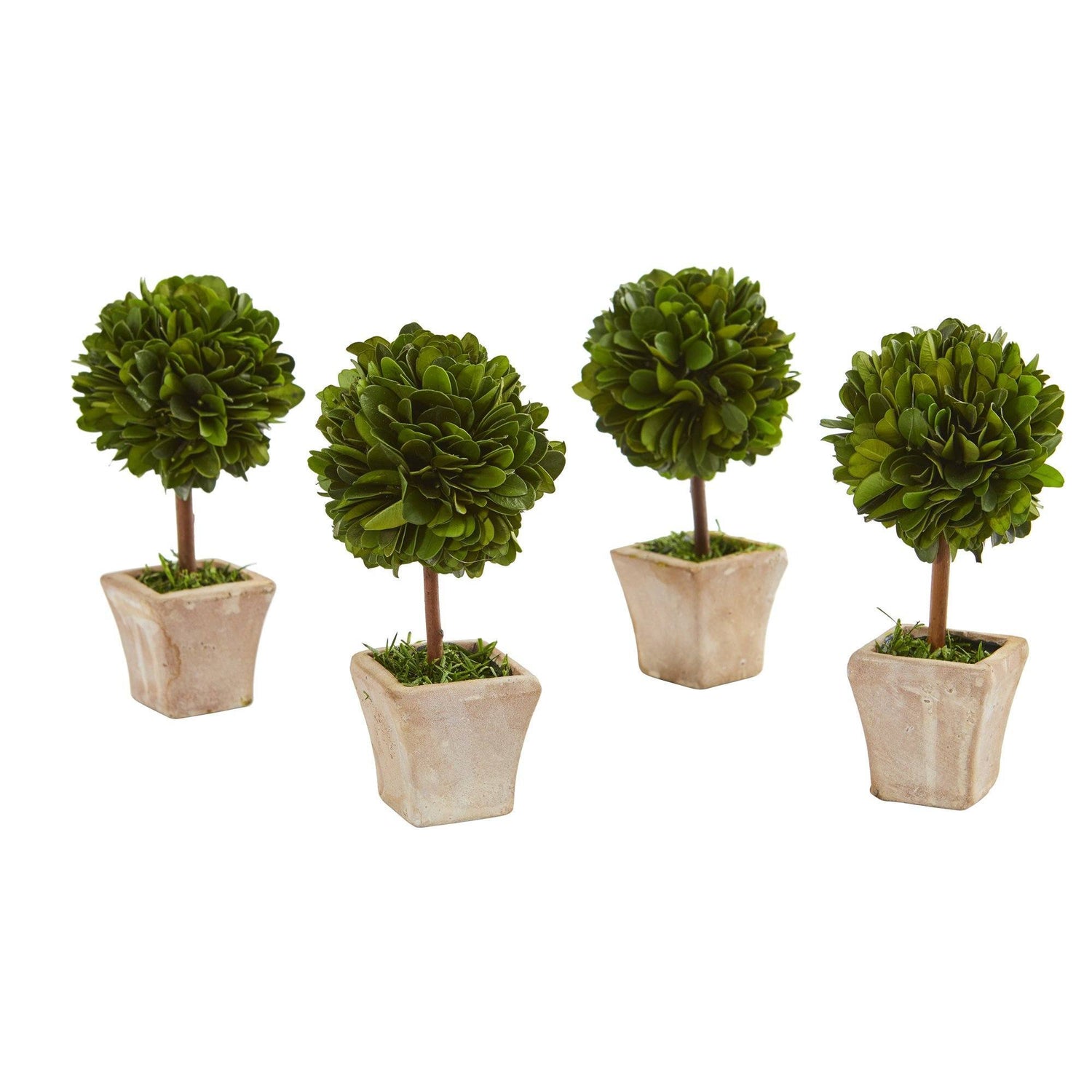
Boxwood holds its shape through freezing nights and needs little trimming once established. Set two or three clipped balls at different heights inside one large ceramic planter for visual rhythm. The dense foliage catches frost in delicate patterns that look intentional.
These topiaries suit formal porch styles where symmetry matters. Move the planter against a wall if strong winds are forecast, since the rounded shape can catch gusts. A single deep watering each month is usually enough once temperatures stay below freezing.
Red Twig Dogwood Stem Displays
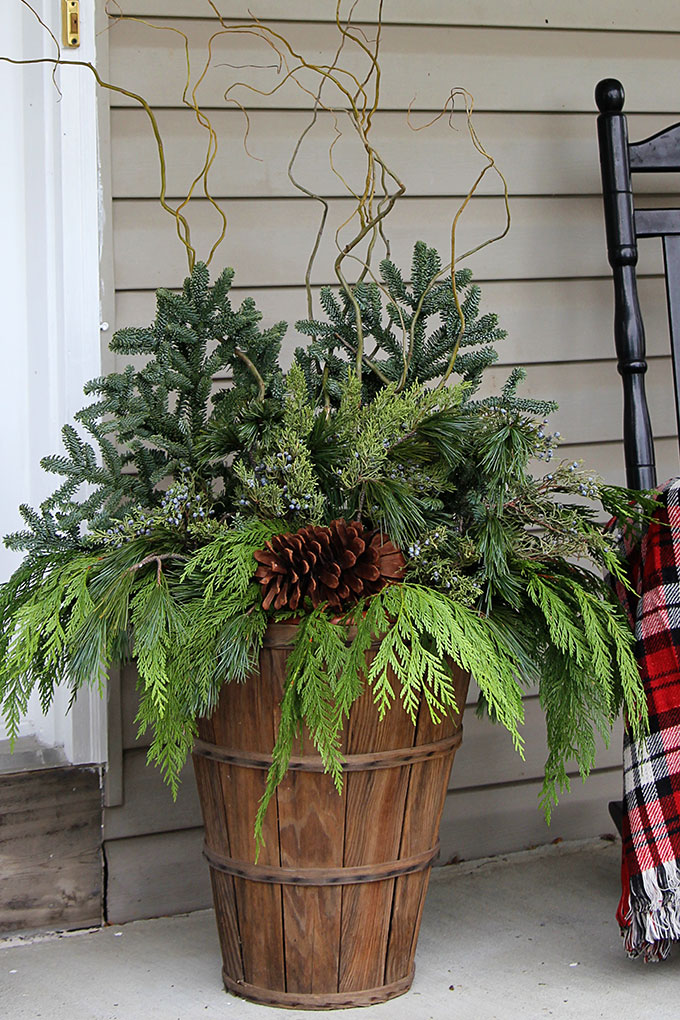
Bright red stems of dogwood bring warm color when everything else looks gray. Bundle several stems together and surround the base with pine boughs to hide the cut ends. The twigs remain vibrant even after repeated freeze-thaw cycles.
Use a tall, narrow pot so the stems stand straight without tipping. Refresh the arrangement mid-season by replacing any stems that lose color. This option works especially well in modern or rustic porch settings.
Ornamental Kale and Cabbage Pots
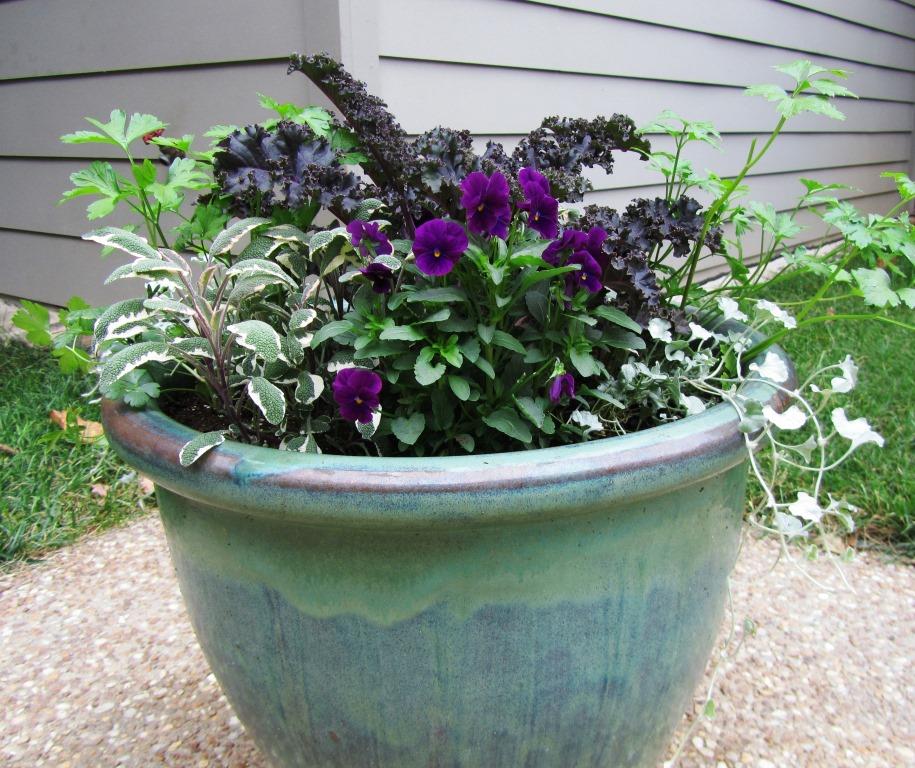
Frilly kale leaves develop deeper purple and cream tones as nights grow colder. Plant three small heads in a round pot so they fill the space without crowding. The rosettes stay attractive until early spring when new growth begins.
These containers look best in groups of three at different heights along the porch rail. Check soil moisture weekly because kale can dry out quickly in windy spots. Remove any yellowing outer leaves to keep the display tidy.
Pinecone and Evergreen Fillers
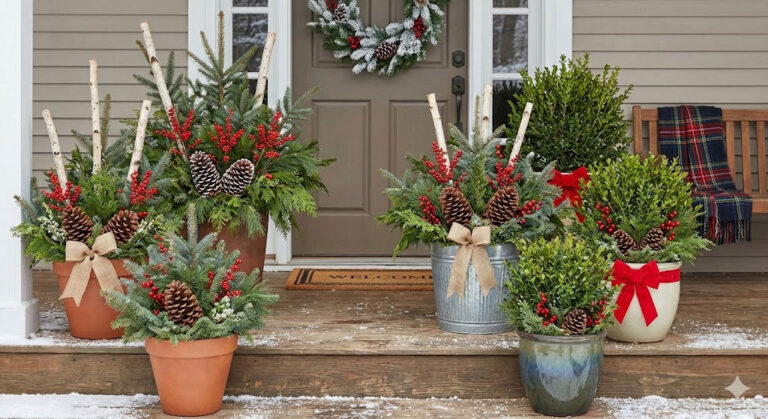
Large pinecones tucked among spruce tips add texture that lasts all season. Layer the cones over a base of sheet moss so nothing shifts when you move the pot. The natural brown tones complement both painted and terracotta containers.
This filler style suits smaller side tables where a full plant arrangement would overwhelm the space. Replace any cones that absorb too much moisture and turn dark. The combination needs almost no maintenance beyond occasional dusting of snow.
Lanterns Surrounded by Winter Greens
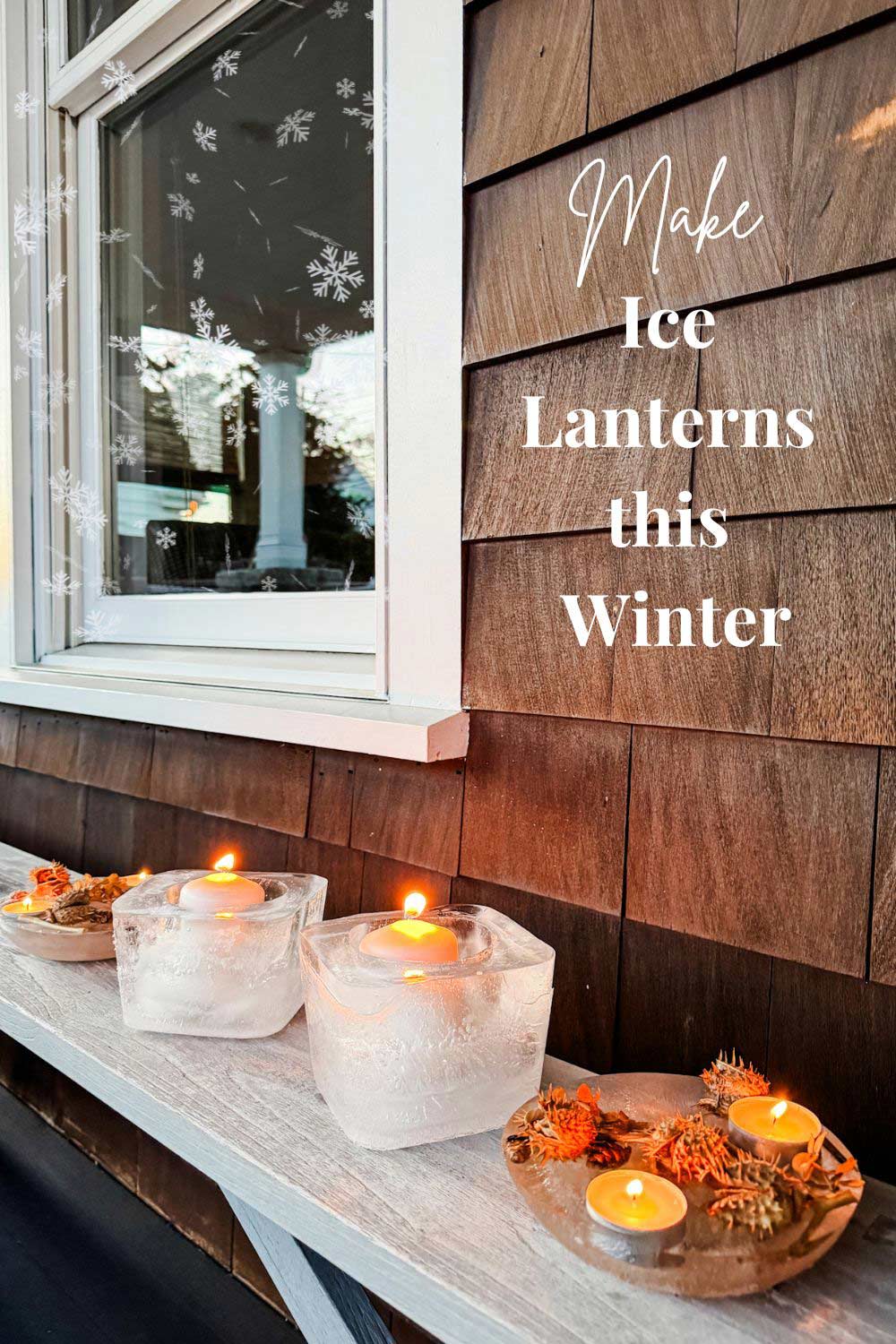
Place a battery lantern in the center of a wide planter and ring it with cut evergreens. The light reflects off the foliage at night and highlights berry clusters. Choose a lantern rated for outdoor use so condensation does not damage the battery compartment.
This setup doubles as both decor and gentle pathway lighting. Trim the greens shorter on the side facing the house so the lantern remains visible from indoors. Swap lantern styles seasonally without disturbing the plants.
Frosted Pine and Cedar Mixes
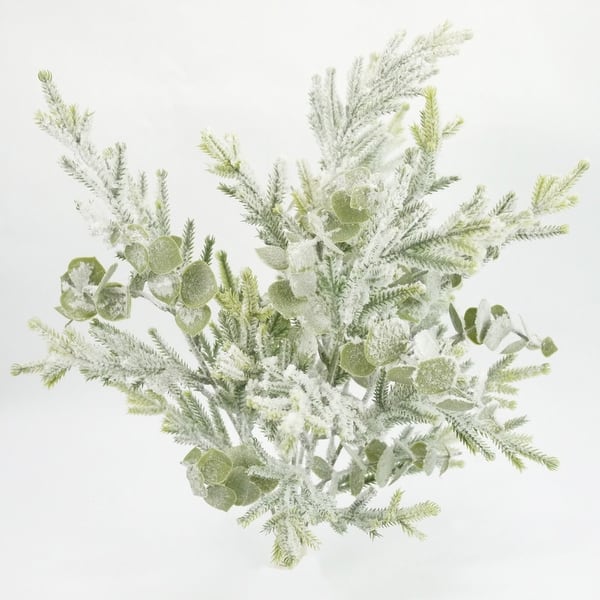
Lightly flocked pine and cedar branches mimic a light snowfall without actual weather. Arrange them in an oval container so the frosted tips catch low winter sun. The effect lasts longer than fresh snow because the coating is designed to withstand moisture.
These containers suit porches with limited natural light. Shake off heavy snow periodically to prevent branch breakage. The look stays consistent even when real snow melts away.
Winterberry Branch Centerpieces
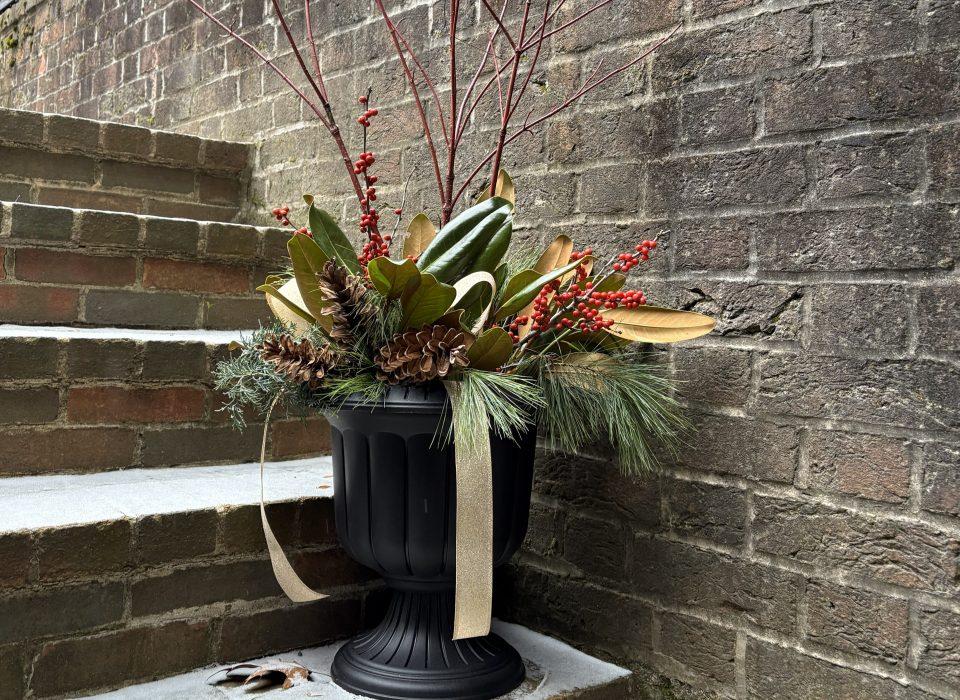
Bare winterberry stems loaded with red fruit create bold vertical accents. Set them in a narrow vase inside a larger planter filled with moss or gravel. The berries remain attached for months when kept away from direct heat sources.
Group three stems of varying heights for balance. Replace any branches whose berries drop early. This option works well in modern porch designs where color needs to stand out against neutral siding.
Conifer and Heather Combinations
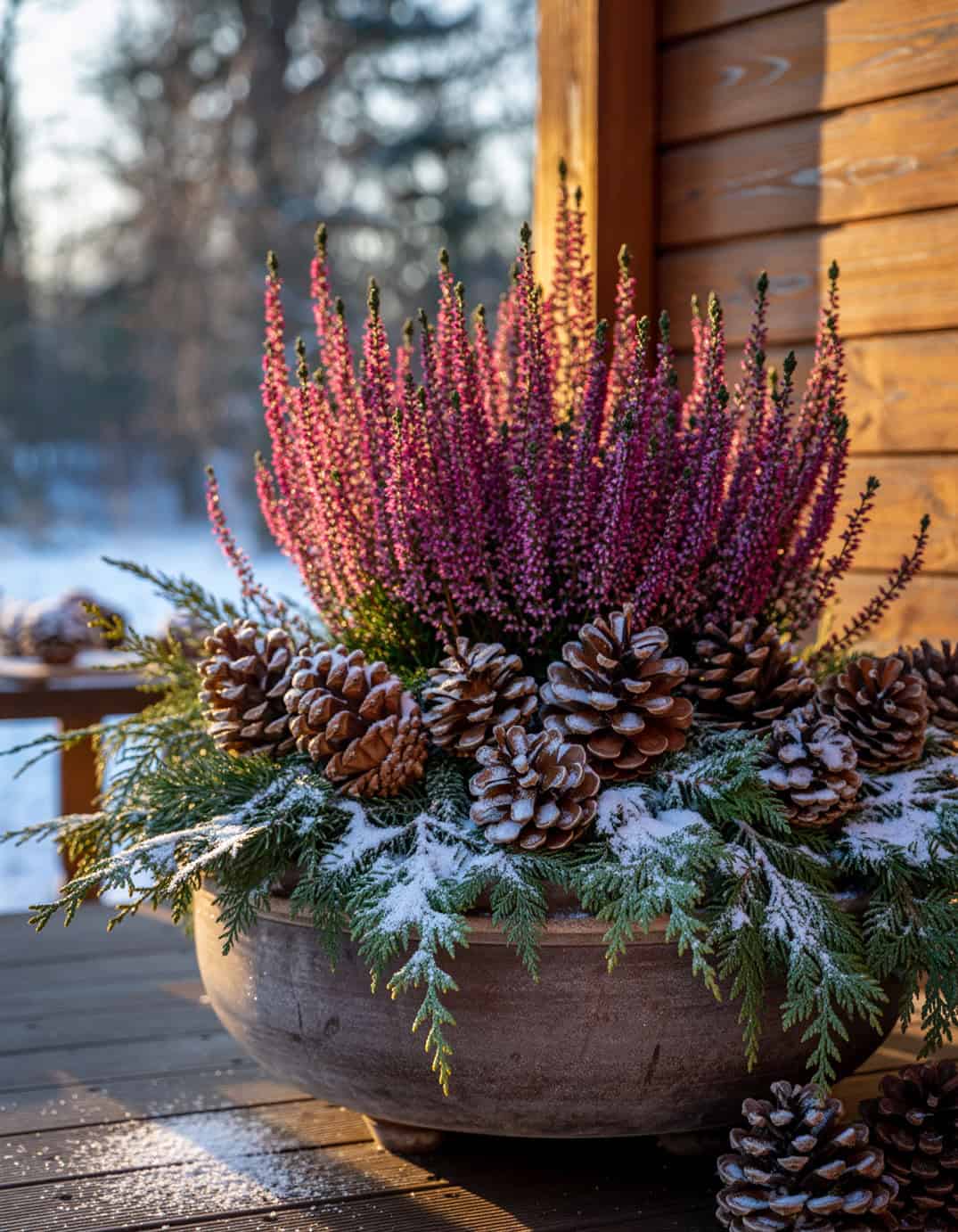
Dwarf conifers paired with heather provide both height and low ground cover. The heather flowers add tiny pink or purple dots through January. Both plants prefer the same well-drained soil and cool temperatures.
Arrange the conifer slightly off-center so the heather can spill forward. Water deeply but infrequently to encourage strong root growth before the ground freezes. These containers transition smoothly into spring without replanting.
Painted Pots with Silver Evergreens
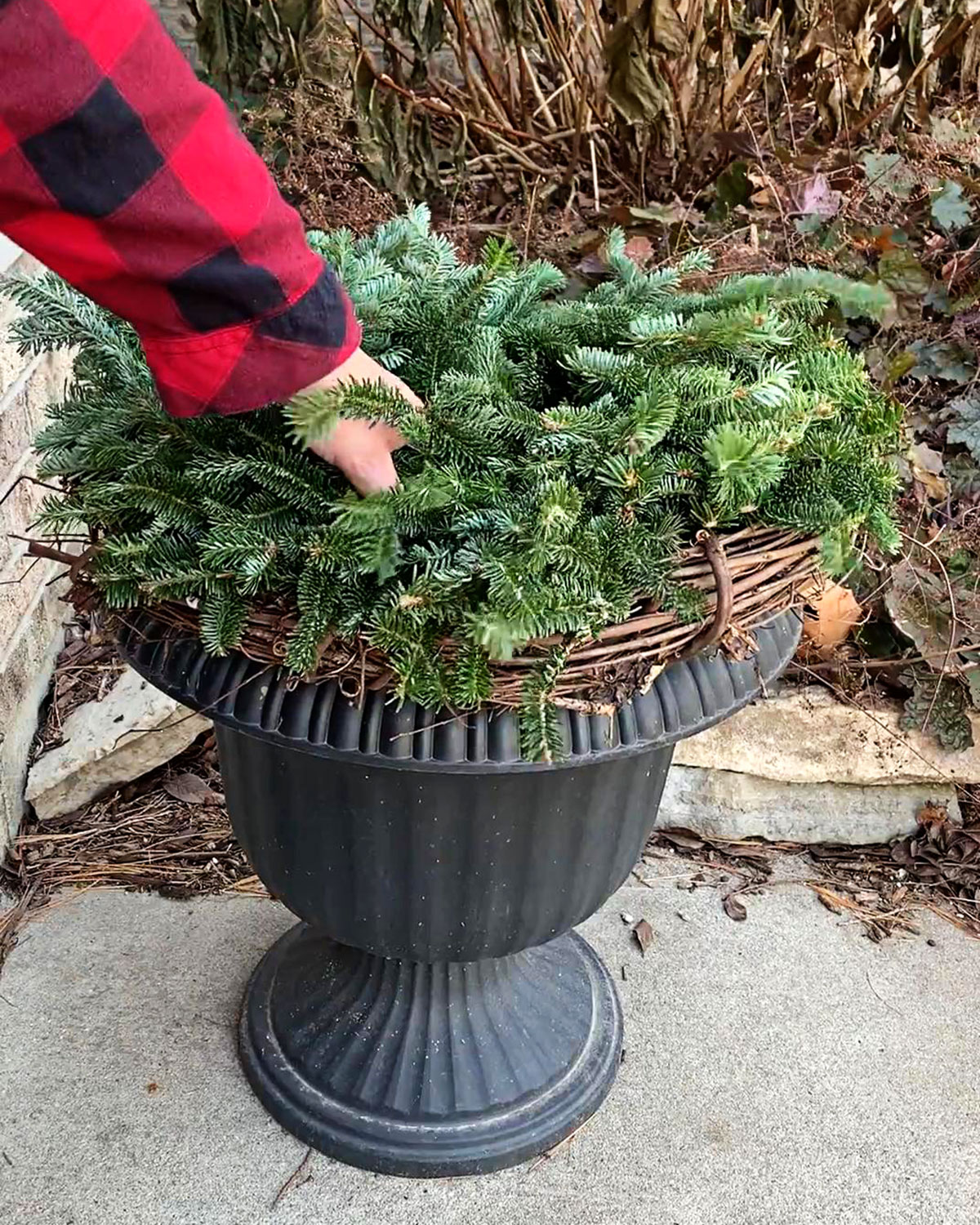
Dusty miller and silver fir branches pop against deep navy or charcoal painted pots. The metallic foliage reflects porch lights after dark. Choose pots with a matte finish so the paint does not compete with the plants.
Rotate the container every few weeks so all sides receive even light and the silver tones stay consistent. Touch up any chips in the paint before spring to protect the ceramic from moisture. This style suits contemporary homes with bold exterior colors.
Rustic Crate Displays with Mixed Greens
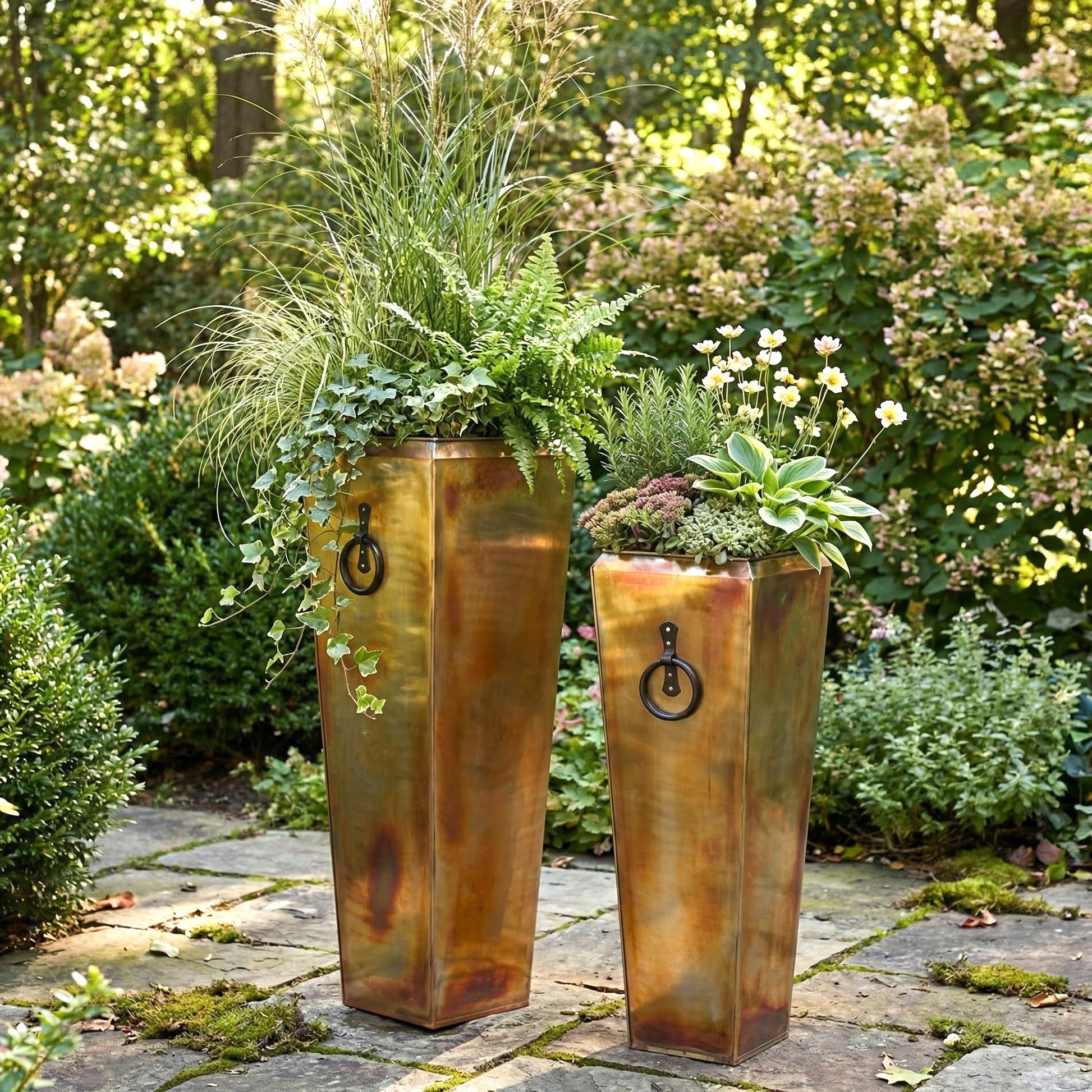
Line a wooden crate with plastic and fill it with a mix of pine, cedar, and a few seeded eucalyptus stems. The natural wood grain adds warmth against brick or stone porches. Keep the arrangement loose so air circulates and prevents mold.
These crates work well on lower steps where taller pots might block the walkway. Check the liner for tears after heavy rain or snow. The rustic material pairs easily with other natural elements like birch or pinecones already on your porch.
Note: Silver foliage plants actually perform better in partial shade during winter because full sun can bleach their color faster than cold alone.
Note: Placing containers against the house wall raises the temperature around roots by several degrees, extending the life of borderline hardy plants.
Choosing Between Fresh Cuts and Potted Plants
| Option | Longevity | Maintenance Level | Best For | Cost Range |
|---|---|---|---|---|
| Fresh cuts | 6–10 weeks | Low | Quick seasonal swaps | Low |
| Potted evergreens | Through spring | Medium | Permanent porch anchors | Medium |
| Mixed both | 3–4 months | Medium-high | Layered visual interest | Medium |
– Fresh cuts let you change colors monthly without buying new pots.
– Potted plants establish stronger roots and return year after year.
– Mixing both gives you immediate color plus long-term structure.
How do I protect containers from cracking in freezes?
Choose pots labeled frost-proof or double-wall ceramic. Elevate each container on pot feet so water drains completely and does not pool at the base. Wrap the exterior in bubble wrap only during the coldest nights if your pots have thin walls.
What plants survive winter in containers on a covered porch?
Focus on zone-rated evergreens such as boxwood, dwarf Alberta spruce, and winterberry. Cyclamen and ornamental kale handle cooler temperatures well when kept out of direct wind. Avoid tropicals or plants that need consistent warmth.
How often should I water winter porch containers?
Check soil every ten days because winter air is drier than it feels. Water only when the top two inches feel dry and always in the morning so excess moisture evaporates before nightfall. Reduce frequency once the ground stays frozen for more than a week.
Can I reuse the same containers next winter?
Yes, as long as you empty and clean them thoroughly each spring. Store empty pots upside down in a sheltered spot to prevent cracking from trapped moisture. Replant with fresh soil and new greenery each fall for best results.
These winter container ideas give your front porch a finished look that lasts through the quiet months. Small adjustments in placement and plant choice keep everything healthy without extra work.
Leave a Reply