
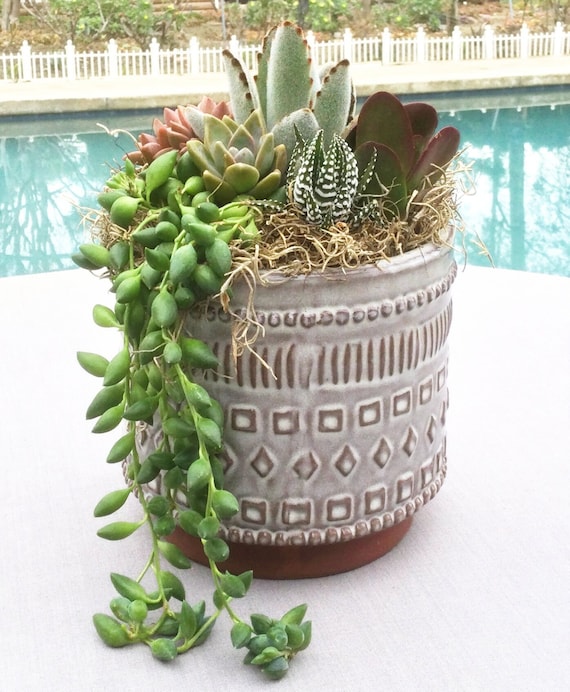
Succulent arrangements bring texture, color, and low-maintenance greenery into homes and outdoor spaces through thoughtful combinations of containers, plants, and accents. Each idea below pairs specific plants with practical containers or structures that suit both indoor conditions and outdoor exposure.
Terracotta Bowl Groupings
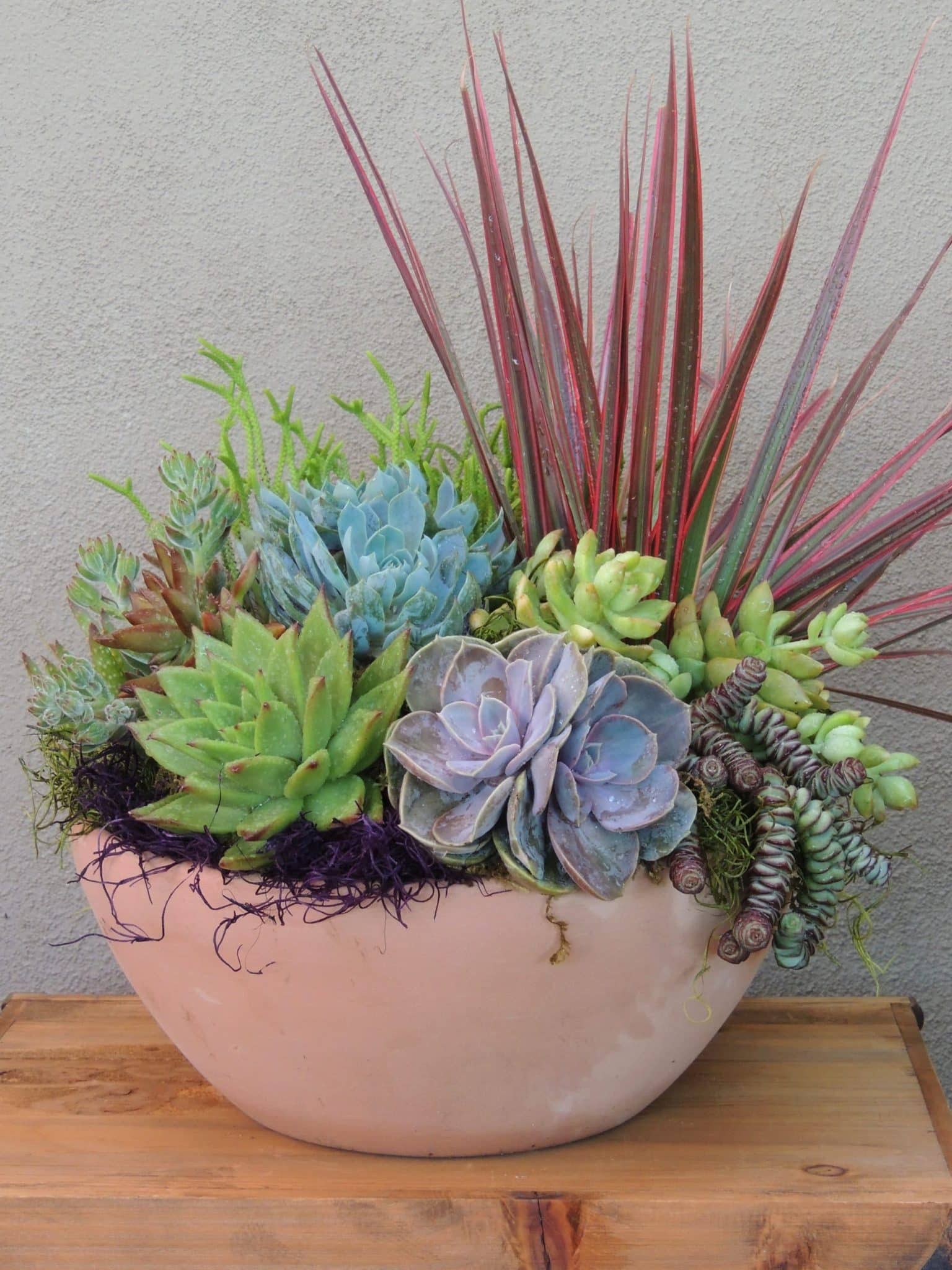
Terracotta bowls allow excess moisture to evaporate quickly, making them reliable for succulents that dislike soggy roots. Group three to five plants of varying heights inside one wide bowl to create visual layers without crowding. Echeveria rosettes sit at the center while trailing sedums spill over the rim.
Place the bowl on a sunny windowsill or patio table where afternoon light reaches the plants evenly. Rotate the bowl every few weeks so all sides receive equal sun and growth stays balanced. Choose unglazed bowls over painted ones because the porous clay supports healthier root systems.
Hanging Macrame Succulent Baskets
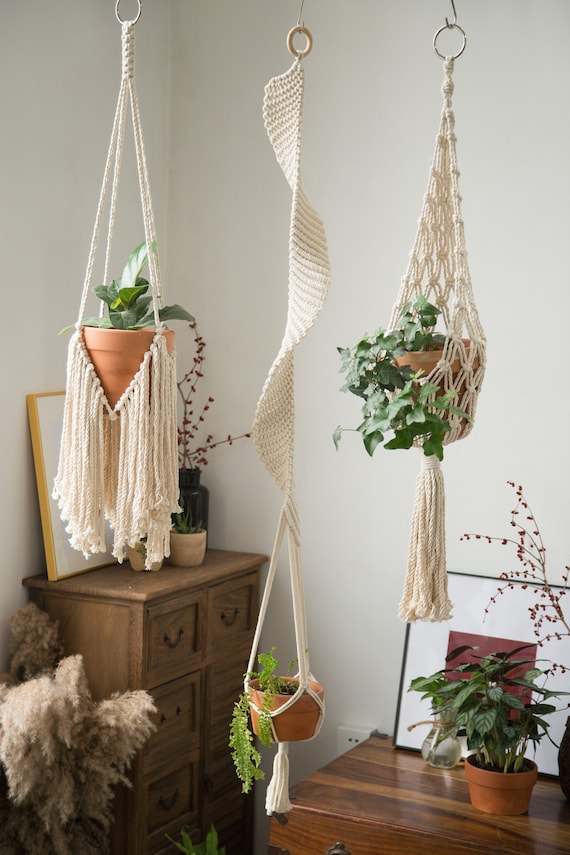
Macrame hangers suspend lightweight succulent baskets at eye level and free up floor space in small rooms. Select shallow baskets lined with coconut coir to hold soil while allowing airflow around the roots. String of pearls and burro’s tail trail downward naturally in these setups.
Position the hanger near a south-facing window indoors or under a covered porch outdoors. Check the soil moisture weekly by lifting the basket slightly rather than relying on surface appearance. Use lightweight potting mix blended with perlite to keep the overall weight manageable.
Glass Terrarium Layers
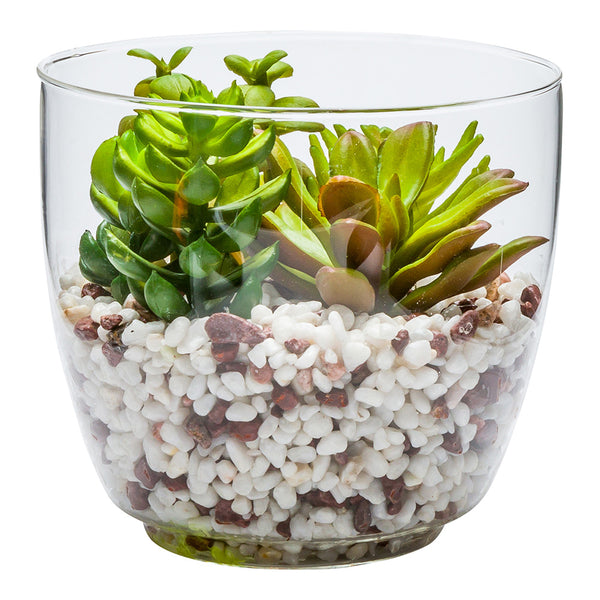
Layering activated charcoal beneath the soil prevents odor buildup in enclosed glass containers. Open or lidded terrariums suit different humidity levels, so match the container style to your indoor climate. Place larger succulents toward the back and smaller ones in front for depth.
Vertical Pallet Wall Gardens
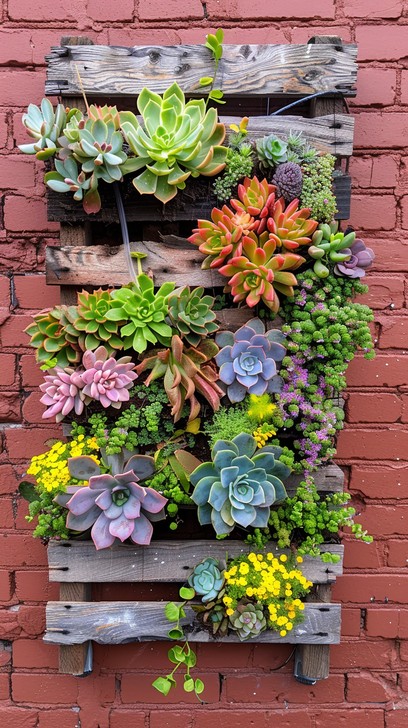
Reclaimed pallets turned on end create instant vertical real estate for succulents on fences or interior walls. Line the back with landscape fabric before adding soil pockets between the slats. Hens-and-chicks and aloe varieties stay compact enough to fit these narrow spaces.
Secure the pallet firmly to wall studs and confirm drainage holes remain clear after installation. Water from the top and let excess run through to the bottom rows. In outdoor settings, face the pallet away from prevailing winds to reduce soil drying.
Teacup and Saucer Displays
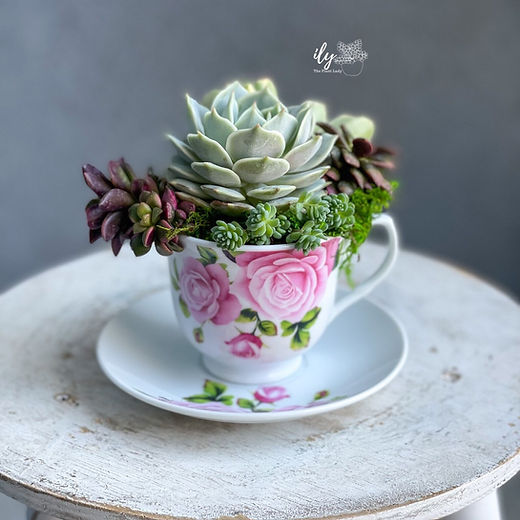
Vintage teacups hold single rosette plants or tiny cuttings for tabletop accents. Drill a small drainage hole in the bottom of each cup before adding soil to avoid root rot. Mix fine gravel into the saucer to elevate the cup slightly and improve airflow.
Cluster several mismatched cups on a tray for a collected look that works on mantels or office desks. Keep these arrangements in bright indirect light indoors because the small soil volume dries out fast. Refresh the gravel layer seasonally to maintain clean presentation.
Driftwood Centerpiece Arrangements
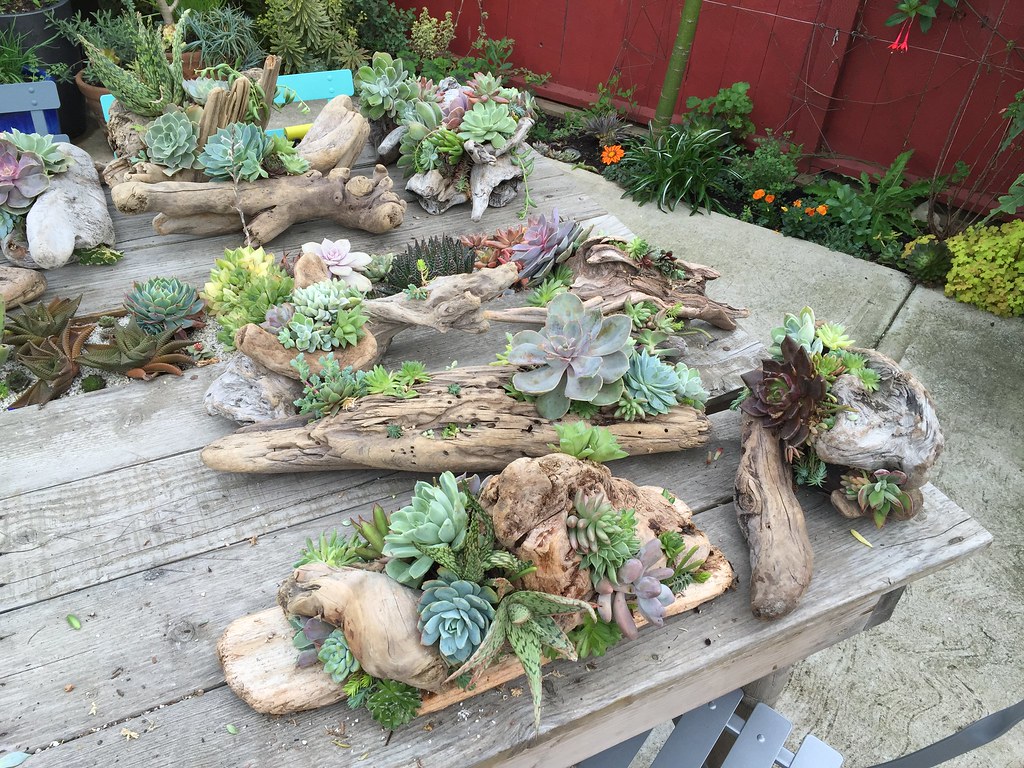
Driftwood pieces with natural crevices become sculptural bases for succulents tucked into the gaps. Secure plants with a dab of floral adhesive or moss rather than burying roots deeply. The wood itself adds organic texture that contrasts with the fleshy leaves.
Set the finished piece on a dining table or coffee table where it serves as a conversation starter. Mist the wood occasionally in dry indoor air to prevent cracking. Move the arrangement outdoors during mild weather but bring it inside before frost.
Mason Jar Hanging Planters
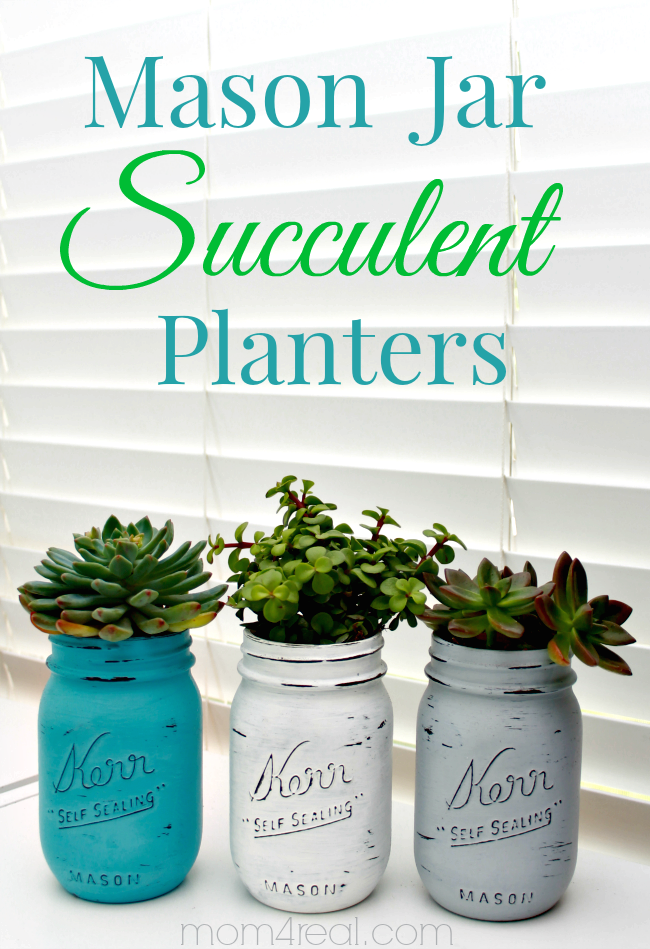
Wide-mouth mason jars suspended with wire or twine create simple hanging planters for patios. Add a layer of pebbles at the bottom for drainage before filling with cactus mix. Choose compact plants like haworthia that won’t outgrow the jar quickly.
Jars with metal lids punched for drainage holes last longer outdoors than those with plastic lids. Hang them at staggered heights along a railing to form a living curtain. Empty and refresh the soil every two years to maintain plant health.
Rock and Pebble Bed Gardens
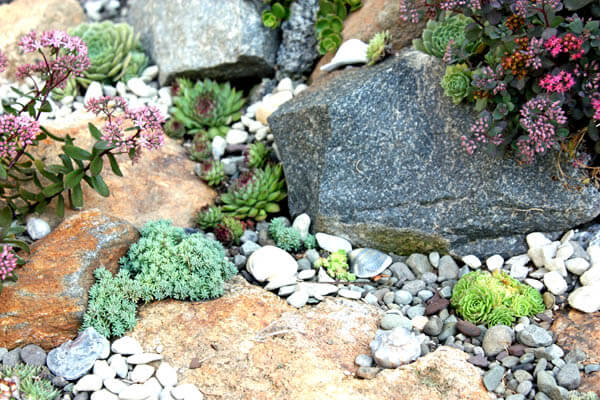
Flat stones and river pebbles form low-maintenance beds that highlight succulent shapes in both garden borders and large containers. Arrange plants first, then fill gaps with pebbles to suppress weeds and retain soil moisture. Agave and yucca provide strong vertical accents against the horizontal stones.
Rake the pebble surface smooth after each watering to keep the bed looking tidy. In outdoor installations, slope the bed slightly so water flows away from building foundations. Replace displaced pebbles after heavy rain to maintain the intended pattern.
Log Slice Planters
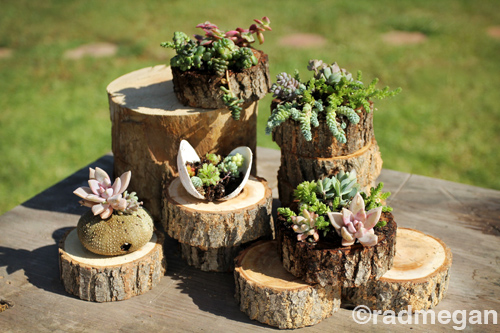
Cross-sections of logs with drilled planting holes turn firewood into rustic planters. Line each hole with sphagnum moss before adding soil to retain moisture around the roots. Small sedums and crassulas fit these shallow cavities best.
Set the log slices on a gravel base outdoors or on a waterproof tray indoors. Check for rot at the base every spring and replace slices that show softening. The natural wood grain complements both modern and farmhouse interiors.
Ceramic Mug Collections
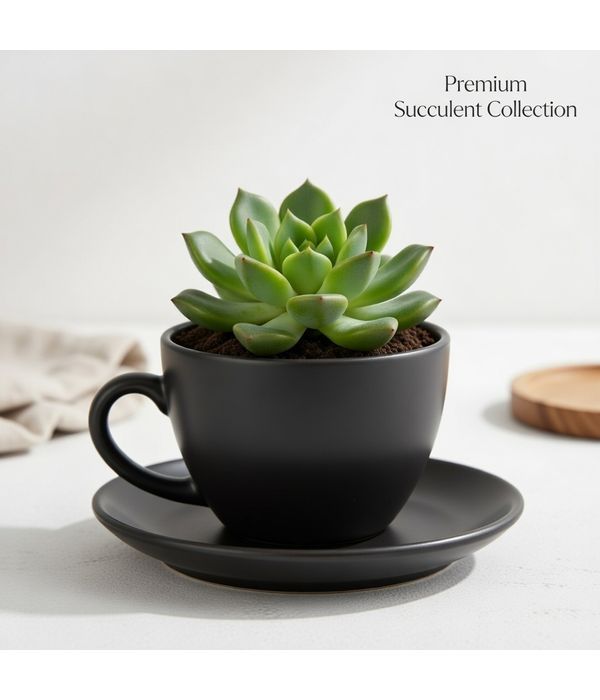
Everyday ceramic mugs become instant planters when drainage holes are added. Group mugs of similar colors but different sizes along a shelf for an orderly display. Choose plants with shallow roots so the limited soil depth does not restrict growth.
Water these small containers more frequently than larger pots because the soil volume is small. Place the collection on a windowsill where morning sun reaches the plants. Rotate individual mugs monthly to prevent one-sided growth.
Window Box Succulent Rows
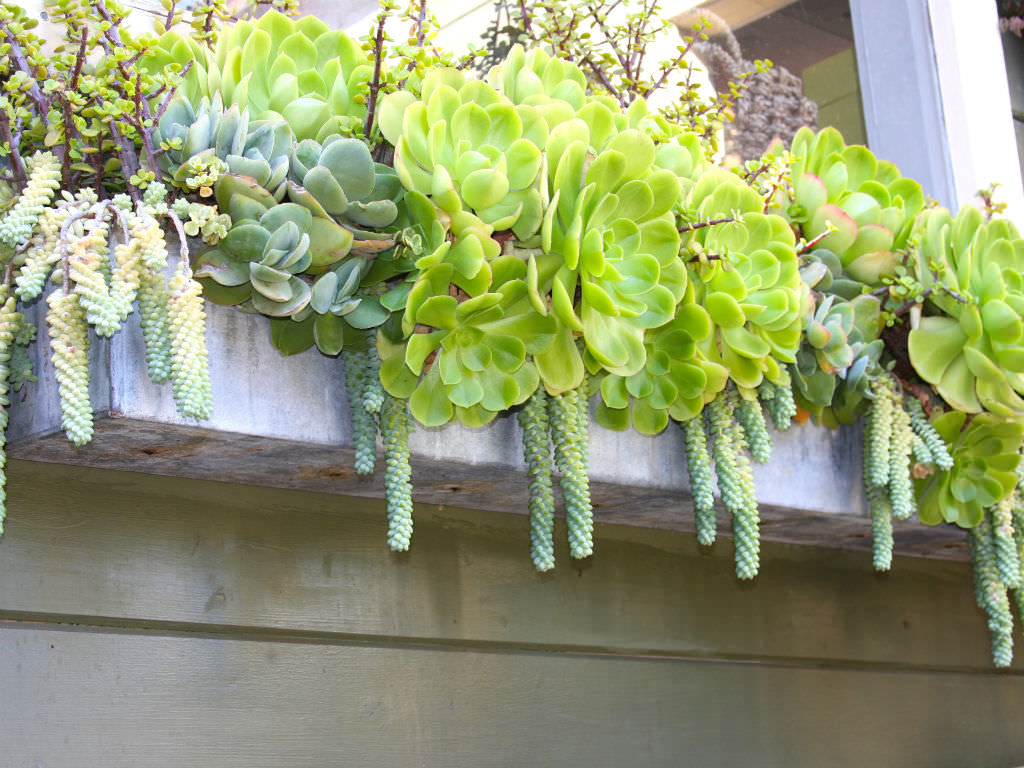
Long window boxes mounted at sill height hold repeating rows of the same succulent variety for a formal look. Alternate leaf colors or textures every third plant to add subtle variety without chaos. Ensure the box has multiple drainage holes along the bottom.
Line the box with mesh before adding soil to keep fine particles from washing out. In outdoor settings, tip the box forward slightly during installation so water does not pool against the house wall. Trim spent flower stalks promptly to keep the display neat.
Fairy Garden Succulent Scenes
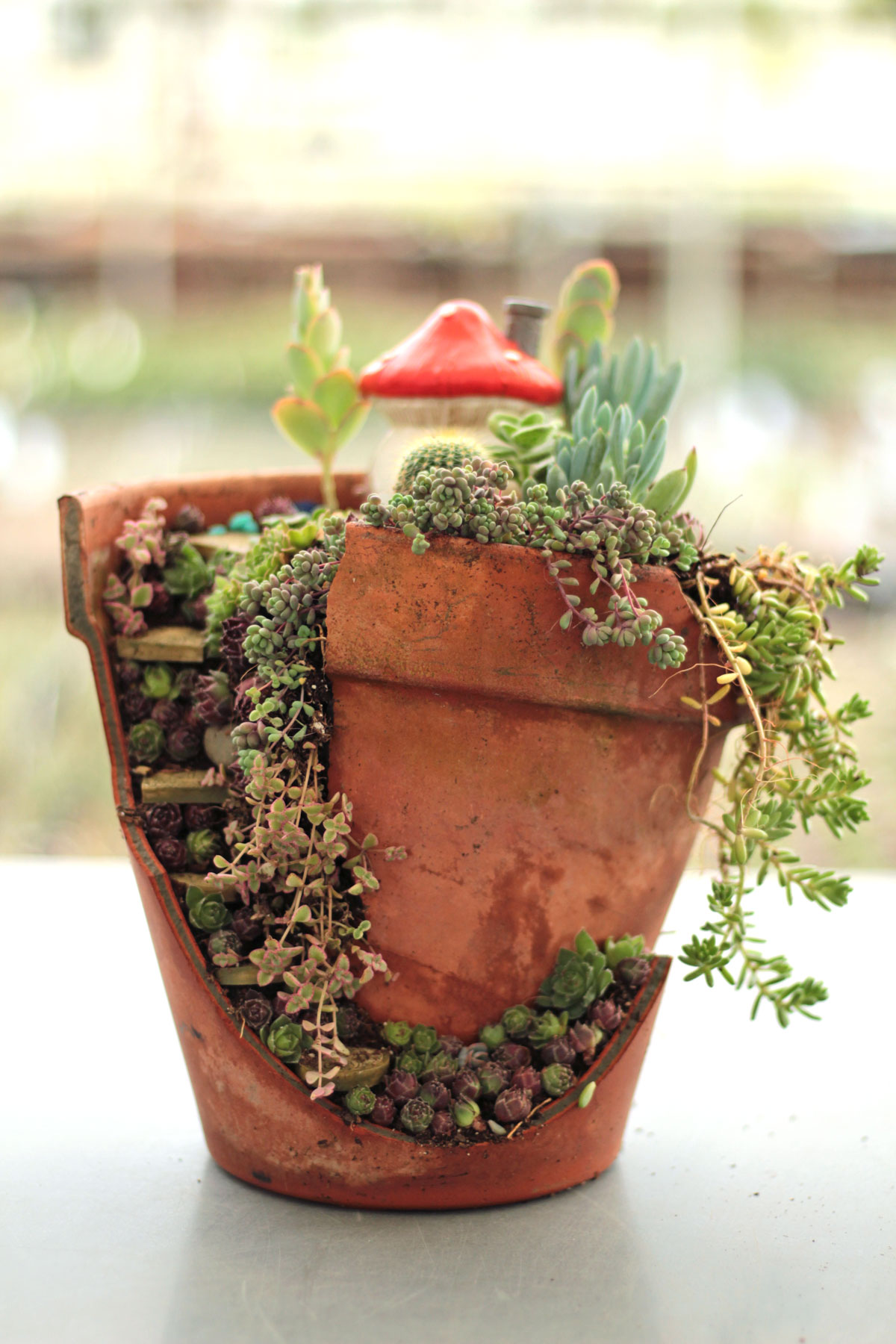
Miniature accessories combined with tiny succulents create storybook scenes inside shallow trays or large bowls. Use crushed slate or fine gravel as pathways between the plants. Keep accessories minimal so the succulents remain the main focus.
Position these gardens on side tables or covered porches where children and guests can view the details up close. Water carefully with a small syringe around the accessories to avoid disturbing the scene. Refresh the gravel pathways every few months as soil settles.
Upcycled Tin Container Displays
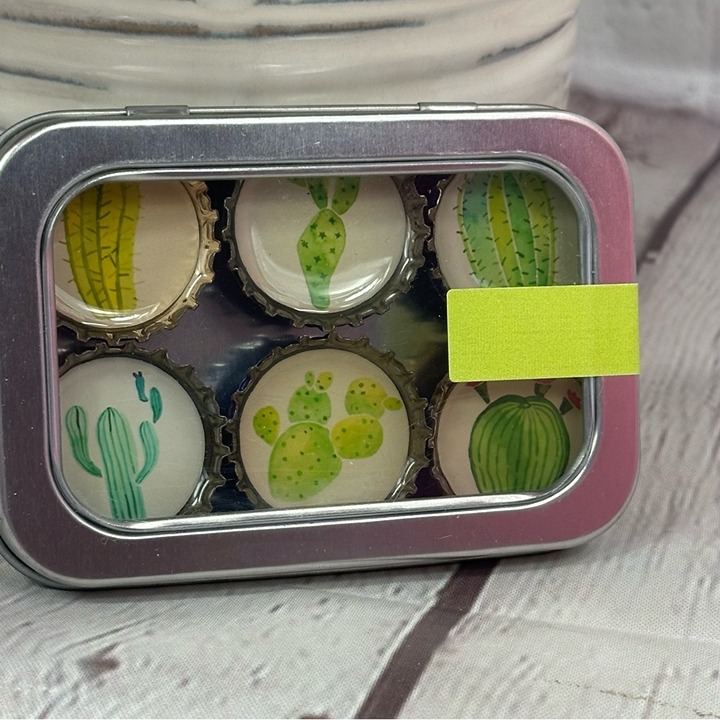
Vintage tins punched with drainage holes and lined with plastic mesh become character-filled planters. Arrange plants in color-coordinated groups inside each tin for quick seasonal swaps. The metal reflects light onto the leaves, brightening darker corners.
Place tins on saucers to protect surfaces from rust rings. Avoid using tins that previously held harsh chemicals. Move the collection indoors during winter if your region experiences freezing temperatures.
Outdoor Rockery Succulent Beds
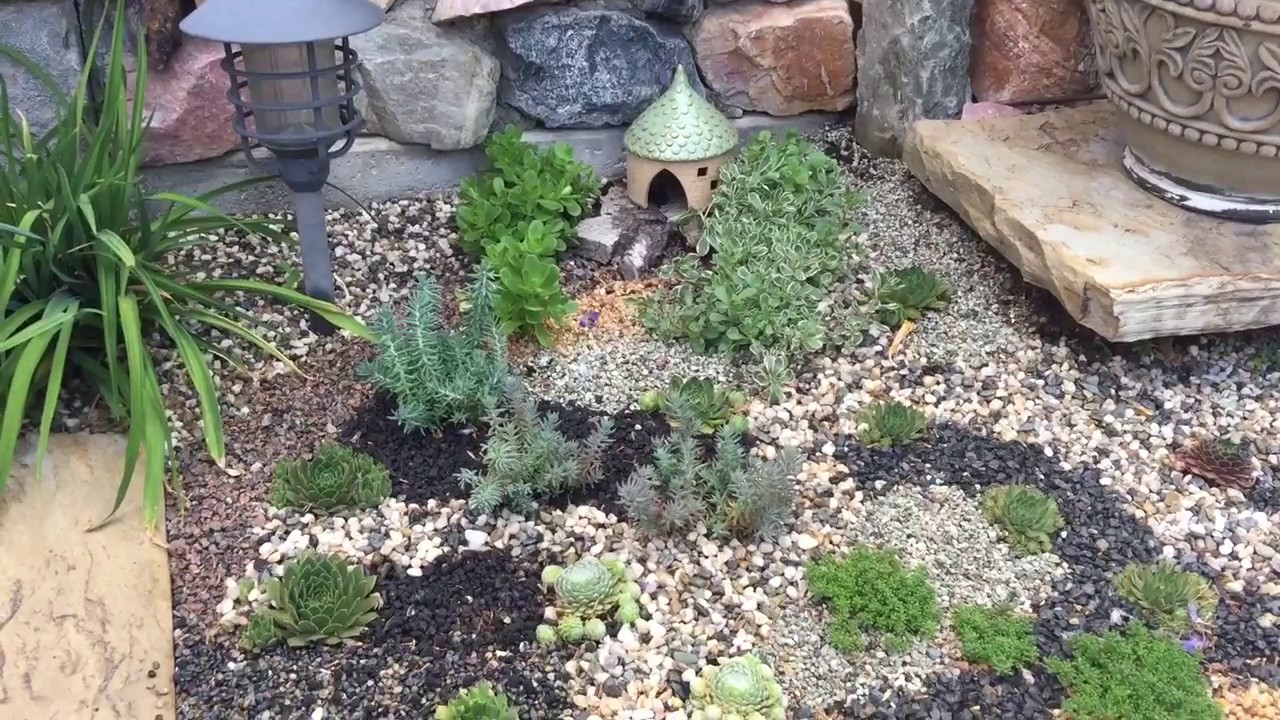
Sloped rockeries built with larger stones and pockets of soil support drought-tolerant succulents in full sun. Plant in the pockets rather than on top of rocks so roots stay cool and moist. Sempervivum and sedum species spread naturally across the stones over time.
Build the rockery on a south- or west-facing slope for maximum sun exposure. Top-dress with gravel after planting to reduce evaporation and weed pressure. Divide overcrowded clumps every three years to maintain vigor.
Glass Bowl Table Centerpieces
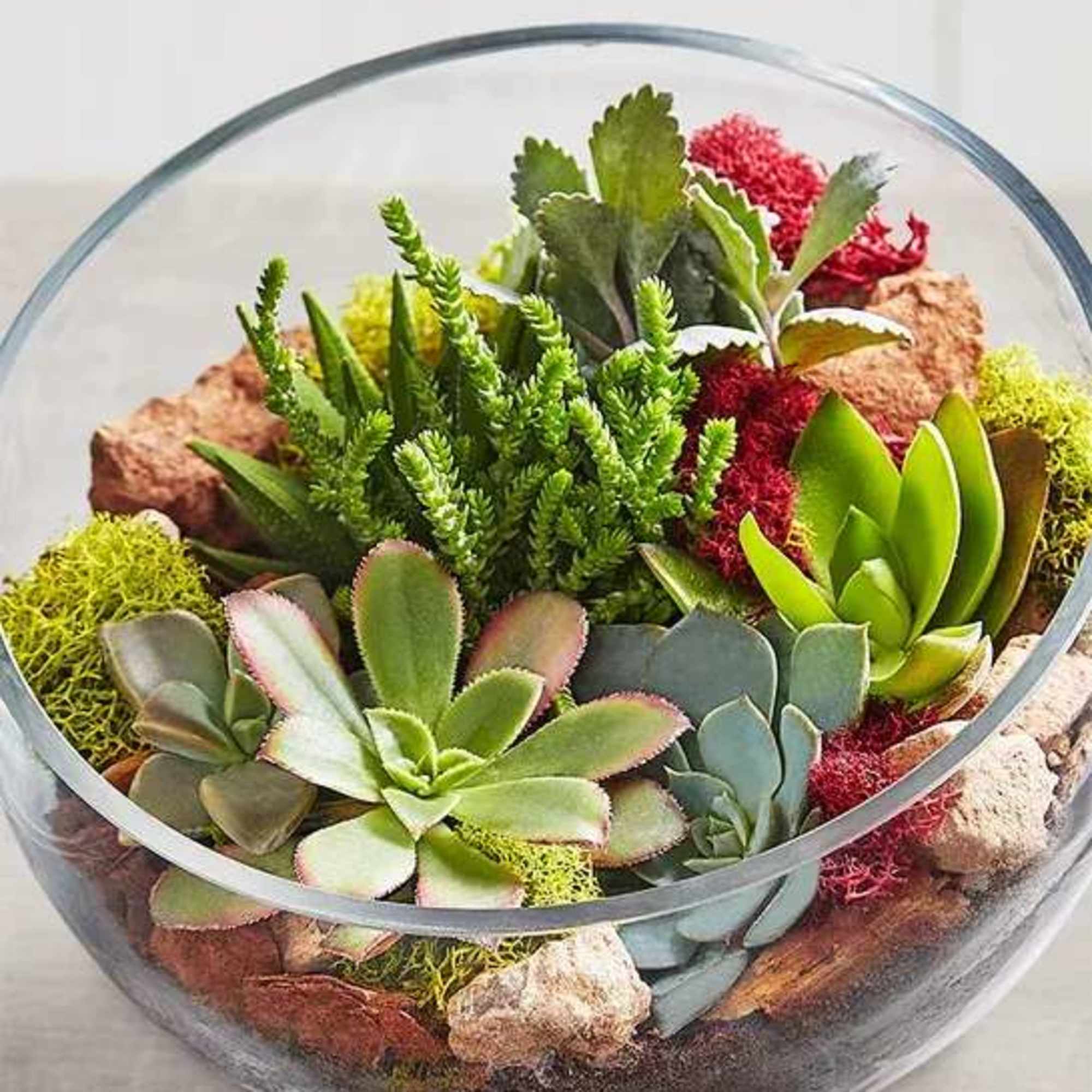
Wide glass bowls filled with a single layer of soil and topped with decorative stones create low-profile centerpieces. Arrange plants in a loose circle so each rosette faces outward. The transparent sides let light reach lower leaves that might otherwise stay shaded.
Keep the soil level below the bowl rim to prevent overflow during watering. These arrangements suit dining tables because they stay short enough not to block conversation. Move the bowl to a brighter location for a few hours each week if the table sits in low light.
FAQ
How often should I water indoor succulent arrangements?
Water only when the soil feels completely dry an inch below the surface, which usually means every ten to fourteen days indoors. Overwatering causes more failures than underwatering, so err on the dry side. Adjust frequency with the seasons because winter growth slows dramatically.
What container material works best for outdoor succulent beds?
Unglazed terracotta and stone both allow moisture to escape, preventing winter rot in cold climates. Avoid plastic or sealed ceramic outdoors unless extra drainage holes are added. Test drainage by pouring water into the empty container before planting.
Can I mix succulents with other plants in the same arrangement?
Most succulents prefer fast-draining soil that other plants may not tolerate, so companions should share the same dry conditions. Air plants or certain grasses can work when planted in separate pockets within the same container. Always match watering needs rather than appearance alone.
How do I prevent etiolation in low-light indoor setups?
Move arrangements to the brightest available window or supplement with a grow light on a timer. Rotate plants regularly so all sides receive equal exposure. Choose naturally compact species such as haworthia when light levels stay consistently low.
One well-planned succulent arrangement can transform a dull corner or patio into a living focal point that requires little ongoing effort beyond occasional watering and light rotation.
Leave a Reply