
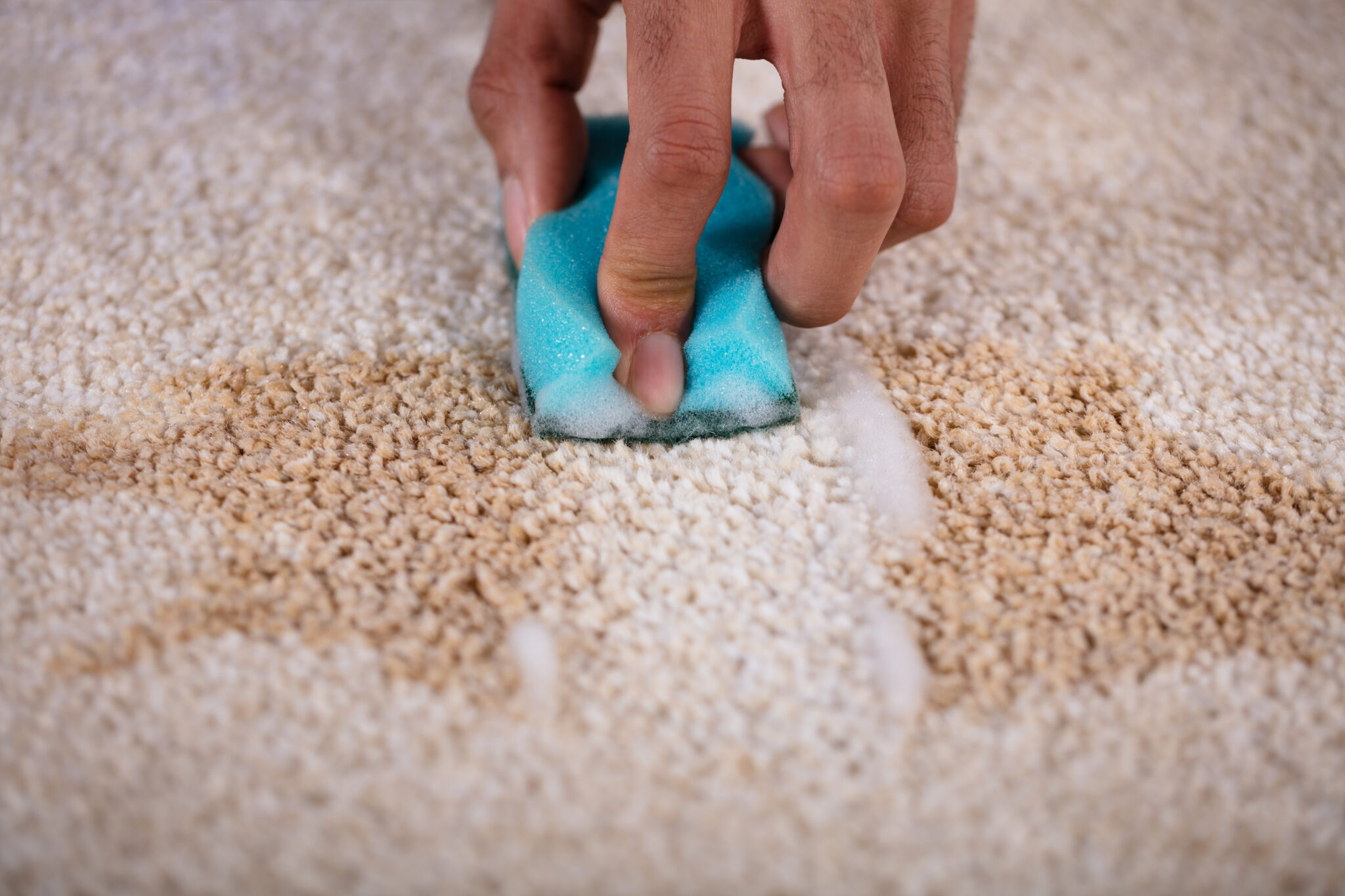
Coffee spills leave dark marks that settle into fibers quickly, yet most clear up with items already in the kitchen or laundry room. Acting before the stain dries prevents it from bonding permanently with the carpet backing. Each approach below targets the tannins in coffee through absorption, lifting, or gentle oxidation.
Immediate Paper Towel Blotting
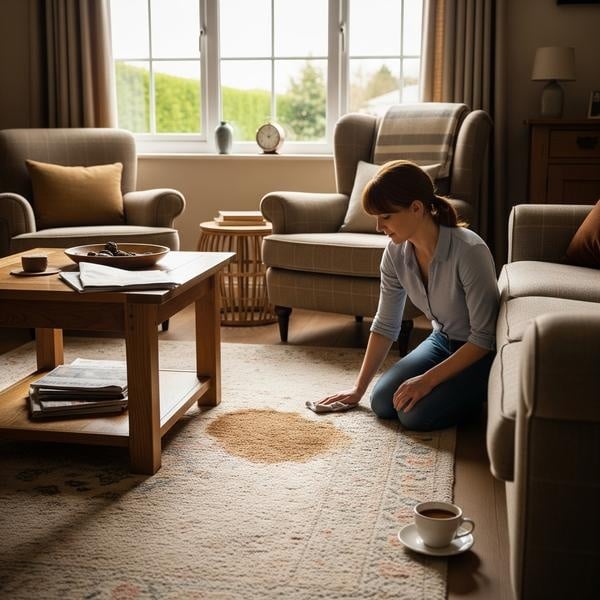
Pressing dry paper towels into the spill draws liquid upward before it spreads sideways. Work from the outer edge toward the center to keep the affected area contained. Replace towels as soon as they become saturated so you never push liquid deeper into the pile.
Repeat the blotting motion several times with fresh towels until almost no moisture transfers. This first step removes the bulk of the stain and shortens the time later treatments need to work. Carpets with longer fibers benefit most from this extra absorption phase.
Cold Water Application
Test any solution on a hidden area first to prevent color damage. Pouring a small amount of cold water over the remaining mark dilutes leftover coffee solids without setting them. Use a spray bottle rather than pouring from a cup so the water stays localized.
Dampen a clean white cloth and continue blotting after each light spray. Avoid hot water at this stage because heat causes the proteins in the coffee to bind more tightly to the fibers. Light-colored carpets show faster progress with this rinse-and-blot sequence.
Vinegar Solution Treatment
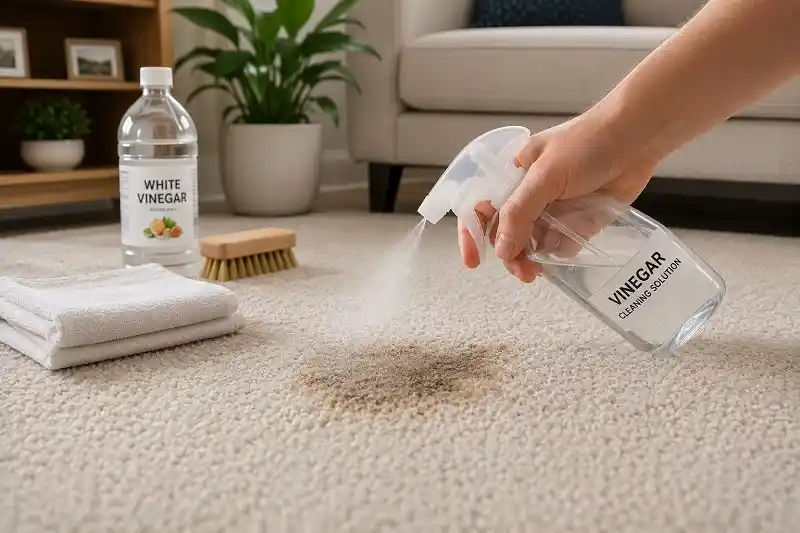
Mix one part white vinegar with two parts water in a spray bottle for a mild acid that breaks down coffee tannins. Lightly mist the solution onto the mark, then let it sit for two minutes before blotting. The vinegar smell dissipates once the area dries completely.
Work in small sections if the stain covers more than a few inches. Reapply only if color still lifts onto the cloth after the first pass. This method pairs well with synthetic carpets that tolerate mild acidity without shrinking.
Dish Soap and Water Mix
A drop of clear dish soap in a cup of warm water creates a surfactant that lifts oily residues sometimes left by flavored coffees. Dip a microfiber cloth into the solution, wring it until barely damp, and gently rub the fibers in one direction. Rinse the cloth frequently in clean water to avoid spreading soap suds.
After the stain fades, rinse the spot with plain cold water on a fresh cloth to remove any soap film. Soap residue attracts new dirt if left behind. This approach works on both cut-pile and loop carpets when the cloth stays only lightly moist.
Baking Soda Absorption
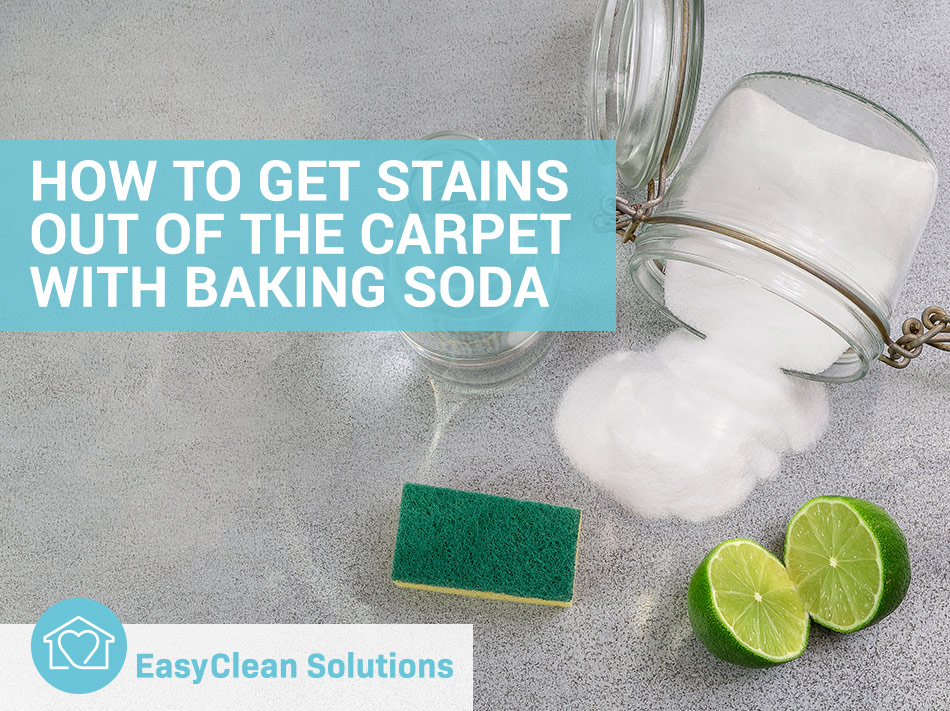
The key is to avoid heat which sets the stain permanently. Sprinkle a generous layer of baking soda over a damp stain to draw out remaining moisture and odor. Leave the powder in place for at least four hours or overnight for older marks.
Vacuum slowly with a brush attachment so the baking soda lifts without grinding into the backing. For stubborn spots, repeat the application once more before moving to another method. This dry step serves as a safe follow-up on carpets already treated with liquid solutions.
Club Soda Fizzing Method
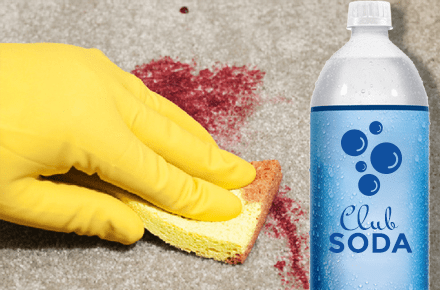
Pour plain club soda directly onto the mark so the bubbles agitate the fibers and loosen particles. Blot immediately with a dry towel as the fizzing action brings coffee upward. The carbonation helps without introducing new colors or scents.
Limit applications to two rounds so excess moisture does not reach the pad underneath. Club soda leaves no residue once blotted and dried, making it suitable for frequent-use areas like hallways. Keep a few cans on hand for quick response to fresh spills.
Hydrogen Peroxide Application
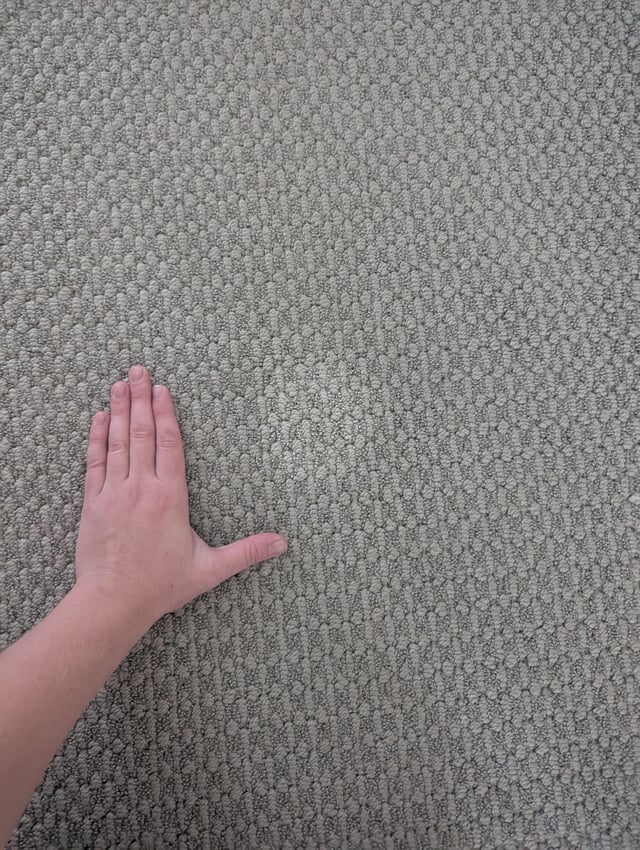
Apply a 3 percent hydrogen peroxide solution sparingly to light or white carpets only. The mild bleach action oxidizes remaining brown tones after other steps have removed the liquid. Place a clean cloth over the area and press rather than rub to control the reaction.
Rinse thoroughly with cold water on a separate cloth once the stain disappears. Never use peroxide on dark or brightly colored carpets because it can cause fading. Allow the spot to air-dry away from direct sunlight to prevent uneven lightening.
Salt Pre-Treatment
Cover a fresh spill with a thick layer of table salt to absorb liquid before it soaks deeper. The salt crystals pull coffee upward through capillary action while you prepare other supplies. Vacuum the salt away once it appears discolored.
This pre-treatment reduces the amount of liquid that reaches the carpet backing and shortens overall cleaning time. Coarse kosher salt works especially well because its larger grains do not pack as tightly. Follow with any of the liquid methods above once the bulk of the spill has been lifted.
Comparing Household Solutions
| Solution | Best Carpet Type | Time to See Results | Residue Risk |
|---|---|---|---|
| Vinegar mix | Synthetics | 5–10 minutes | Low |
| Dish soap | Cut pile | 3–8 minutes | Medium |
| Club soda | Any | Immediate | None |
| Hydrogen peroxide | Light colors only | 10–15 minutes | Low |
– Vinegar and dish soap both require a follow-up rinse with plain water.
– Club soda and salt leave the fewest traces behind.
– Hydrogen peroxide should be reserved for final touch-ups on pale carpets.
FAQs: Quick Answers to Common Questions
Does vinegar work on old coffee stains?
Vinegar breaks down tannins even after the liquid has dried, though older marks may need two applications spaced several hours apart. The acid loosens the bond between the stain and fiber so blotting can finish the job. Always blot rather than scrub so the carpet pile stays intact.
Can I use baking soda on wool carpet?
Baking soda remains safe for wool when used dry and vacuumed thoroughly afterward. Wool tolerates the mild alkalinity without damage, yet excess moisture from any follow-up liquid must be kept minimal. Test first in an inconspicuous corner to confirm no texture change occurs.
Will club soda remove set-in stains?
Club soda works best on fresh spills, but it can still lighten older marks when combined with gentle blotting and a second pass of another solution. The fizzing action loosens surface particles that later treatments then lift completely. Multiple light applications outperform one heavy soak.
How long should I wait before walking on the cleaned area?
Allow the carpet to dry fully, usually two to four hours depending on humidity and airflow. Placing a fan nearby speeds evaporation and prevents new dirt from sticking to damp fibers. Walking on a still-damp spot can grind any remaining particles deeper into the backing.
Quick action combined with the right household item restores most carpets without calling in professionals. Keep a small kit of towels, vinegar, and salt ready so the next spill meets an immediate response.
Leave a Reply