
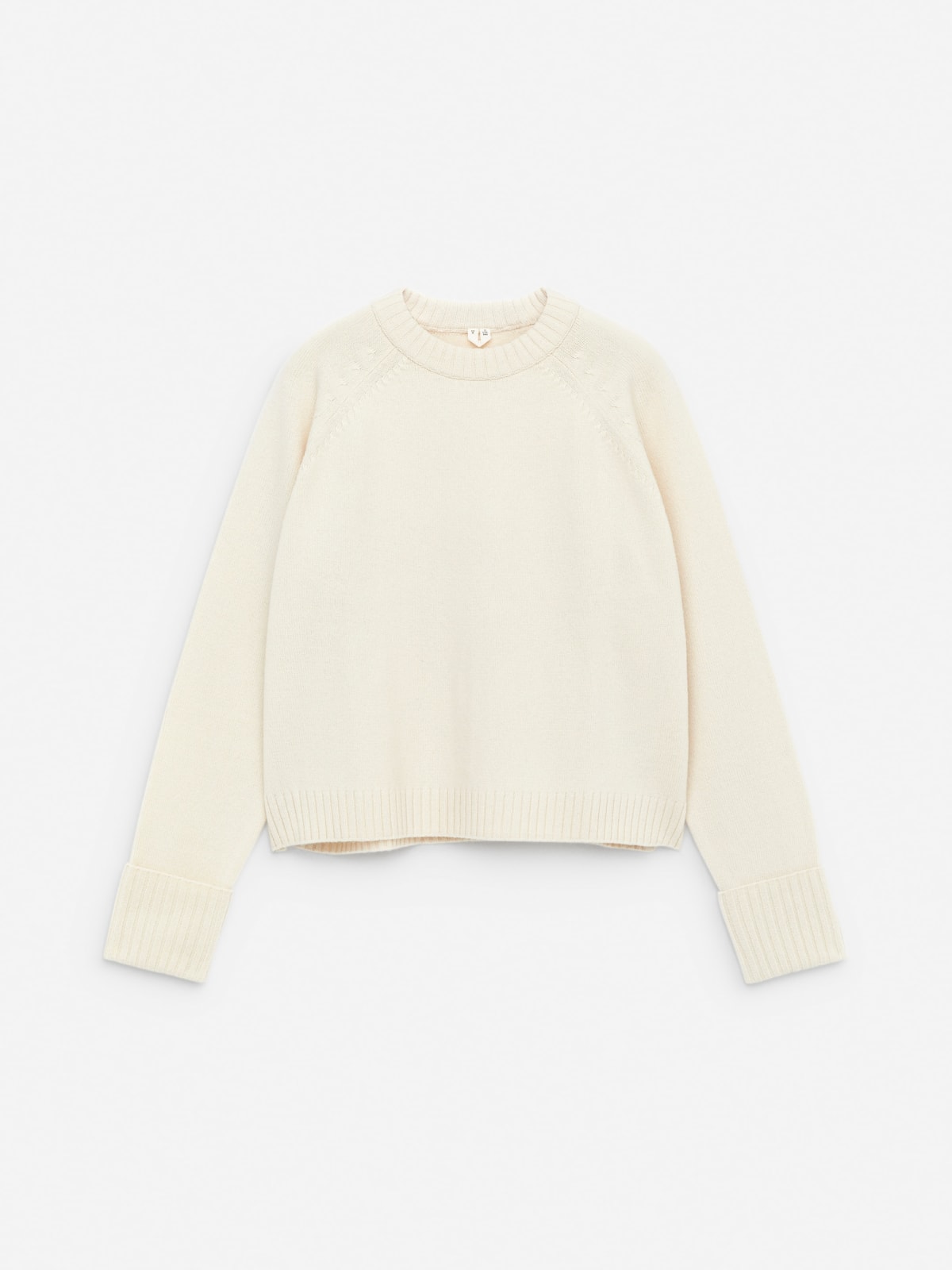
It happens faster than you’d think: one warm wash, one careless turn in the dryer, and your favorite merino crewneck comes out sized for a teenager. Wool shrinks because heat, moisture and agitation make the tiny scales on each fiber lock together and pull the whole fabric in — a process called felting.
The encouraging part is that most of that locking is loose enough to reverse. You relax the fibers with a cool soak, then coax the sweater back to its old dimensions while it’s damp and let it dry locked in that shape.
The eight methods below are listed roughly in the order I’d try them — the cheap soak first, the hands-on stretching second — and they work best when you combine a soak with a stretch rather than expecting either one to do all the work. A heavily felted sweater will improve, but it will never be perfect again; a sweater that’s shrunken a size or so usually comes back.
1. Soak It in Hair Conditioner
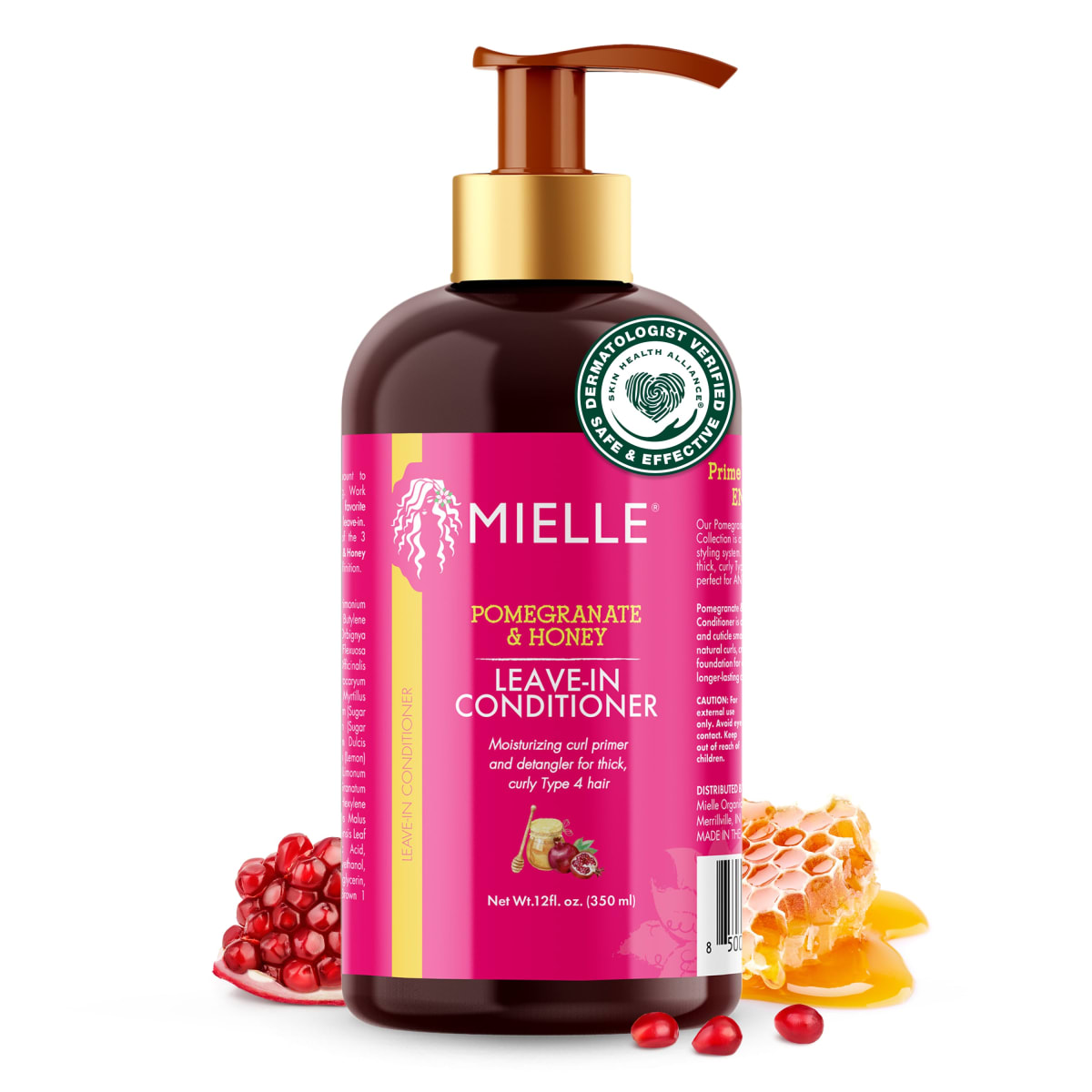
This is the first thing I reach for, because everyone has a bottle in the bathroom and it genuinely works. Conditioner coats the wool fibers in lubricating oils and silicones, which lowers friction between them so the scales can slip past each other instead of staying locked. That’s all the “magic” is — lubrication and a relaxed fiber.
Fill a clean basin or the bathroom sink with lukewarm water — think bath temperature at the very warmest, around 30°C / 85°F. Hot water felts wool further, so if you can’t hold your hand in it comfortably, it’s too hot.
Add about a tablespoon of cheap, plain conditioner per gallon of water (Suave Essentials or VO5 work perfectly; skip anything thick and heavily perfumed), swish until the water turns milky, then lay the sweater in and press it down until it’s fully saturated. Let it soak for 20 to 30 minutes without poking, rubbing or swishing it around.
Drain the water, press the sweater against the side of the basin to squeeze out what you can, and move on to the stretching step while it’s still wet.
A quick cool rinse is fine, but don’t obsess over getting every trace of conditioner out — a little leftover lubrication actually helps the fibers stay slippery while you stretch. Just know that too much will leave the wool feeling slightly coated, and you’ll want to wash it properly after it’s dry.
2. Try Baby Shampoo Instead
Baby shampoo does the same job as conditioner but more gently, and it’s the better choice for fine, soft wools like cashmere or a lightweight merino where a silicone-heavy conditioner might leave the fabric feeling waxy. Johnson’s Head-to-Toe is the classic — it’s formulated to be sting-free, which is another way of saying it’s extremely mild and low-residue.
The process is identical: cool-lukewarm water, about a tablespoon of shampoo per gallon, swirl until it’s lightly sudsy, submerge and soak for 20 to 30 minutes. One honest difference, though: shampoo cleans and relaxes the fibers but doesn’t lubricate them as much as conditioner does, so it usually needs a firmer, more deliberate stretching session afterward to hold the gains. Skip dandruff shampoos, clarifying formulas and anything with a strong lather — more suds means more agitation, and agitation is what shrunk it in the first place.
3. Give It a White Vinegar Soak

Distilled white vinegar (the 5% acidity stuff in the big clear jug) is mildly acidic, and wool is happiest at a slightly acidic pH. A vinegar soak helps relax the fibers, strip out the detergent residue that’s making the knit feel stiff, and kill any musty smell from the sweater sitting damp in a washing machine.
Pour about a cup of white vinegar into a basin of lukewarm water, add the sweater, and give it 15 to 20 minutes. That’s genuinely all there is to it.
Think of vinegar as a booster rather than a standalone fix: on its own it won’t do much for a tightly felted sweater, but it makes a conditioner or baby shampoo soak work noticeably better and leaves the wool softer and a bit shinier afterward. The sharp smell disappears completely as it dries — really, once it’s dry you’d never know.
Just never mix it with bleach or ammonia-based cleaners, and don’t substitute balsamic or malt vinegar for anything in the world.
4. Use a Real Wool Wash
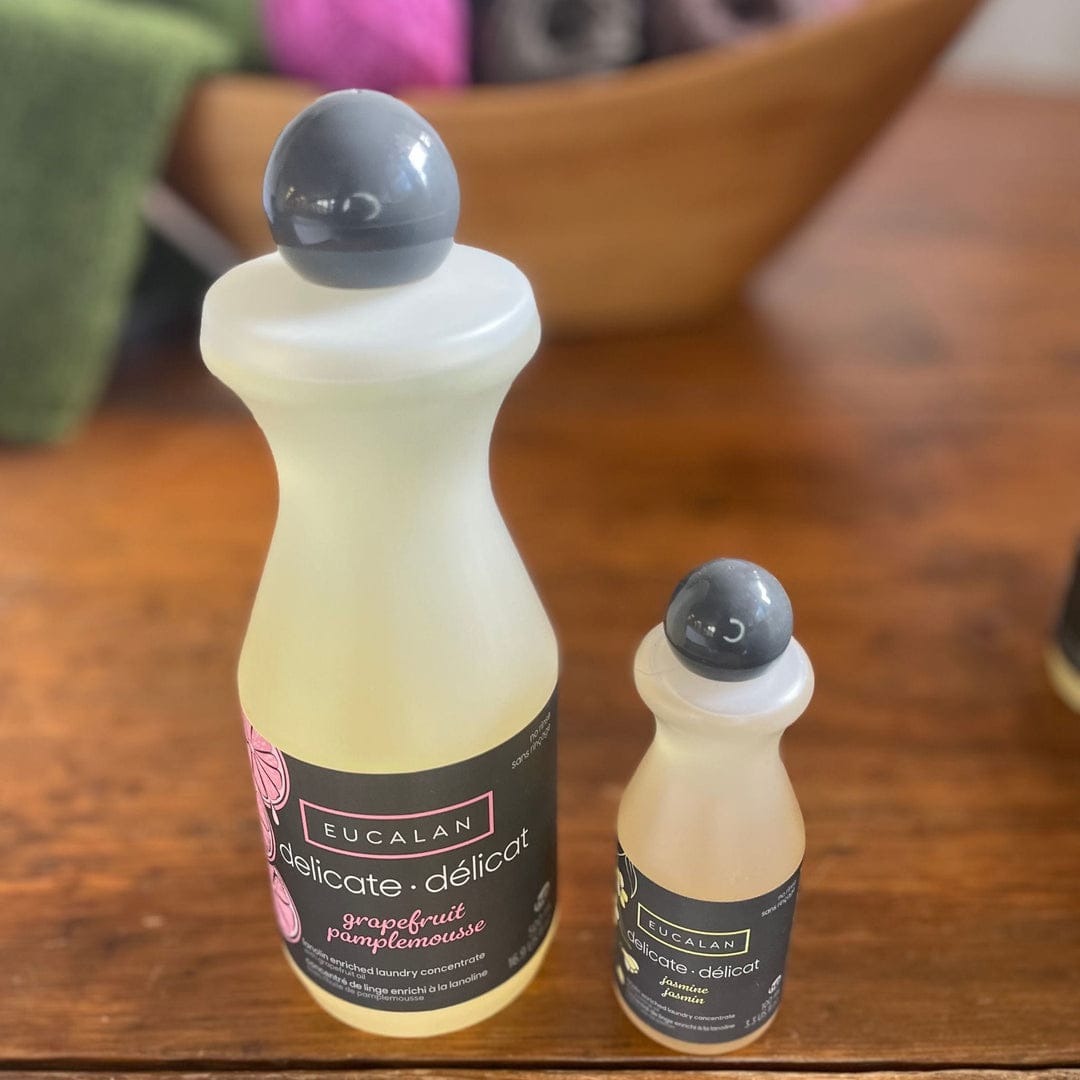
If you own hand-knits or anything expensive, buy a proper no-rinse wool wash and keep it by the sink. These are pH-balanced for protein fibers, they’re designed to clean without agitation, and several of them contain lanolin — the natural wool grease that keeps fibers supple and slippery. That combination is exactly what a shrunken sweater needs.
- ✦Eucalan Delicate Wash — contains lanolin, comes in lavender and unscented
- ✦Soak Wash — no-rinse, light scents, very popular with knitters
- ✦Kookaburra Wool Wash — lanolin plus tea tree oil, good for musty pieces
- ✦Perwoll Wool & Fine — a liquid detergent option if you prefer machine-safe
Follow the cap measurements on the bottle, dissolve it in cool water, and soak for 15 to 20 minutes. The no-rinse part matters more than it sounds: because you skip the rinse cycle, you skip the handling that re-felts the fibers, and the leftover trace of wash keeps things lubricated while you stretch. This is my favorite method for anything hand-knit, since it protects the yarn while it works.
5. Roll It in a Towel, Then Stretch It
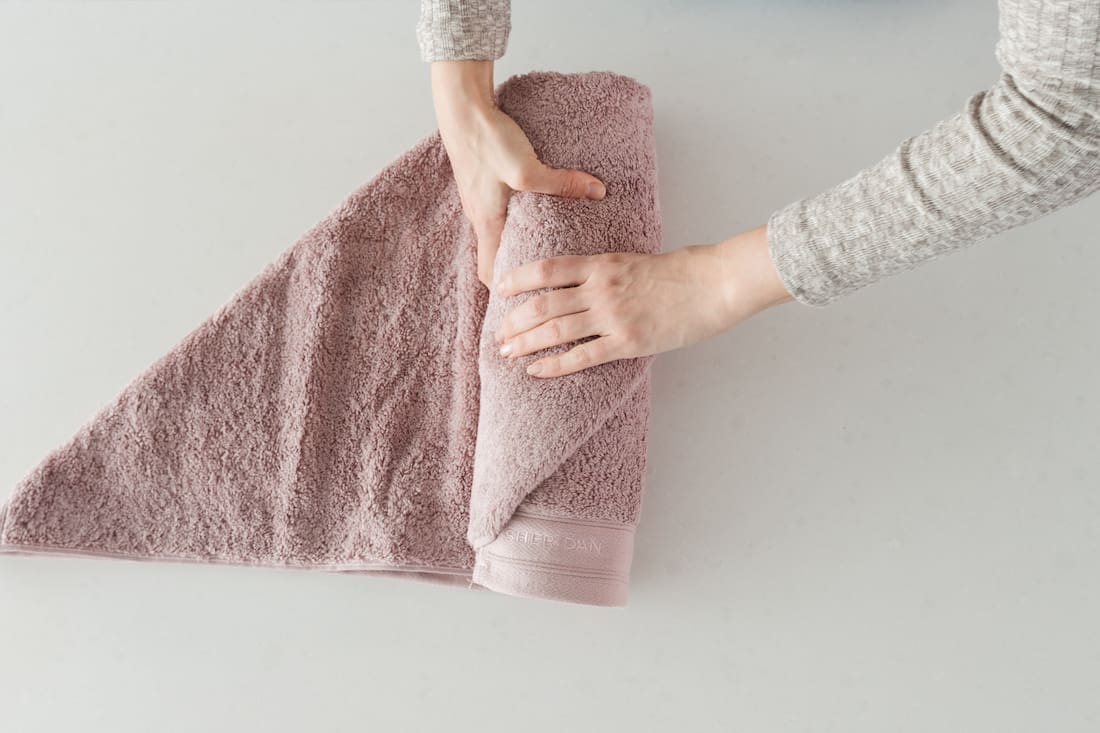
How you get the water out matters as much as what you soak it in. Wringing a wet wool sweater is how you turn a fixable problem into a felted one — the twisting crushes the fibers and locks them in their shrunken state.
Instead, lay the sweater flat on a clean, dry bath towel, roll the whole thing up jelly-roll style, then press down along the roll with your palms (or stand on it, which works embarrassingly well). Unroll, and the sweater comes out damp rather than dripping.
Now stretch it while those relaxed fibers are still slippery and damp. Work in small passes — a centimeter or two at a time at the cuffs, the hem, the shoulders and along the sides — instead of yanking the middle outward and distorting the whole shape.
If you want to be precise, measure a sweater that fits you before you start soaking and compare as you stretch; it’s much easier than eyeballing it. Let it dry flat in the new shape and check it in a few hours.
Wool often springs back partway, which just means another soak-and-stretch round, not a failure.
6. Pin and Block It
Blocking is what knitters do to every finished piece, and it’s the most reliable way to get a whole sweater back to a specific size. Foam blocking mats, T-pins and a tape measure are all you need; blocking wires along the long edges help you get dead-straight hems and cuffs without scalloping.
Soak the sweater using any of the methods above, press the water out with the towel roll, then lay it on the mats and pat it into shape. Pin every 2 to 3 centimeters along the seams, hem, cuffs and neckline, measuring against your reference sweater as you go — it’s much easier to correct the shape while it’s pinned than after it’s dry.
Then walk away and let it dry completely, which takes 24 to 48 hours for a chunky knit. Two things to watch: pinning too tightly stretches the edge into little points between pins, and drying near a radiator or in direct sun can bake the shape (and the color) in unevenly.
Somewhere warm, dry and out of the light is ideal.
7. Steam It While You Pull
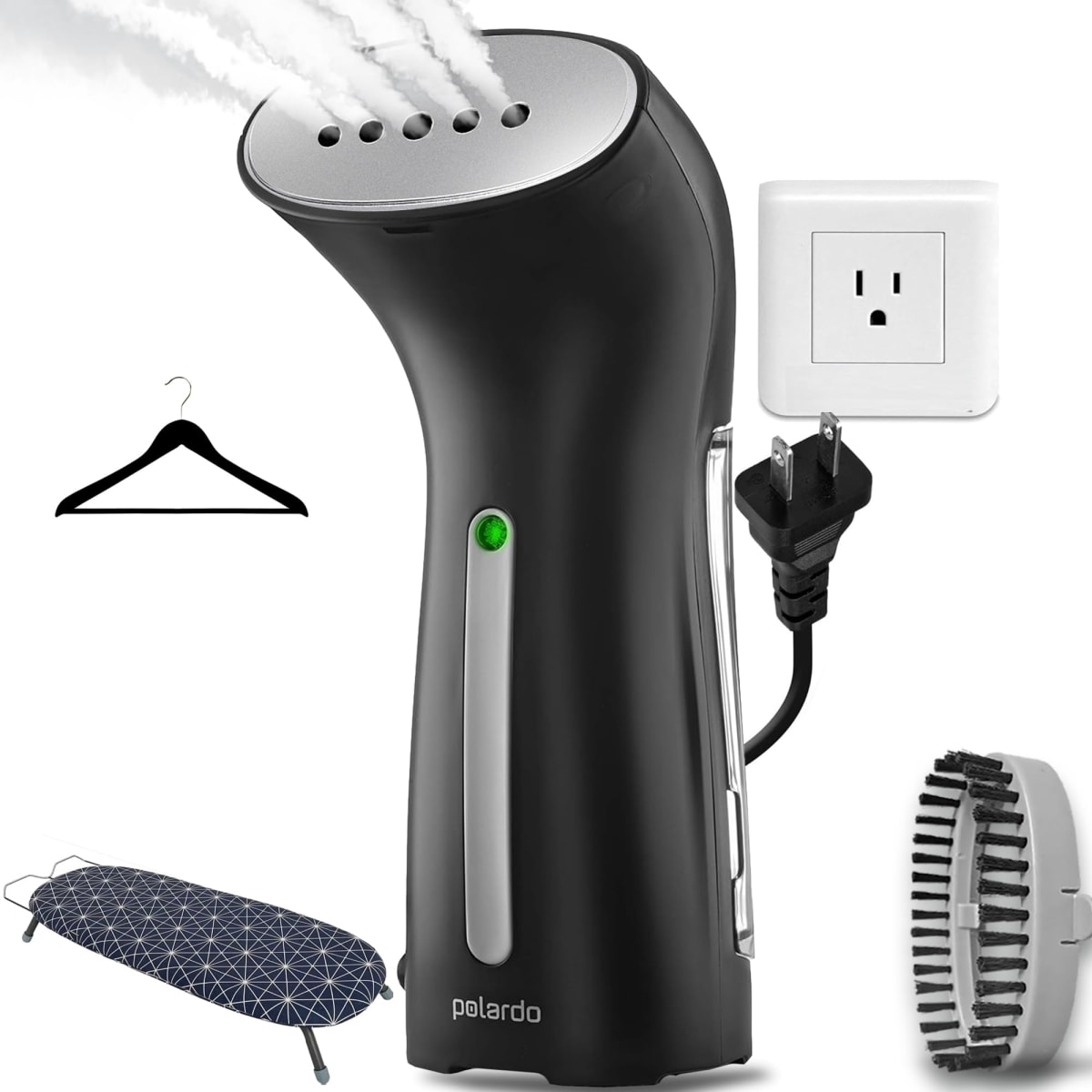
Steam is the fast route for a sweater that’s only gone down half a size, and it’s also the finishing touch that makes the other methods stick. Moist heat relaxes the fibers quickly, and holding the shape while the wool cools sets it there.
- ✦A handheld garment steamer (Rowenta or Conair) held a few centimeters from the fabric
- ✦A steam iron on the wool setting with a clean press cloth between the plate and the knit
- ✦A kettle held at arm’s length, if you’re careful and don’t drip on yourself
Work in small sections: steam, gently tug the fabric outward and downward with your free hand, then let that section cool before moving on. Hang the sweater or lay it flat — whichever suits the area you’re working.
The one rule here is never to press a hot iron directly onto wet wool. It flattens the loft, leaves a permanent shine, and in the worst case welds the fibers into a stiff panel.
Always use a press cloth or hover the iron, and test the setting on an inside seam first.
8. Dry It Stretched and Weighted
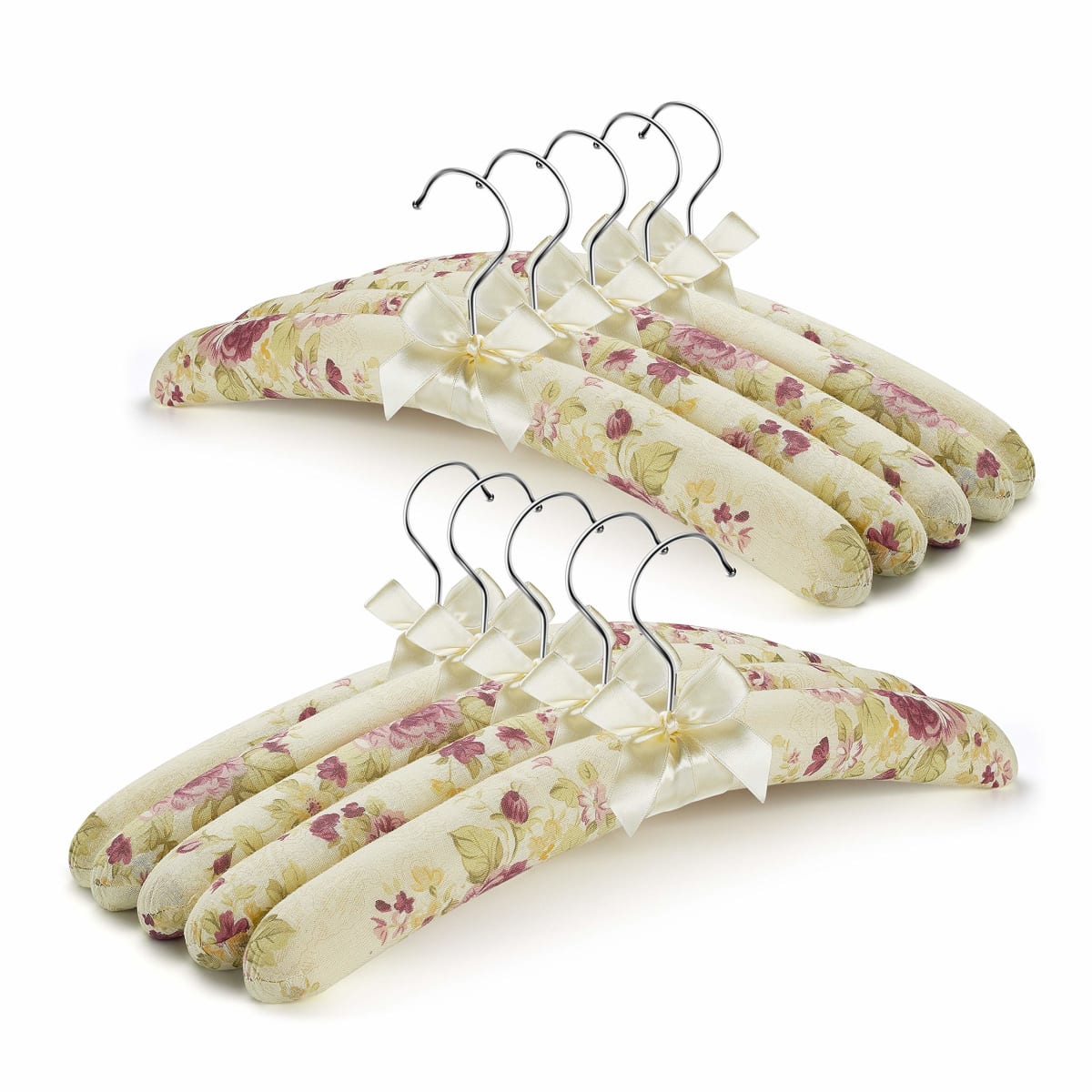
All of this comes together in the drying, because a wool sweater takes its final shape as the water leaves it. If you’ve gained length but not width, use gravity on purpose for a short window: drape the damp sweater over a wide padded hanger or a broomstick balanced on a drying rack for 30 to 60 minutes to let it ease downward, then lay it flat to finish. Don’t leave it hanging overnight — you’ll trade one problem for shoulder bumps and a sagged hem.
For width, lay it flat and weight the edges so the fabric can’t contract as it dries:
- ✦Heavy glass jars or mugs at the corners and along the side seams
- ✦Sealed water bottles laid across the hem
- ✦Smooth stones wrapped in a tea towel, so nothing snags the yarn
Keep the weights light enough that they hold rather than distort, and check the sweater after a couple of hours — you can still reposition things while it’s damp. Once it’s bone dry, the shape is yours to keep.
FAQ
Can you unshrink a wool sweater that has already felted?
Only partially. Once the fibers are truly felted — matted, stiff, fuzzy, with the knit structure no longer visible — the scales are permanently locked and no soak will fully undo it. A conditioner soak plus careful stretching can still buy you a bit of give, but if a sweater is badly felted, your best options are to shrink it deliberately into a bag, slippers or seat pads, or to accept a smaller sweater.
Does hair conditioner actually unshrink wool?
Yes, with one caveat: the conditioner itself doesn’t change the fibers, it lubricates them so they can slide back into their original spacing while damp. That’s why the soak alone rarely does anything visible — the stretching and flat drying are what hold the new size. On mildly shrunken sweaters it works remarkably well; on heavily felted ones it’s a modest improvement at best.
How long does it take to unshrink a wool sweater?
Plan on about two days, most of which is waiting. The soak is 20 to 30 minutes, the pressing and stretching take another 10 to 15, and the sweater needs a full 24 to 48 hours to dry flat in its new shape. Chunks of that can overlap if you’re blocking and steaming in the same session.
Can you put a wool sweater in the dryer to unshrink it?
No, and this is one of the most-repeated bad tips out there. Heat and tumbling are what shrinks wool in the first place, so a dryer will only set the shrinkage more firmly. If a sweater has already been through a hot cycle, skip the dryer entirely and go straight to a cool soak.
It’s worth saying one more time that all of these work best in combination: a cool soak to relax the fibers, gentle pressure to get the water out, then a gradual stretch held in place while the sweater dries. Take thirty seconds to measure a sweater that already fits you before you start, keep the water lukewarm at most, and have patience with the drying — that’s the part everyone rushes and the part that decides whether the shape holds. And once it’s back, wash it on the wool or delicate cycle in cold water inside a mesh bag, or better yet by hand with a capful of Eucalan, and lay it flat to dry every single time.
Leave a Reply