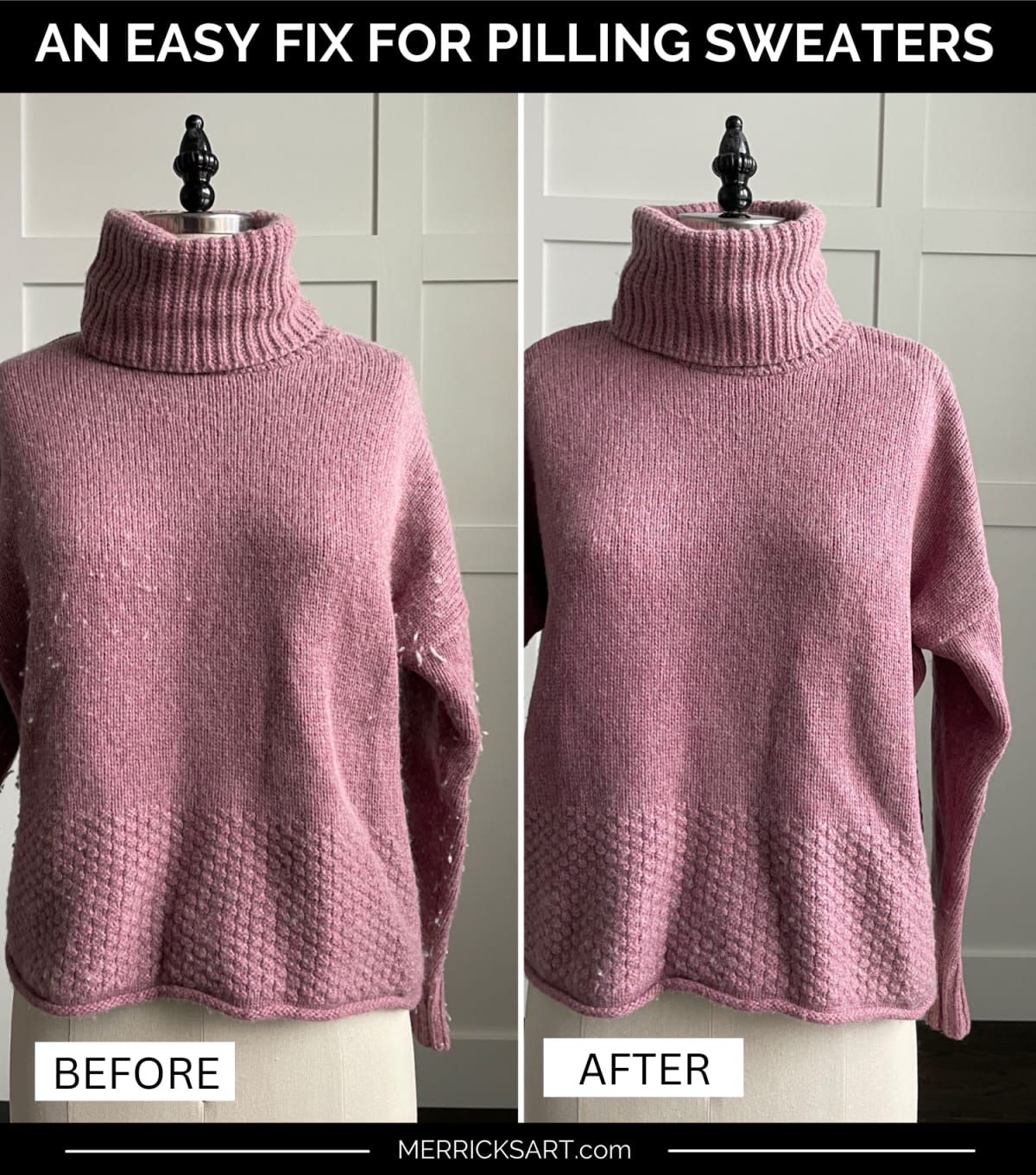
Those little bobbles — the fuzz that collects on the sleeves, under the arms, and along the sides where your bag rubs — are just loose fibers that have worked their way out of the knit and tangled into themselves. It happens to merino, cashmere, cotton, and acrylic alike, and it says nothing about how expensive the sweater was.
The good news is that nearly all of it comes off at home with tools you may already own, and you don’t need to be precious about it. You just need the right tool for the amount of pilling, a light hand, and a sweater that’s laid flat and dry.
Here’s how the main methods stack up before you pick one:
| Method | Best for | Risk to fabric | Rough cost |
|---|---|---|---|
| Electric fabric shaver | Heavy, all-over pilling | Low–medium | $15–$30 |
| Sweater comb | Medium pilling, control | Low | $10–$20 |
| Sweater stone | Medium pilling on chunky knits | Medium | $12–$18 |
| Disposable razor | Light pilling, small areas | Medium | $2–$5 |
| Fine-tooth comb | Light fuzz on sturdy knits | Low | $1–$3 |
| Lint roller or tape | Loose surface fuzz only | Very low | $3–$8 |
| Small sharp scissors | A few stubborn bobbles | Low | $5–$15 |
Electric Fabric Shaver

This is the workhorse, and if you own more than two sweaters it’s worth the drawer space. A fabric shaver — the Conair Fabric Shaver, the BEAUTURAL, any rechargeable model with a foil guard and a catch bin — pulls the pills up through holes in the guard and slices them off against a spinning blade, so it removes fuzz fast without dragging on the knit.
Lay the sweater flat on a towel or an ironing board, hold the skin of the fabric gently taut with one hand, and run the shaver in short, light passes in one direction. Keep it flat and let the guard do the spacing; pressing hard or holding it at an angle is what causes nicks and holes.
Start on an inside seam or the hem to check the result before you commit to the body of the sweater. Empty the bin partway through — a full bin loses suction and you’ll end up going over the same patch again and again. Fine knits like cashmere want the lowest speed and the briefest touches; chunky lambswool can take a more thorough session.
Sweater Comb
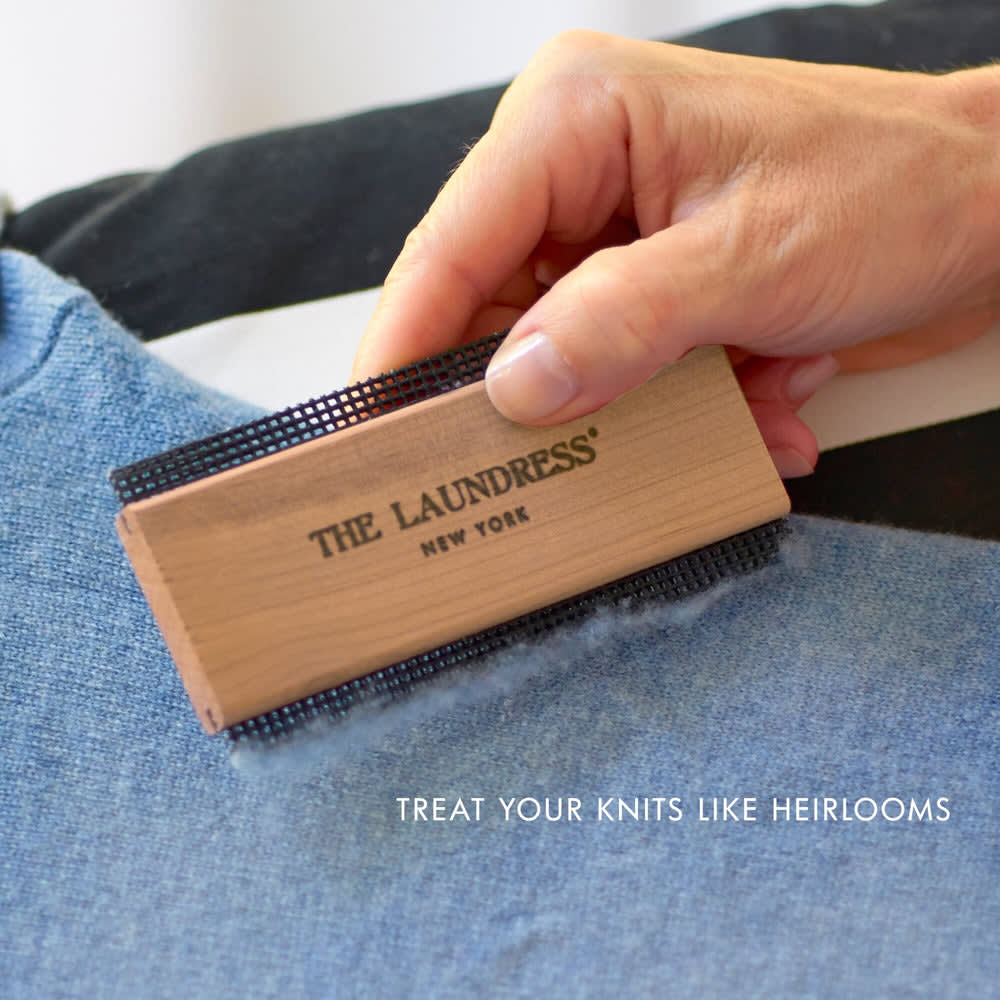
A sweater comb is a small blade set into a plastic comb frame — the Gleener Ultimate Fuzz Remover is the one I keep in the mending basket — and it’s the tool I reach for when a shaver feels like overkill. You drag it across the surface in one direction and it catches and cuts the pills while you watch exactly what’s coming off, which gives you far more control on thin, drapey knits than a motorized blade does. It also travels well and never needs charging.
Use it on a dry sweater laid flat, with short overlapping strokes and almost no downward pressure. If you find yourself digging in, the blades may be dull — most sets come with interchangeable heads for different fabric weights, and swapping to the fine-fabric head is usually the fix rather than pressing harder.
Sweater Stone
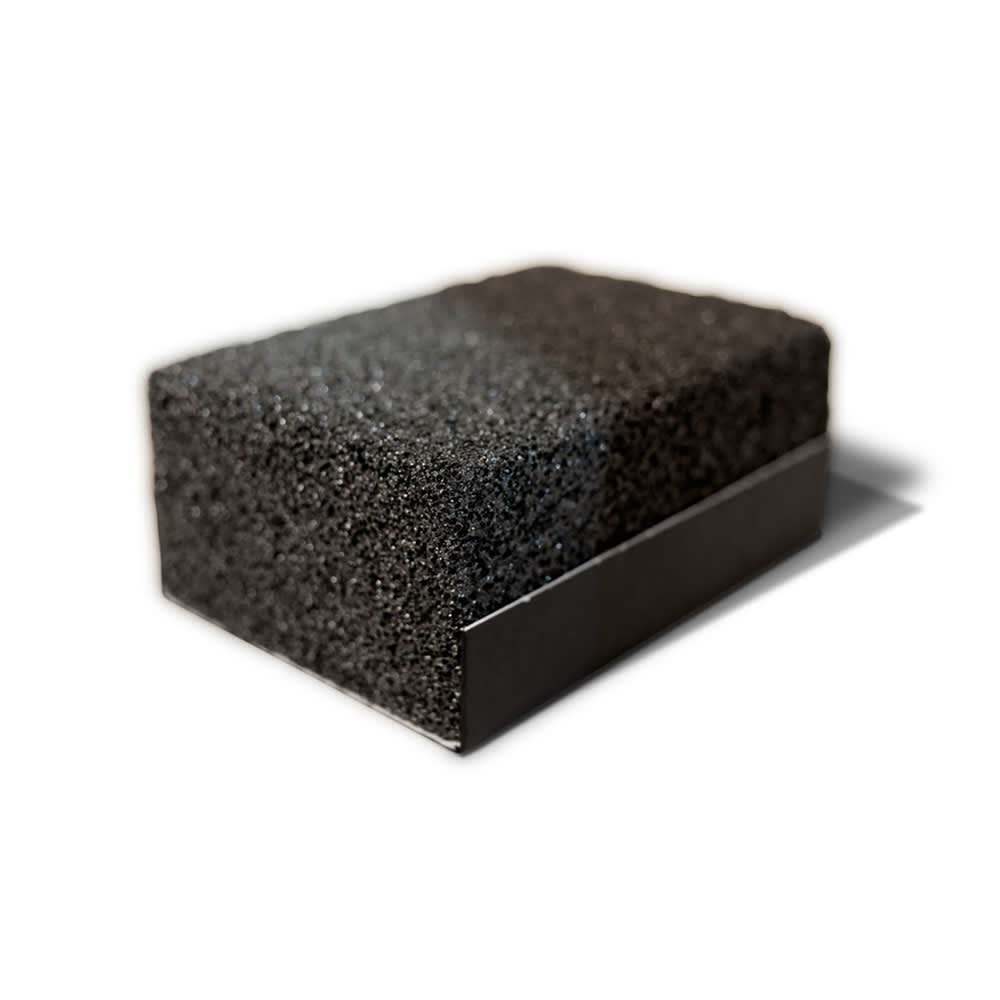
A sweater stone is a block of porous volcanic pumice made specifically for knitwear, and it works well on thick, lofty sweaters where the pills are big and soft. You sweep it lightly downward across the fabric and the rough surface grabs the bobbles and lifts them off, which is why it’s less effective — and riskier — on anything fine or loosely woven. Think chunky cardigans and fisherman knits, not a thin merino shell.
Work over a table or a bin so the lint falls somewhere you can clean up, and use light, short strokes in one direction only. This one is genuinely abrasive, so skip it on cashmere, angora, anything with a raised rib you care about, and any sweater where the fibers already look thin. Replace the stone when the surface glazes over and stops catching.
Disposable Razor
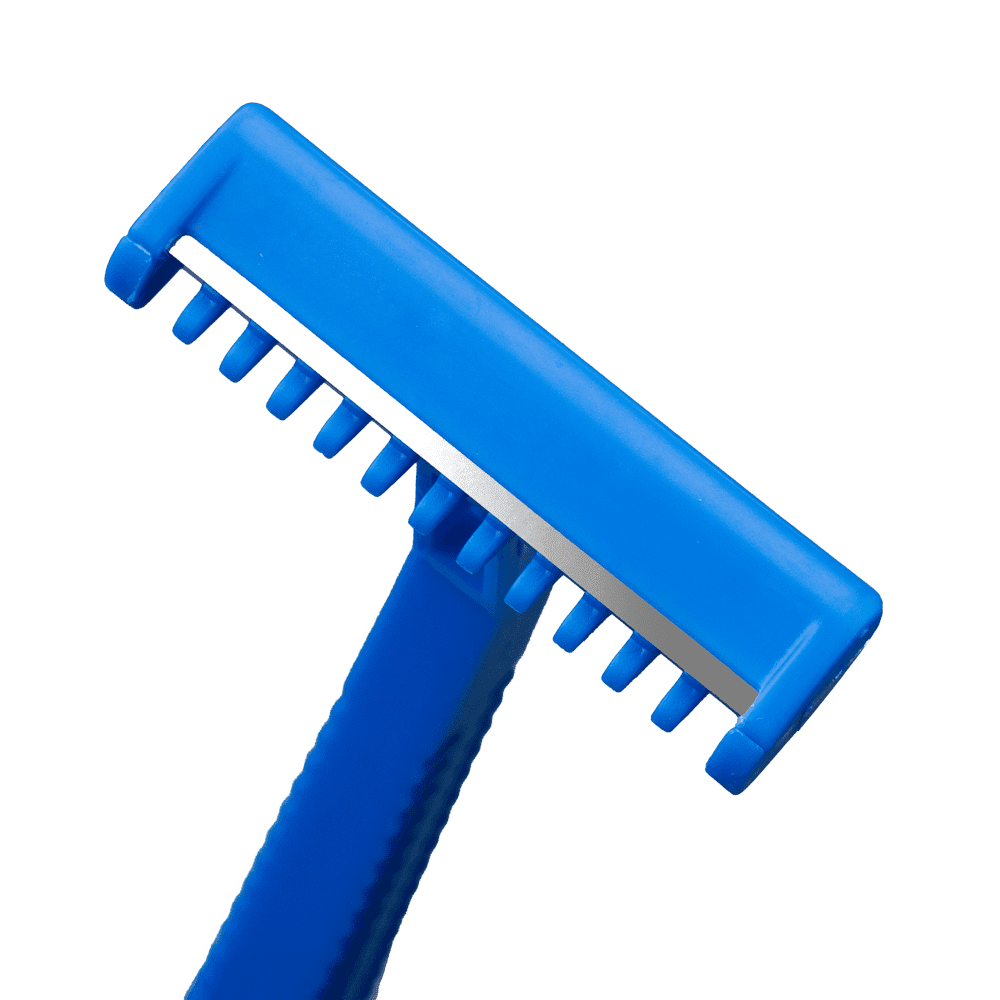
A plain disposable razor is the classic trick, and it works — cheap, immediate, and already in your bathroom. The blade shaves pills off the surface the same way it shaves hair, so the whole trick is tension and touch: lay the sweater flat, pull the fabric taut with one hand, and draw the razor toward you in short, gentle strokes, no pressure and no water. The moment the fabric bunches up under the blade, you’re a step away from a hole.
A fresh blade is dramatically safer than a used one; a dull razor snags and drags instead of cutting. Skip this on very fine knits, chenille, and anything with an open or lacy stitch — the shaver or comb is far safer there.
And shave a dry sweater only. Wet fibers stretch and shred.
Fine-Tooth Comb
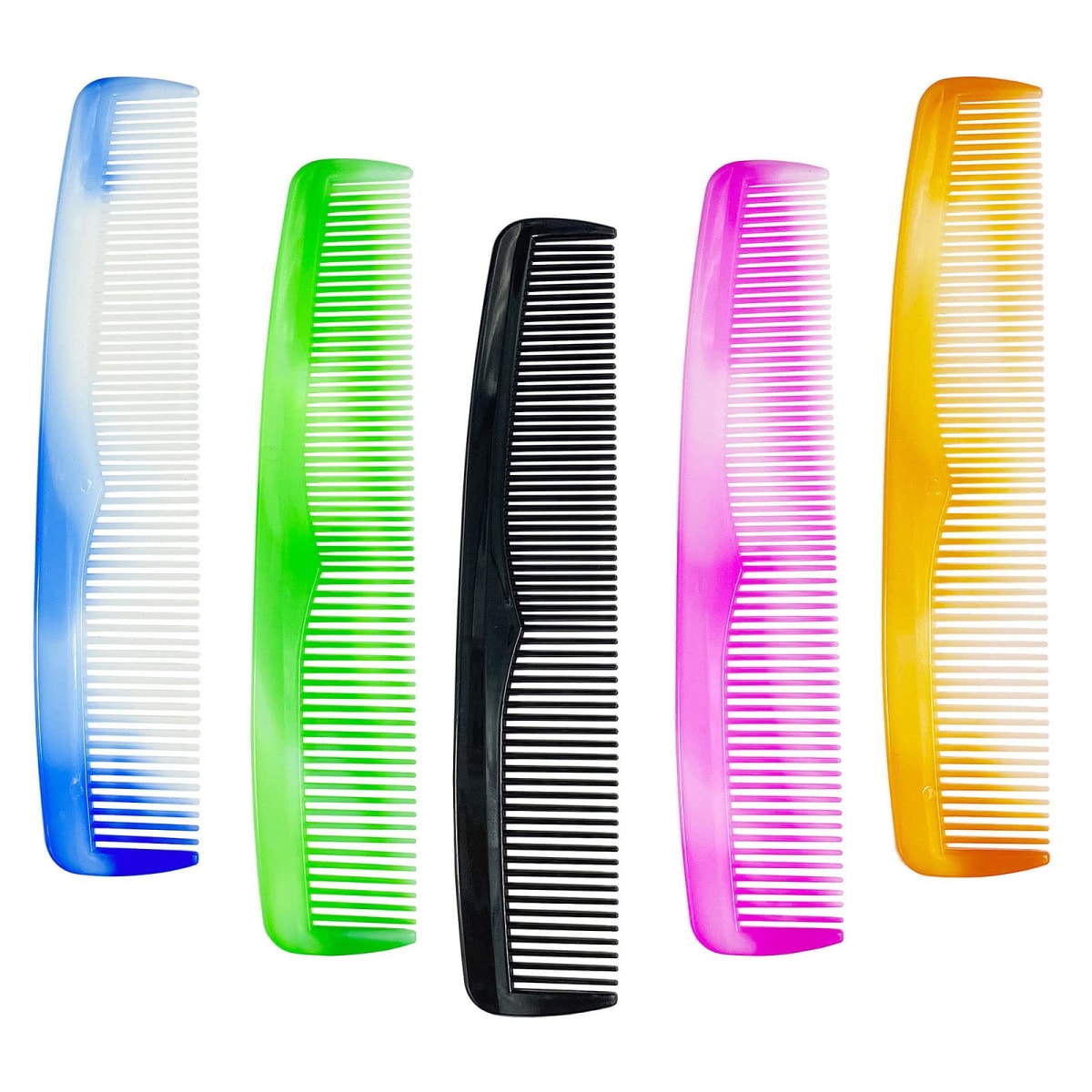
For light fuzz on a sturdy knit, a plain plastic hair comb works surprisingly well and costs nothing. The teeth lift and gather the loose fibers as you draw it across the surface, and because the teeth flex and the tension is low, it’s hard to do real damage — which makes it a good first pass on a sweater you’re nervous about. It won’t do much against hard, compacted bobbles; those need a blade.
Comb in one direction across the fabric, stopping every few strokes to pull the collected lint off the teeth. Best on cotton, acrylic, and tight knits. It’s basically useless on cashmere or mohair, where the pills are soft and the fibers snag, so put the comb down and reach for a shaver there.
Lint Roller and Tape
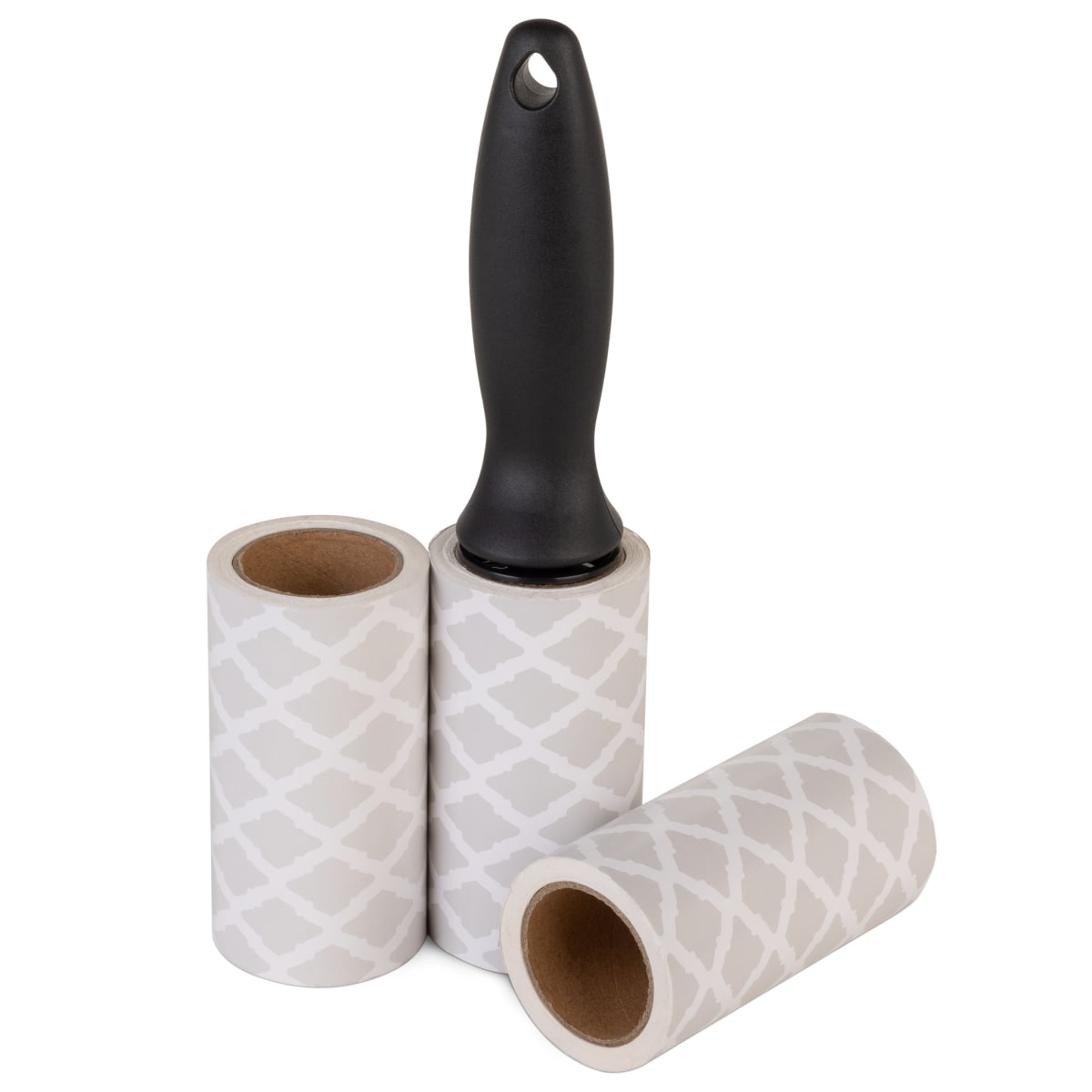
Adhesive lifters won’t cut off real pills, and any post that tells you otherwise is being optimistic — but they’re the fastest way to clean up a sweater once you’ve finished with a shaver or razor, and the only thing you should use on the most fragile pieces. A Scotch-Brite lint roller picks up the loose fuzz that a de-pilling session leaves behind, plus dust, pet hair, and the general grey film that makes a sweater look tired.
- ✦Lint roller for a full sweep of the finished sweater
- ✦Packing tape wrapped sticky-side-out around your hand for tight spots and cuffs
- ✦Masking tape for delicate knits where you want the weakest possible grip
Roll in one direction and lift rather than scrub, especially at cuffs and necklines where stitching can pull.
Small Sharp Scissors
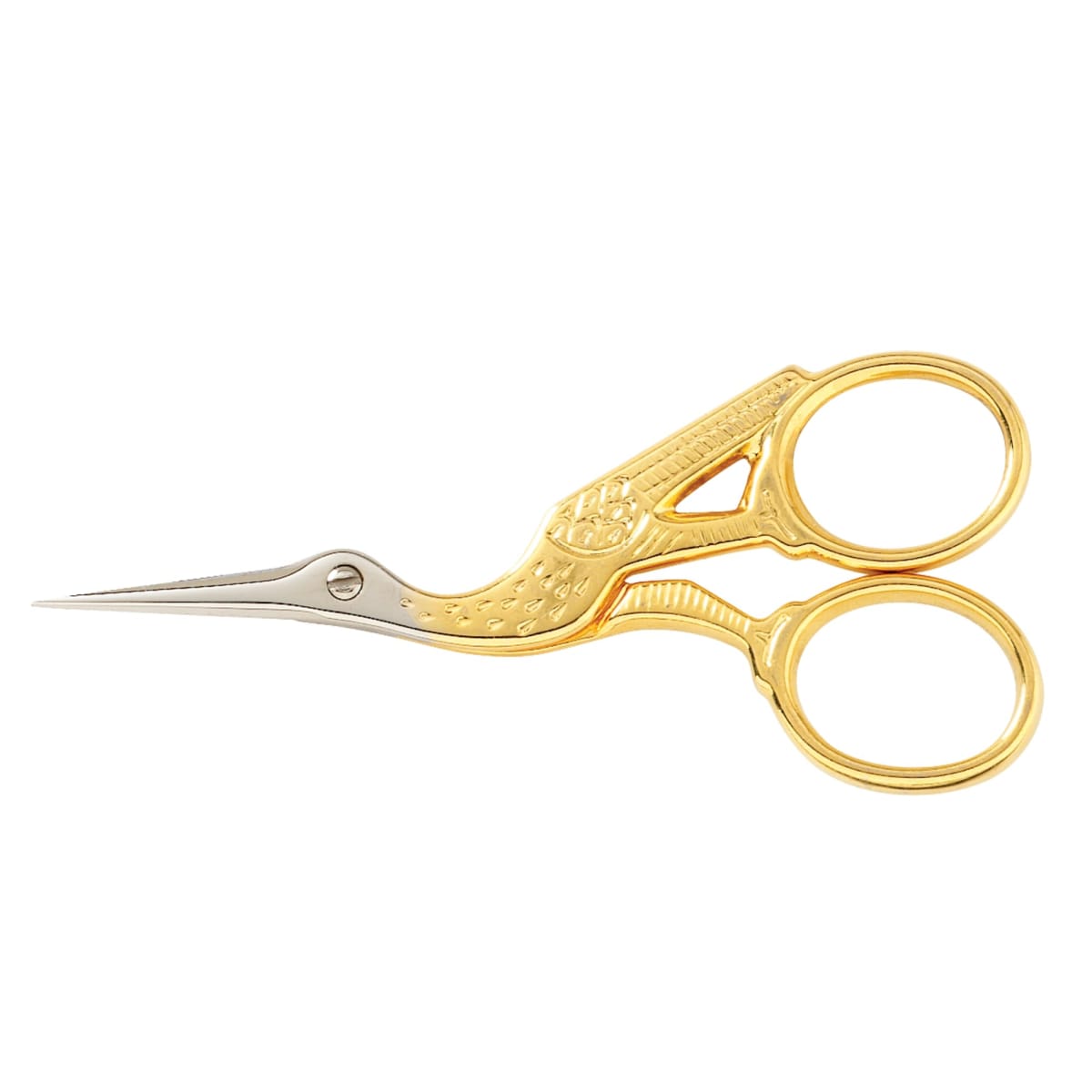
Sometimes a handful of bobbles survive every tool, usually where a seam rubs or where the sweater is already worn thin. For those, a pair of small, very sharp scissors — embroidery scissors, nail scissors, anything with a fine point — is the precise answer. Snip each bobble as close to the surface as you can without nicking the knit, then pat the area to loosen the clipped fiber.
This is slow, and that’s the point: it’s for the last five percent, not the whole sweater. Don’t try to speed it up by sliding the blade along the fabric, and never pull a bobble off with your fingers — you’ll draw out a loop of yarn and create a new pill or a small hole.
Does cutting pills off make more pills come back?
Not because of the cutting. Pills come back because friction keeps pulling fibers loose from the yarn, so if the sweater keeps rubbing against a bag strap or a coat lining, it will pill again regardless. Trimming is a maintenance step, not a cure — the prevention habits below do the real work.
Keep Pilling From Coming Back
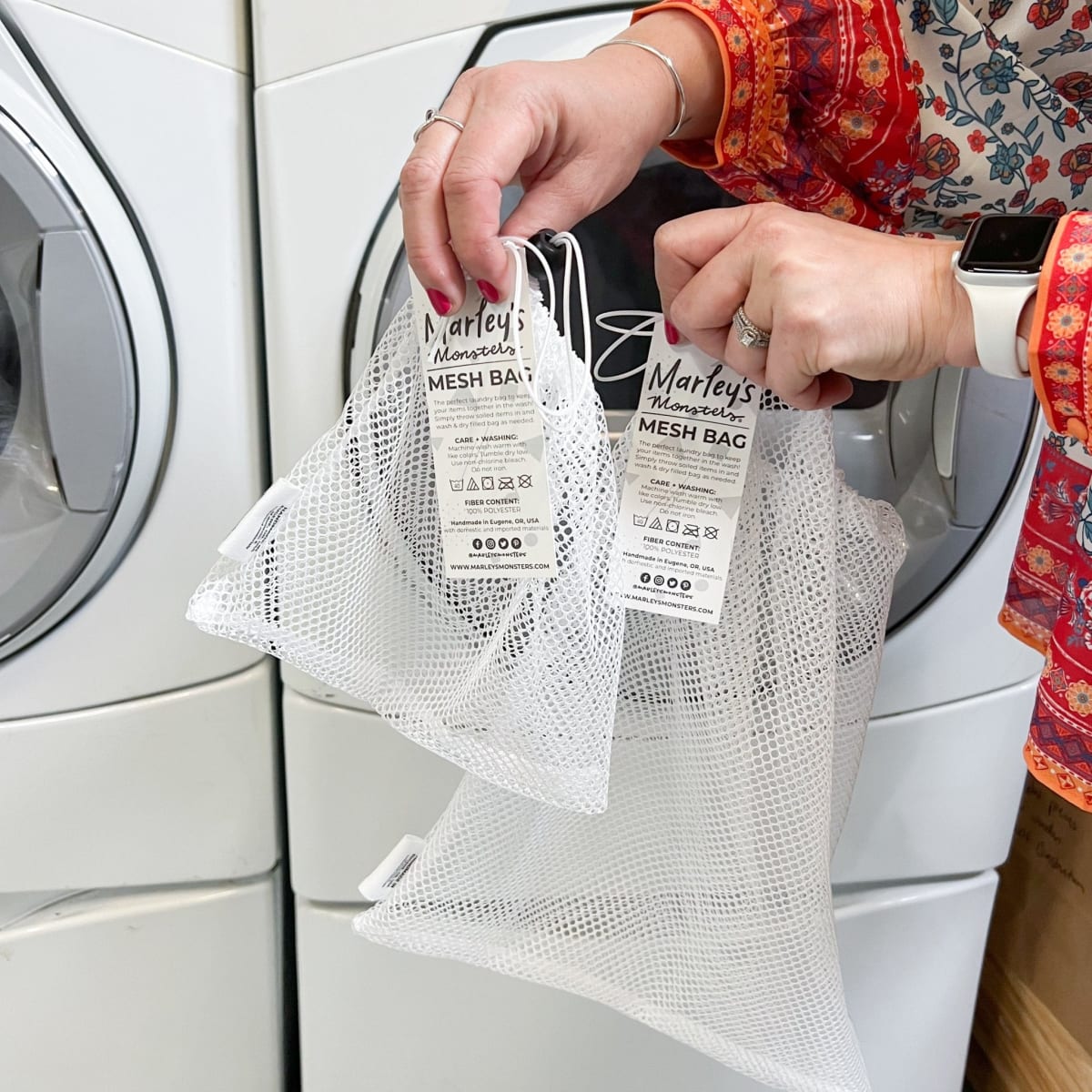
Removing pills is satisfying; keeping them away is cheaper. Pilling is mostly caused by friction, and washing is the biggest source of it, so a few habits make a real difference to how often you have to break out the shaver. Wash sweaters inside out in cold water on the gentle cycle inside a mesh laundry bag — the bag keeps the knit from rubbing against everything else in the drum, which is where most new pills begin.
- ✦Air dry flat on a towel or a drying rack; the dryer tumbles fibers loose faster than anything else
- ✦Use a wool and cashmere wash like The Laundress Wool & Cashmere Shampoo or Eucalan, and skip fabric softener
- ✦Rotate sweaters instead of wearing one favorite three days running
- ✦Store folded rather than hung, so shoulders and sleeves don’t stretch and fray
A sweater that’s washed gently and dried flat might still pill in its first season — that’s normal for new knits, which shed their loosest fibers early — but it should settle down after a few gentle washes.
FAQ
Can you use a regular razor on a sweater?
Yes, as long as the sweater is dry, flat, and pulled taut, and the razor is new and sharp. It works best on medium-to-sturdy knits and light-to-medium pilling; on fine or loosely woven fabric, use a fabric shaver or sweater comb instead.
Will a fabric shaver ruin my sweater?
Not if you use it gently — a shaver with a foil guard is designed to keep the blade off the knit itself. Ruin comes from pressing hard, holding it at an angle, or working on thin, worn-through fabric, so test on a seam first and use the lowest speed on cashmere and merino.
Can you put a sweater in the dryer to get rid of pills?
Don’t. Tumble drying creates friction, which is exactly what causes pilling in the first place, and heat can shrink or felt wool. De-pill with a tool and then dry sweaters flat on a towel or rack.
How do you remove pilling from cashmere without damaging it?
Skip the sweater stone and the razor entirely. Use a fabric shaver on its lowest setting or a sweater comb’s fine-fabric head with barely any pressure, then finish with a lint roller to lift the loose fuzz.
Any sweater in your closet can be rescued this afternoon — pick the tool that matches how bad the pilling is, work on a dry, flat surface, and take your time. Once you’ve done one, the rest of the drawer gets noticeably more wearable, and you’ll stop quietly retiring sweaters that only needed ten minutes of attention.
Leave a Reply