
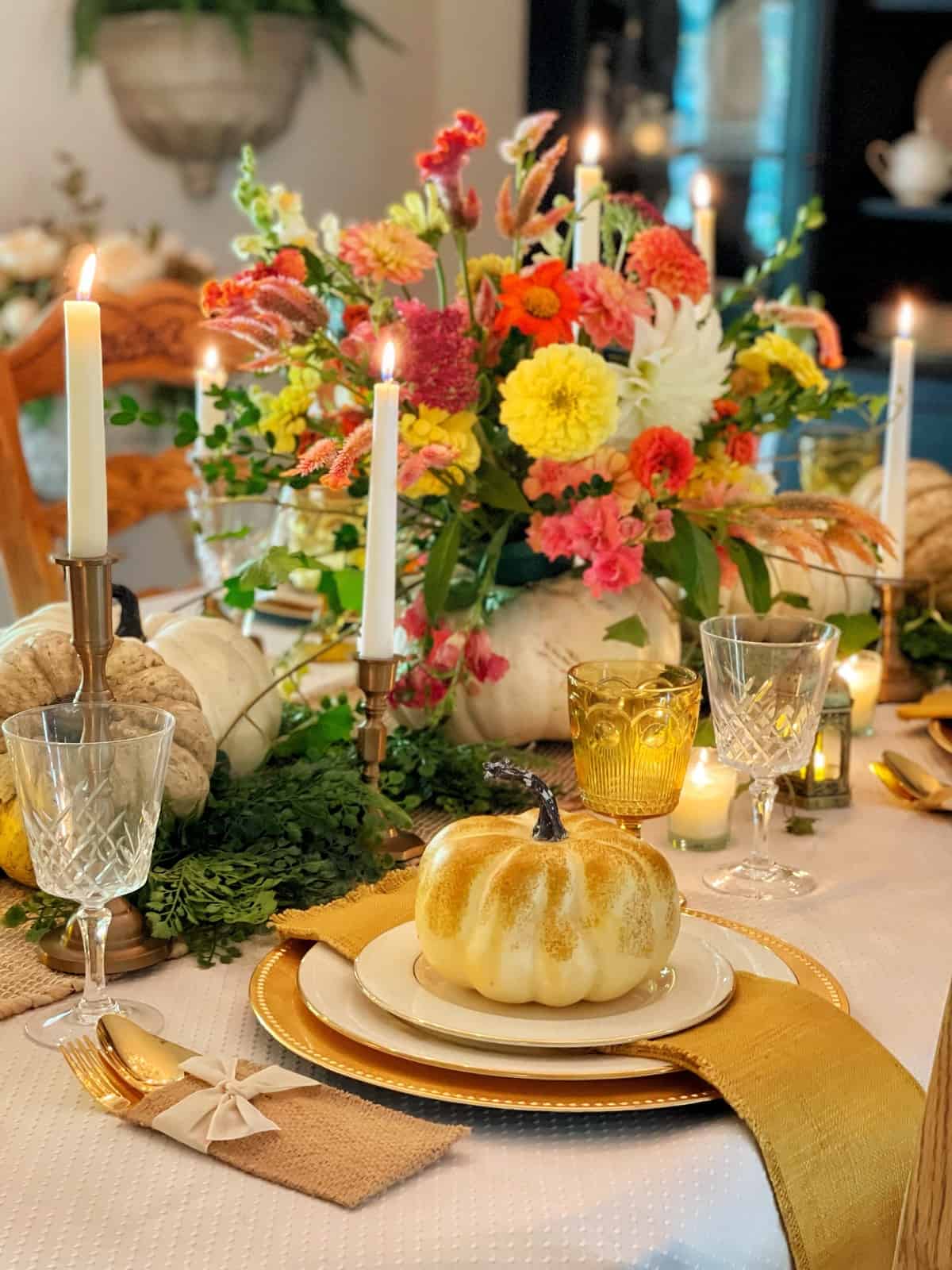
Friendsgiving table decor centers on warm textures, seasonal produce, and layered elements that turn an ordinary dining surface into a shared celebration space. These setups rely on natural materials that age gracefully through the evening and hold up under repeated use across multiple gatherings.
Pumpkin Place Card Holders
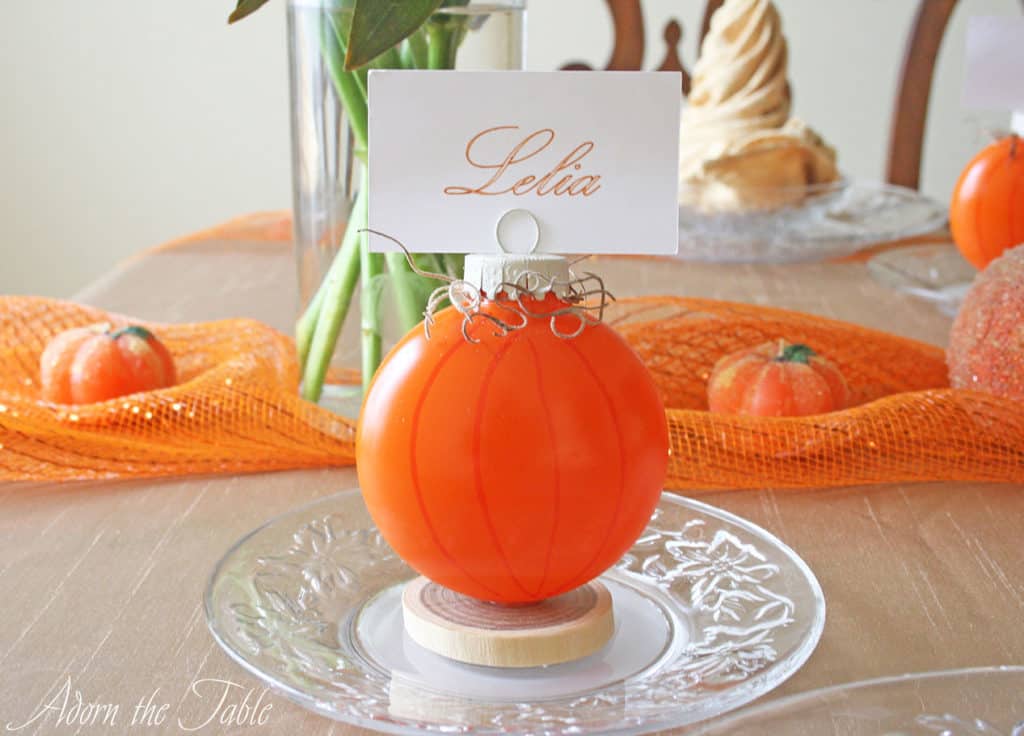
Small pumpkins serve as both seating markers and conversation starters when guests arrive. Choose varieties in different sizes and muted tones so the arrangement feels collected rather than matched. Tuck handwritten tags into the stem or secure them with a short length of twine so the cards stay visible even after the first course is cleared.
Placement works best when the pumpkins sit slightly off-center on each plate, leaving room for flatware on the right. This offset creates visual movement along the table length without blocking sightlines between seats. A common mistake is overcrowding the pumpkin surface with extra tags; one clean card per pumpkin keeps the look intentional.
Plaid Napkin Accents
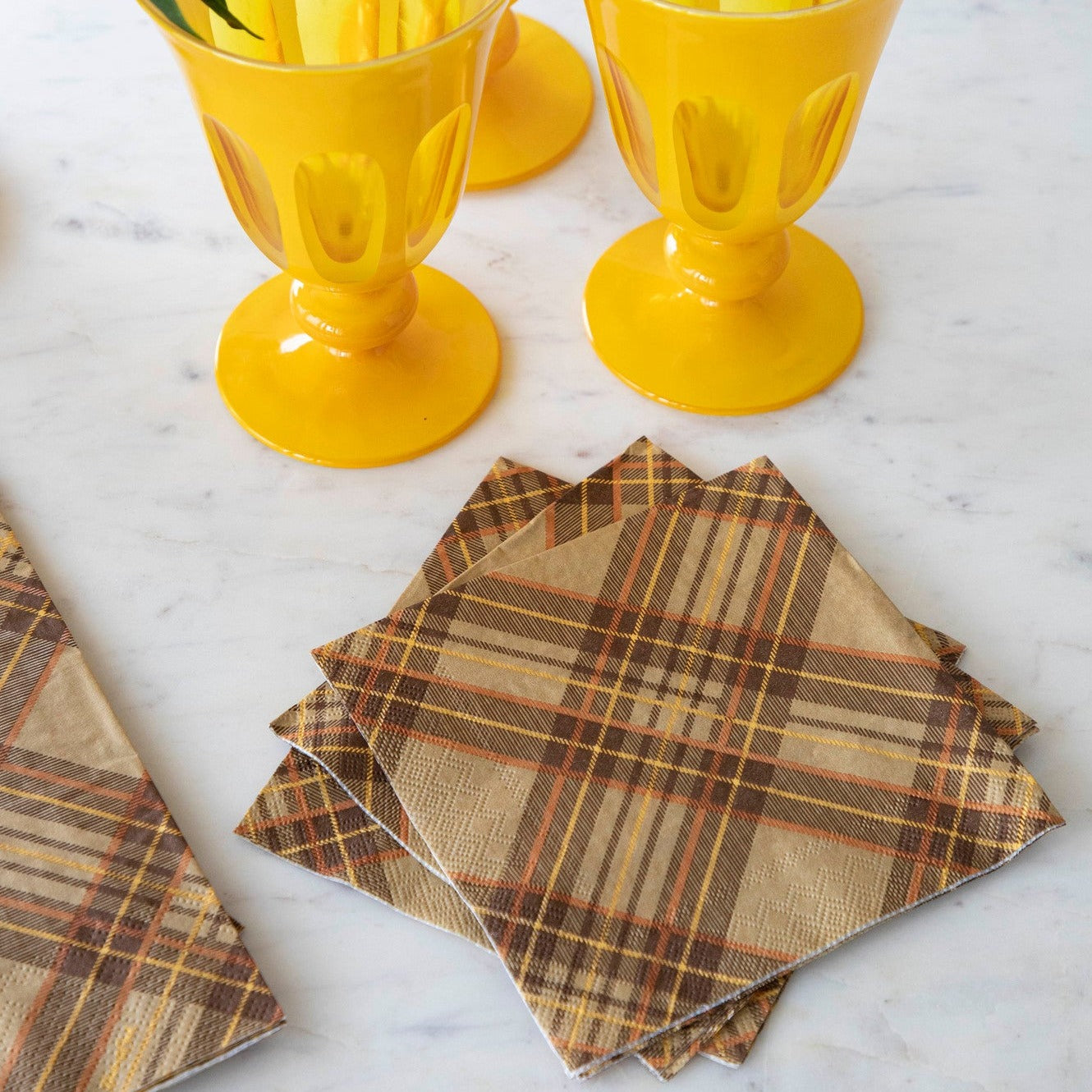
Plaid napkins bring immediate warmth through pattern and weight. Fold them into simple rectangles and slide them under the forks so the fabric drapes naturally over the plate edge. The pattern reads clearly against solid dinnerware and pairs easily with wooden or ceramic dishes.
Different plaid scales change the overall tone. Smaller checks feel more casual while larger blocks read as more structured. Keep the rest of the table soft so the napkins remain the strongest pattern element.
Leafy Garland Runners
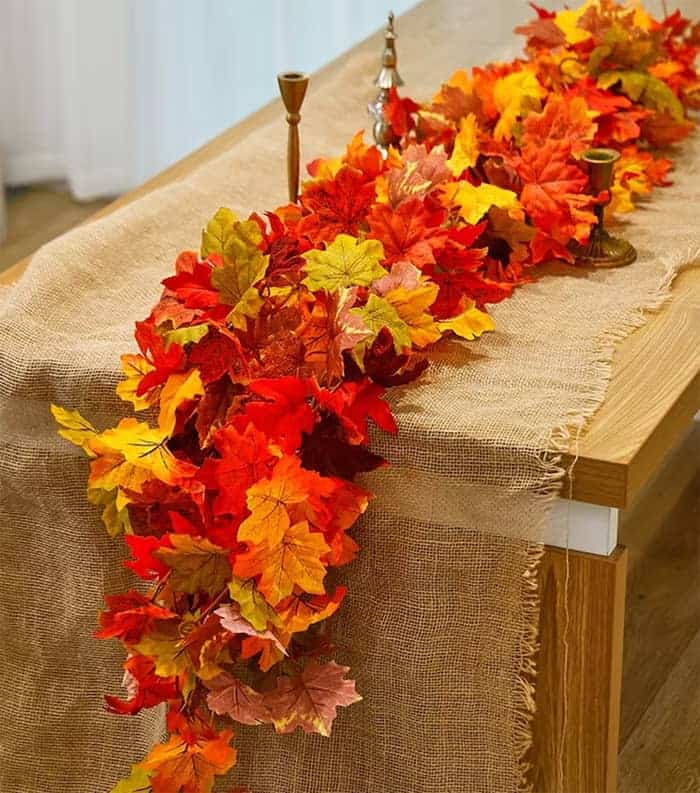
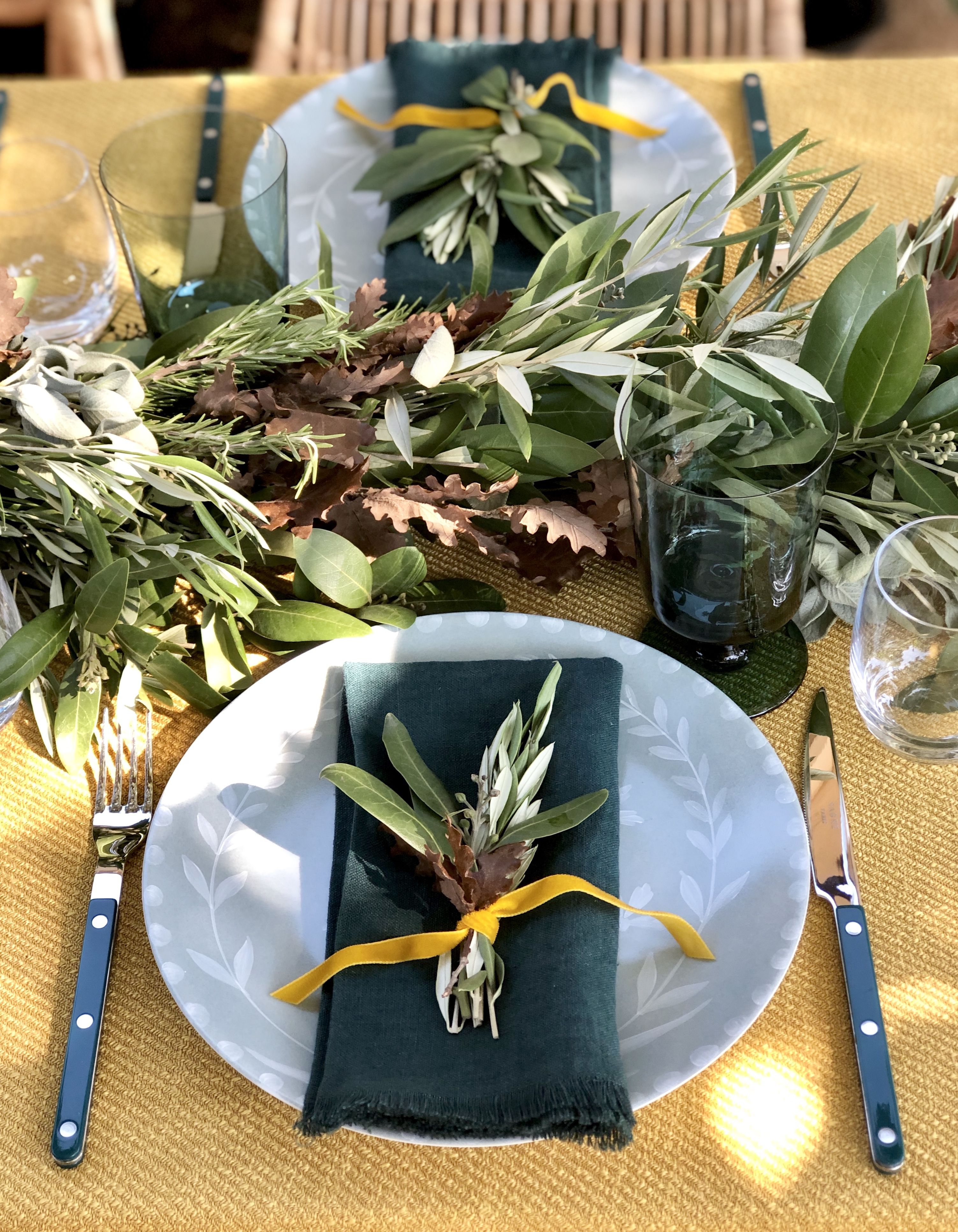
A garland of preserved leaves creates a continuous line that guides the eye from one end of the table to the other. Lay the greenery first, then position plates and glasses on top so the runner stays anchored. The leaves add color without competing with food once serving dishes arrive.
Mix oak, maple, and beech leaves for varied edges and tones. Mist the garland lightly with water the morning of the dinner to keep it supple through the evening. Avoid fresh leaves that curl quickly under warm lighting.
Candle Cluster Centerpieces
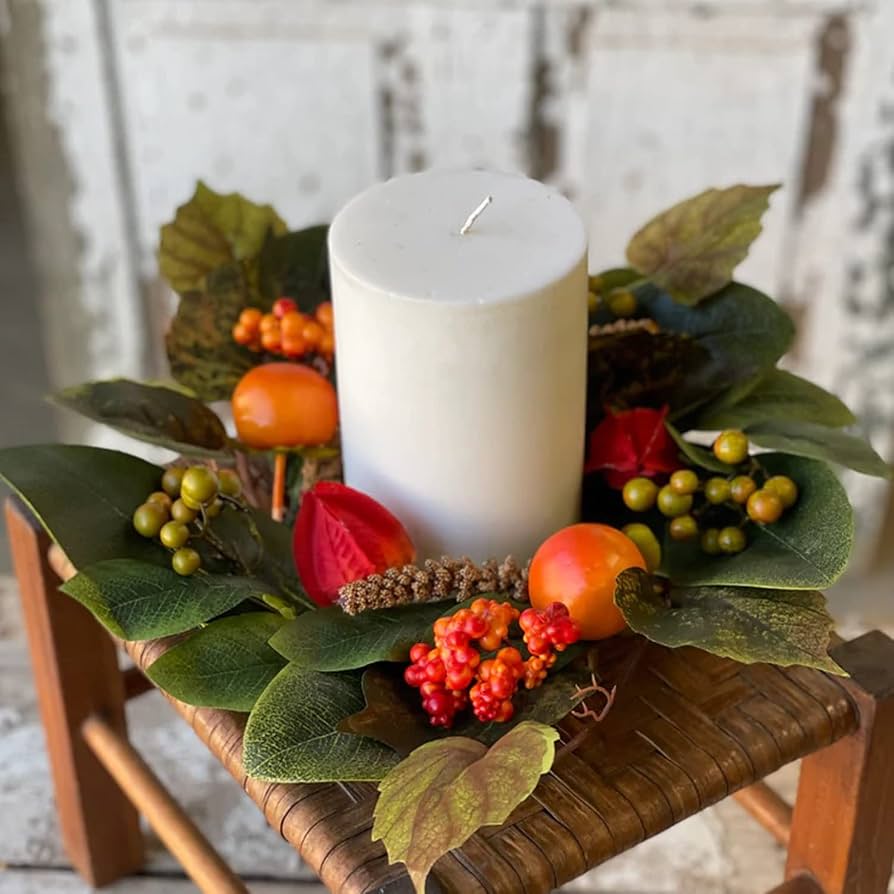
Grouping candles of varying heights produces a soft, flickering light that flatters both food and faces. Use three to five pillars in one area rather than scattering singles across the entire surface. Keep the tallest candles under twelve inches so guests can still converse across the table.
Non-obvious insight: dripless pillars in soy wax reduce cleanup compared with paraffin even when left burning for several hours.
Place the cluster on a low tray or wooden slab to contain any stray wax and protect the table finish. This central glow becomes the natural focal point once overhead lights are dimmed.
Mason Jar Floral Arrangements
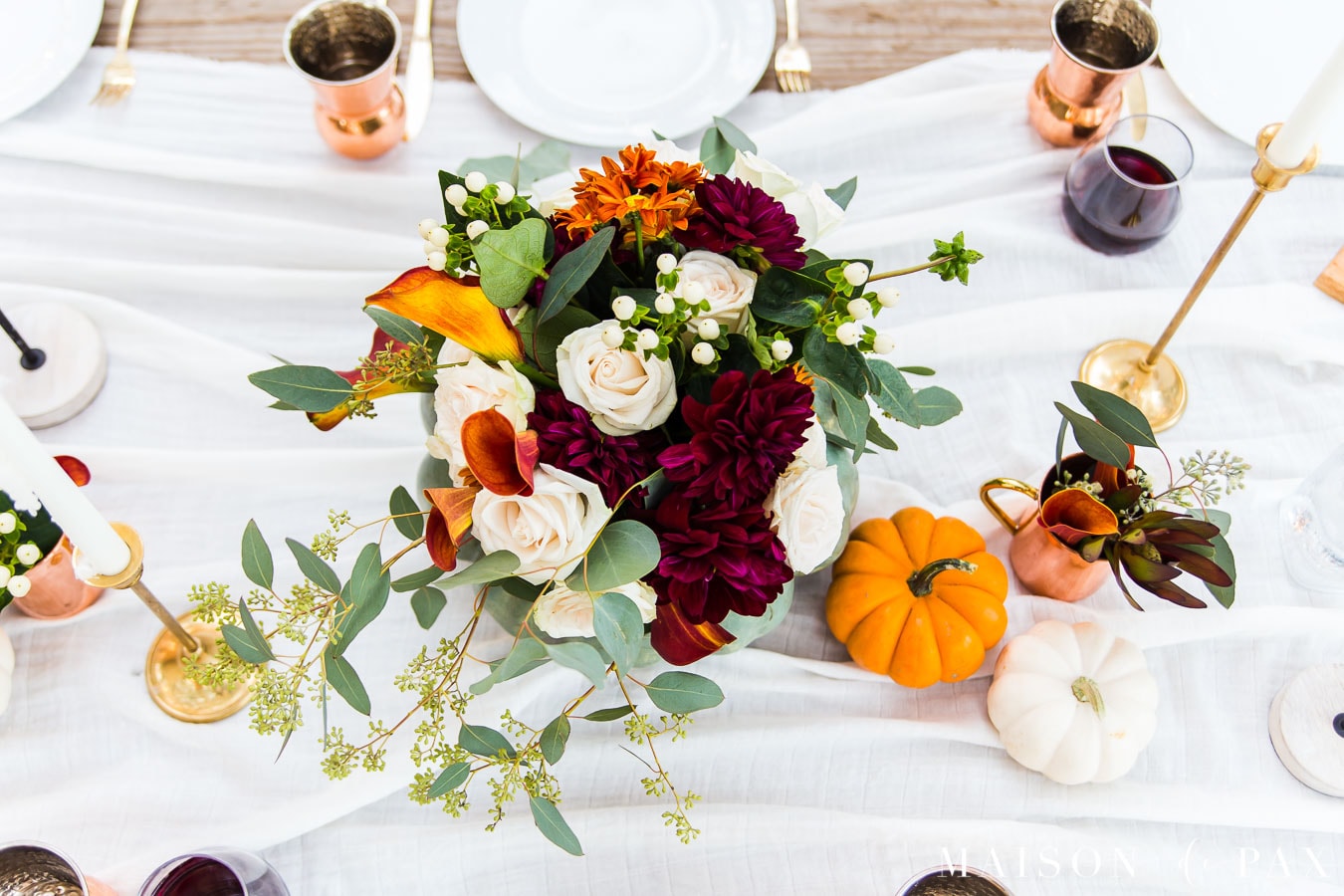
Wide-mouth mason jars hold mixed stems without needing floral foam. Fill each jar two-thirds with water, then add a mix of chrysanthemums, dried wheat, and a few seeded eucalyptus stems for movement. The clear glass lets the water line and stem colors become part of the display.
Position one jar between every two place settings so no guest sits directly in front of a large bloom. This spacing keeps conversation easy while still distributing color evenly. Change the water the day before if the arrangement is assembled early.
Burlap and Lace Tablecloths
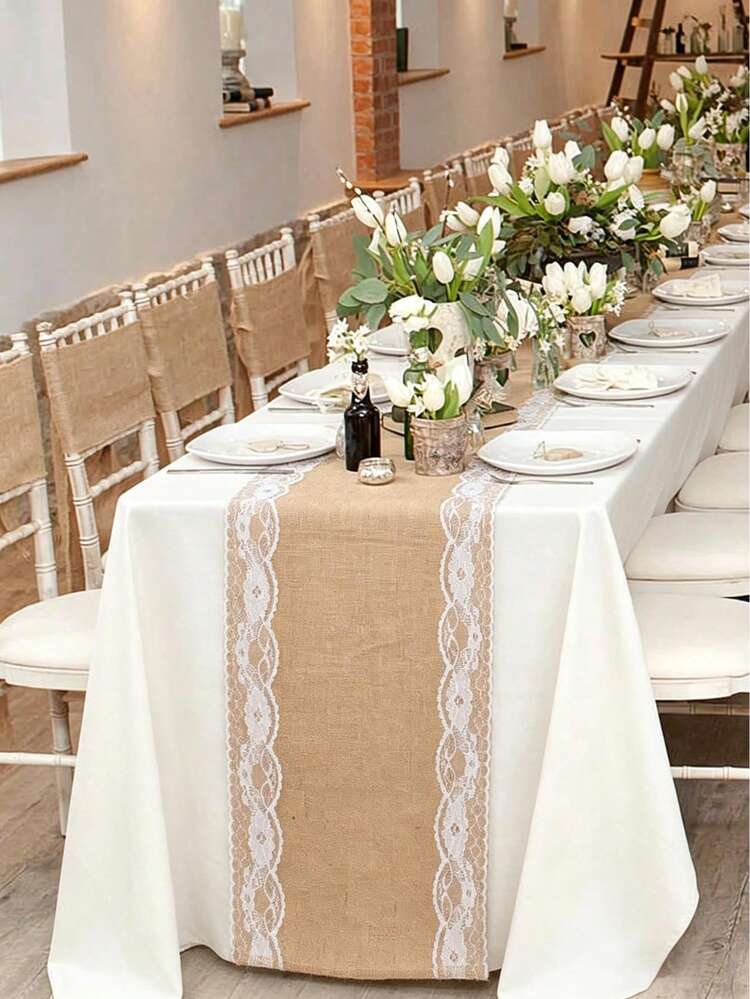
A burlap base layer adds texture that feels substantial under plates and glassware. Top it with a narrower lace runner down the center for contrast without full coverage. The combination softens the table while still allowing wood grain to show at the edges.
Choose burlap that has been pre-washed to reduce stiffness. The lace softens the overall look and photographs well under warm lighting. Trim any loose threads before guests arrive so the surface stays neat throughout the meal.
Acorn and Nut Bowls
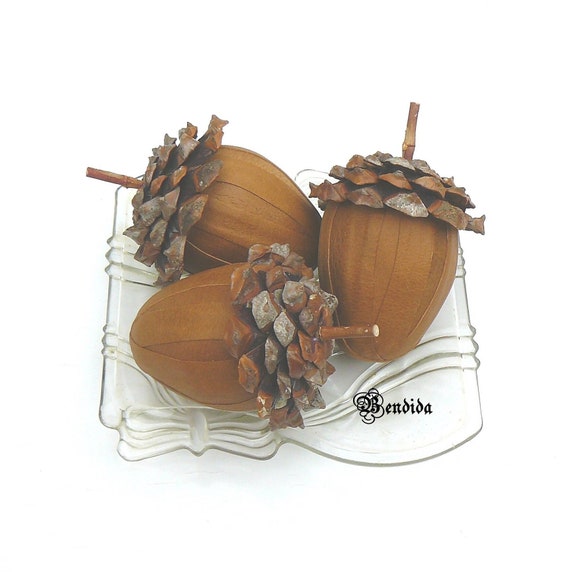
Small wooden bowls filled with mixed acorns and hazelnuts provide a tactile element guests can touch. Scatter three bowls along the runner rather than one large display. The nuts echo the season and require no maintenance once placed.
Keep the bowls shallow so they do not obstruct passing dishes. A light dusting of cinnamon on the nuts adds scent without affecting the visual. Store the nuts in a paper bag after the event for reuse the following year.
Wooden Slab Chargers
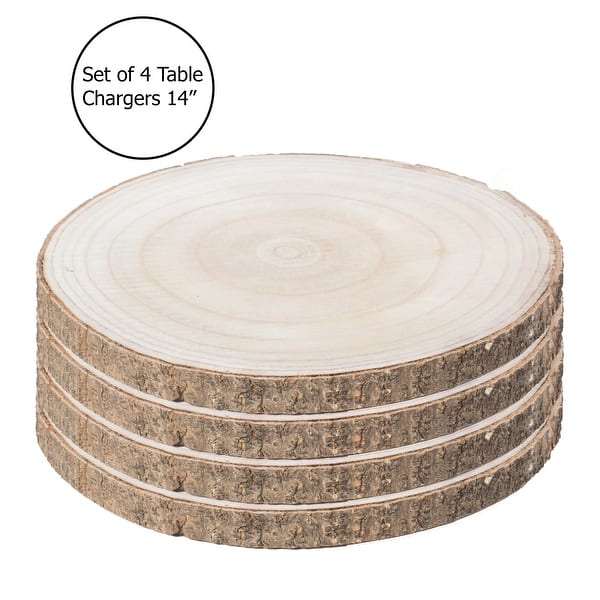
Thick wooden slabs under each plate protect the table and add warmth to every setting. Choose slabs with live edges for organic shape variation. The wood pairs naturally with both ceramic and stoneware dishes.
Rotate the slabs so the grain direction changes slightly from seat to seat. This small shift prevents the table from looking too uniform. Wipe the slabs with a damp cloth before use to bring out the grain.
Copper and Brass Flatware
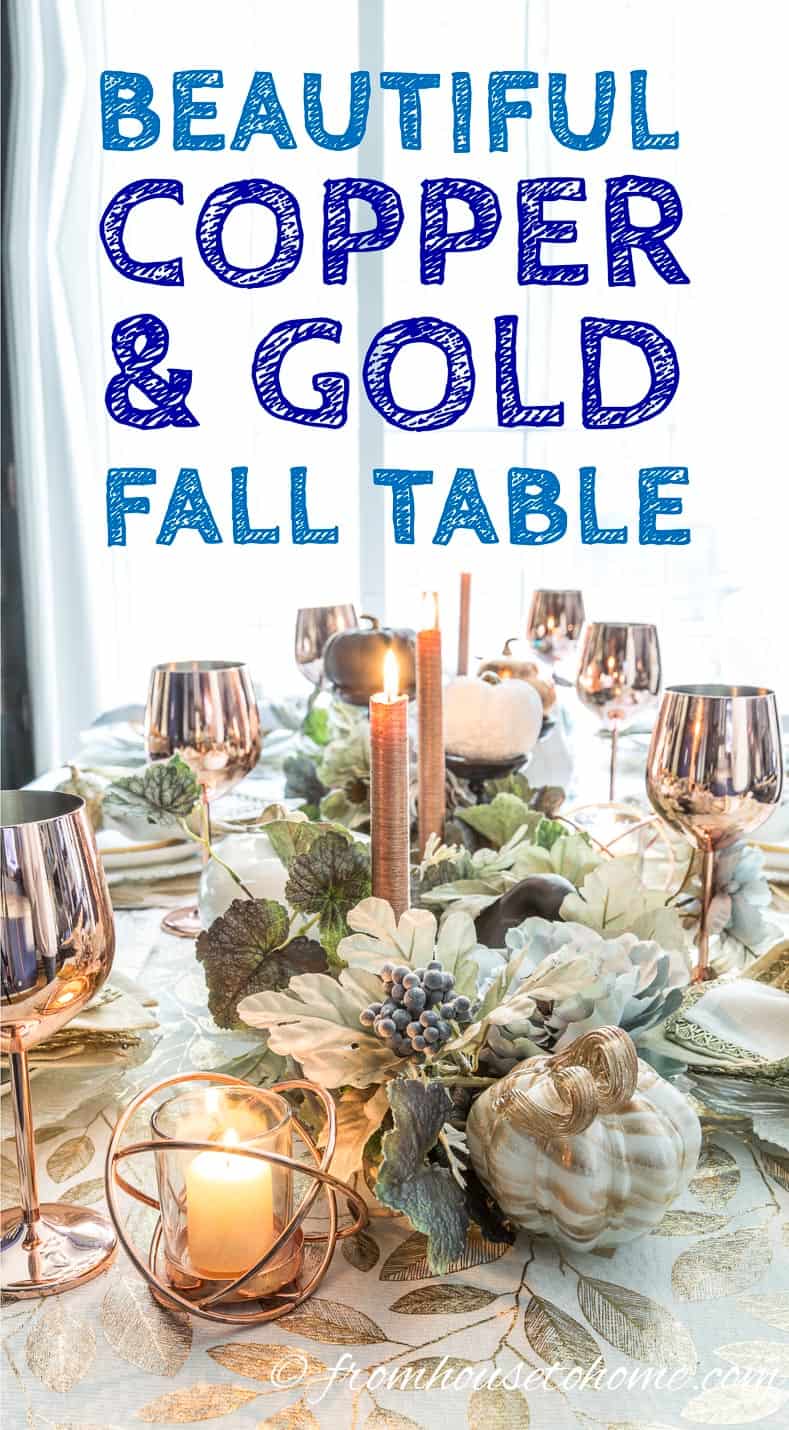
Mixing copper and brass utensils introduces metallic warmth that catches candlelight. Place the pieces directly on the wooden chargers so the metal contrasts with the matte surface. The finish develops a gentle patina over repeated gatherings.
Limit the mix to two metal tones so the table stays cohesive. Polish only the handles that guests will touch; the rest can remain softly aged. This approach keeps the look collected rather than brand-new.
Dried Citrus Garland
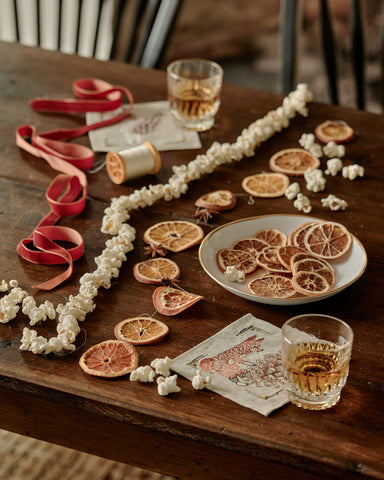
Thin slices of dried orange and lemon threaded on twine create a garland that releases subtle scent as the evening progresses. Drape the garland between candle clusters so it does not interfere with serving dishes. The translucent slices catch light beautifully.
Dry the slices several days ahead on a low oven rack to ensure they stay flat. Store extras in a sealed container between uses. The garland can be refreshed with a light mist of water if it begins to look brittle.
Feather and Twine Napkin Rings
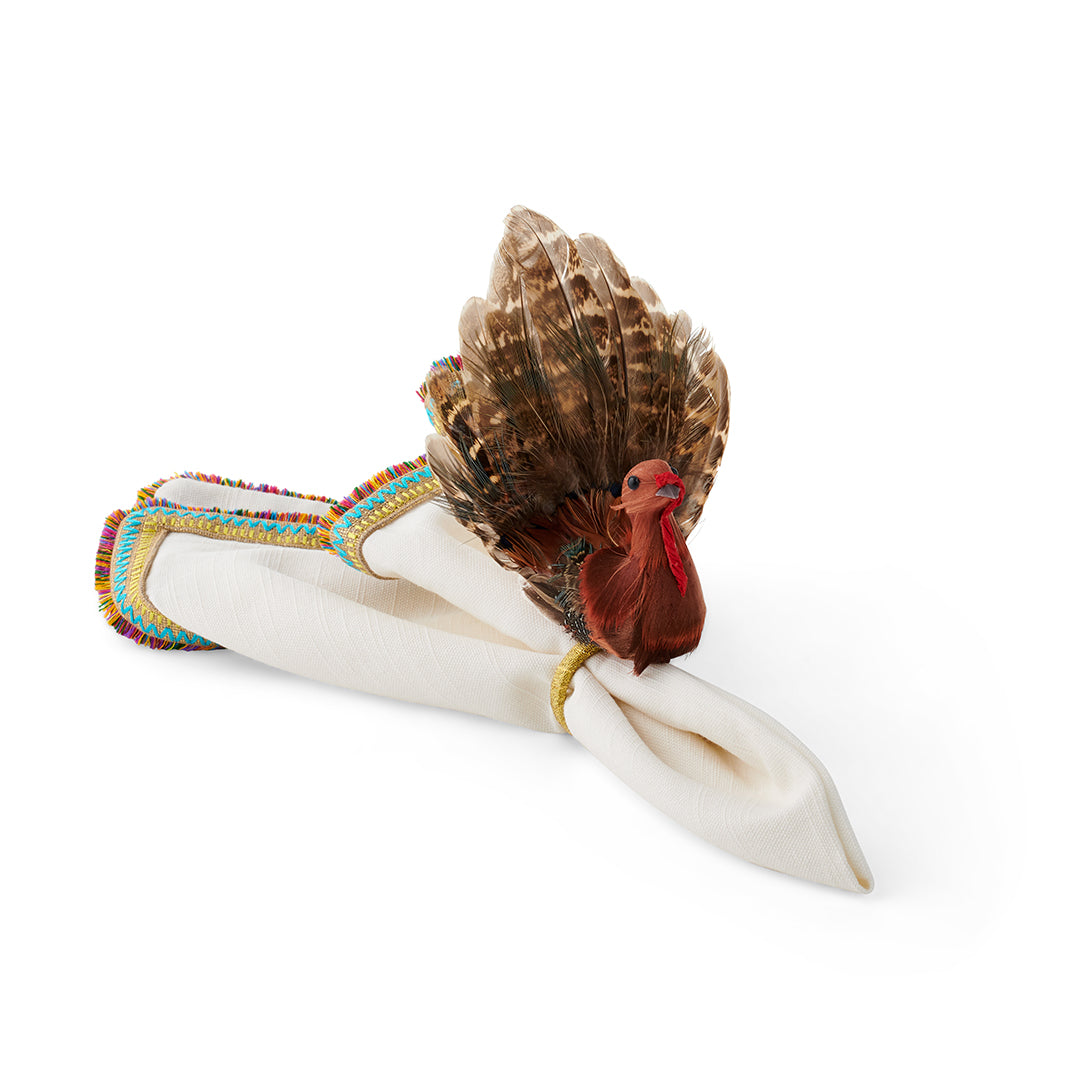
Simple twine rings wrapped with a single feather add movement to each place setting. Slide the ring over a loosely folded napkin so the feather rests along the plate rim. The natural texture feels seasonal without requiring extra color.
Use turkey or pheasant feathers for durability. Secure the feather with a small dab of hot glue on the back of the twine so it stays in place when napkins are lifted. Keep a few extra rings on hand in case one shifts during the meal.
Small Lantern Displays
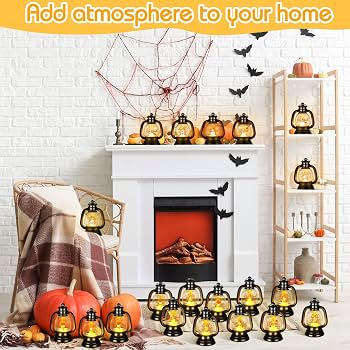
Glass lanterns with battery candles provide contained light that works even on breezy patios. Group three lanterns of graduated sizes near the center rather than lining them along the full length. The enclosed flame feels safer around children and pets.
Choose lanterns with aged metal frames to match the rest of the autumn palette. Replace batteries the morning of the dinner so the light lasts through dessert. Store the lanterns together in one box after the event to protect the glass.
Herb Pot Place Settings
Tiny terracotta pots holding rosemary or thyme double as both decor and take-home favors. Set one pot at each place so guests can pinch a leaf during the meal. The scent mingles with food aromas in a pleasant way.
Label each pot with a small tag so guests know which herb they are taking home. Water the pots lightly the day before so the soil stays moist but not wet. This detail turns a simple table element into a lasting reminder of the evening.
Wine Cork Coasters
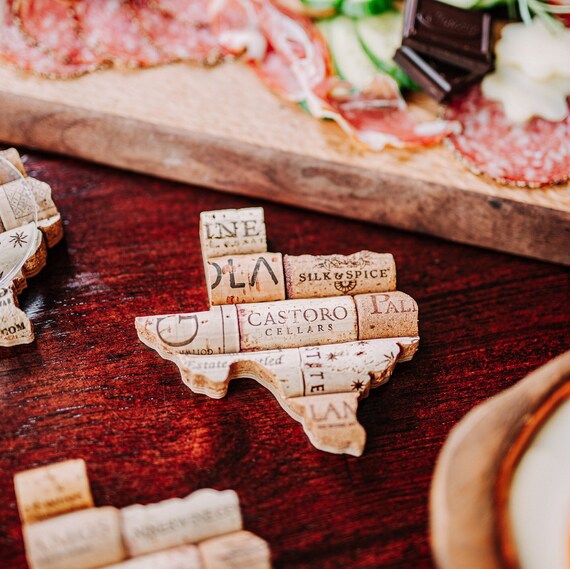
Stacked wine corks glued into square coasters protect the table from condensation rings. Make enough sets for every guest plus a few spares. The corks echo the wine served and require almost no cost to assemble.
Arrange the coasters at the top right of each place setting before glasses arrive. The neutral tone works with any dinnerware color. Keep a small tray nearby for used coasters once the meal begins.
Rustic Crate Displays
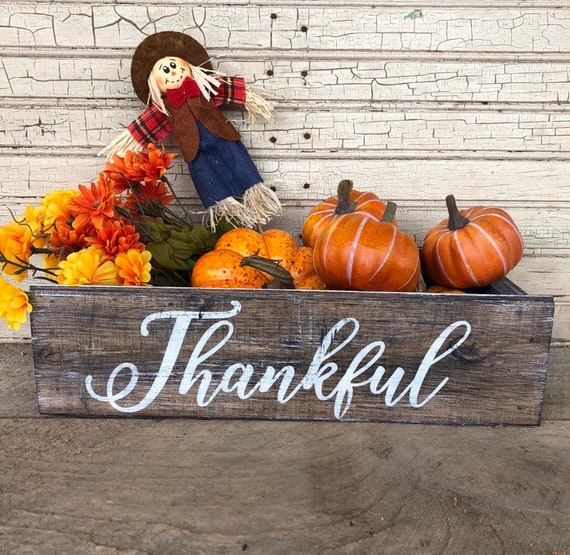
A single low wooden crate turned on its side holds extra napkins, flatware, or small candles in one contained area. Position the crate at one end of the table so it functions as both storage and visual anchor. The open slats allow the contents to become part of the display.
Line the crate with a scrap of burlap to prevent items from slipping through. This approach keeps the main surface clear while still offering easy access to backup supplies. The crate can be carried away quickly once the meal is finished.
How do I stop candles from dripping onto the tablecloth during a long dinner?
Place each pillar on a small ceramic dish or metal coaster before lighting. The dish catches any wax that escapes the candle base and protects fabric underneath.
Choose dripless soy pillars and trim wicks to one-quarter inch before guests arrive so the flame stays contained. This combination keeps the tablecloth clean even after several hours of burning.
Which table runner material holds up best when food is passed family-style?
Burlap and linen both withstand repeated contact with serving dishes without showing wear quickly. Burlap offers more texture while linen feels smoother under plates.
Either material can be spot-cleaned between courses if a small spill occurs. Avoid delicate lace runners when heavy platters will move across the surface.
How long in advance can I assemble dried citrus garlands without them fading?
Dried citrus slices stay vibrant for up to ten days when stored in a cool, dark container between layers of parchment paper. Assemble the garland the morning of the dinner for the freshest color.
Mist lightly with water if the slices begin to curl. This timing keeps the garland looking fresh throughout the evening without extra maintenance.
FAQ
How do I keep the table from looking too busy with fifteen different elements?
Select three main materials such as wood, metal, and fabric, then repeat them across all fifteen ideas. This repetition creates cohesion even when many objects are present. Remove any item that does not share at least one material with the others before guests arrive.
What size table works best for these decor pieces?
A six- to eight-foot rectangular table accommodates the full set of ideas without crowding. Round tables require fewer centerpiece clusters and shorter runners to maintain balance. Measure your surface before cutting garlands or choosing charger sizes.
Can I reuse these pieces for Thanksgiving the following week?
Most items store easily in a single bin when wrapped in tissue paper. Replace fresh flowers with dried stems and swap any perishable place cards. The wooden and metal pieces remain unchanged between events.
How do I photograph the finished table for social media?
Shoot from a slight angle rather than straight down so the layered heights remain visible. Use natural window light and turn off overhead fixtures to keep candle glow prominent. Capture one detail shot of a single place setting in addition to the full table view.
The right combination of texture, light, and seasonal materials turns any table into a welcoming Friendsgiving setting that guests remember long after the last plate is cleared.
Leave a Reply