
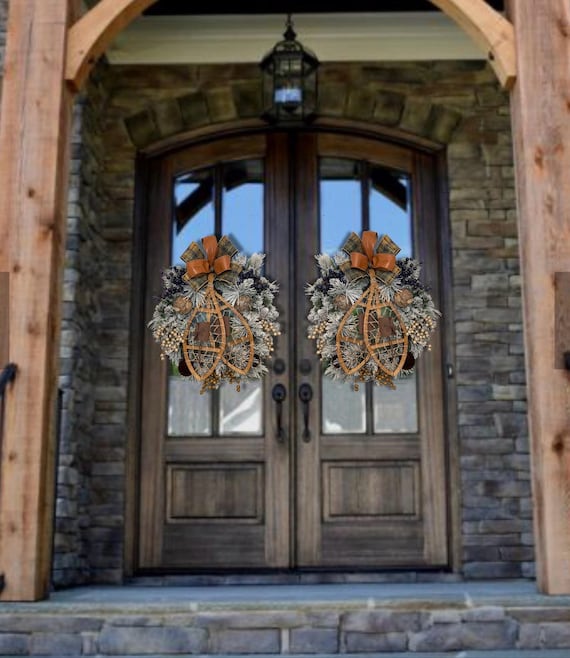
Pinecone wreaths bring natural texture and seasonal warmth to any entryway when cooler weather arrives. These projects rely on gathered or purchased pinecones combined with simple accents that hold up to outdoor conditions. Each variation below focuses on a distinct look that pairs well with typical fall front door setups like neutral paint, brick, or wood siding.
Classic Burlap Pinecone Wreath
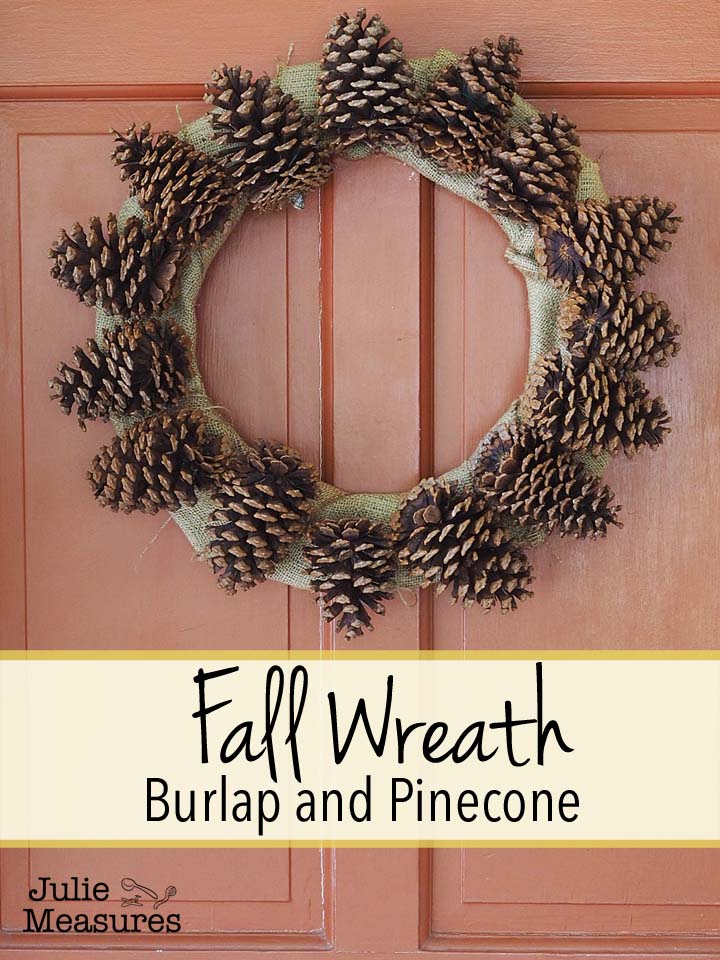
Burlap provides a neutral base that lets the pinecones stand out while adding soft folds around the edges. The fabric wraps the wreath form first, then pinecones attach in tight rows so the overall shape stays full and rounded. This approach works especially well on doors with earth-tone finishes because the burlap tones blend without competing.
A common placement variation sets the wreath slightly off-center on double doors to create visual balance with a door knocker or house number plate. The burlap also accepts light distressing with sandpaper if a more weathered surface is preferred before the pinecones go on. Outdoor sealant sprayed on the finished piece helps the fabric resist moisture from rain or morning dew.
Pinecone Wreath with Fall Foliage

Adding preserved maple and oak leaves around the pinecones introduces color shifts from deep red to golden yellow that echo the season outside. Leaves tuck between cone clusters so they catch light from different angles throughout the day. The foliage layer stays secure when glued at the stem ends rather than the leaf surface.
This style suits homes with large glass inserts in the door because the leaves catch reflections and add movement. Choose leaves that have been pressed flat first to prevent curling once the wreath hangs. A light coat of matte varnish keeps the colors from fading under direct sunlight.
White Painted Pinecone Wreath

A coat of white paint on the pinecones creates contrast against darker door colors and gives the wreath a cleaner silhouette from a distance. The paint covers only the outer scales so inner details remain visible. Multiple thin coats prevent drips that could fill the natural gaps between scales.
This version pairs nicely with black or navy doors where the white reads as crisp rather than stark. Test the paint on a single cone first because some varieties absorb more pigment and shift toward gray instead of bright white. A final clear sealer layer protects the finish from humidity changes.
Pinecone and Berry Accents Wreath
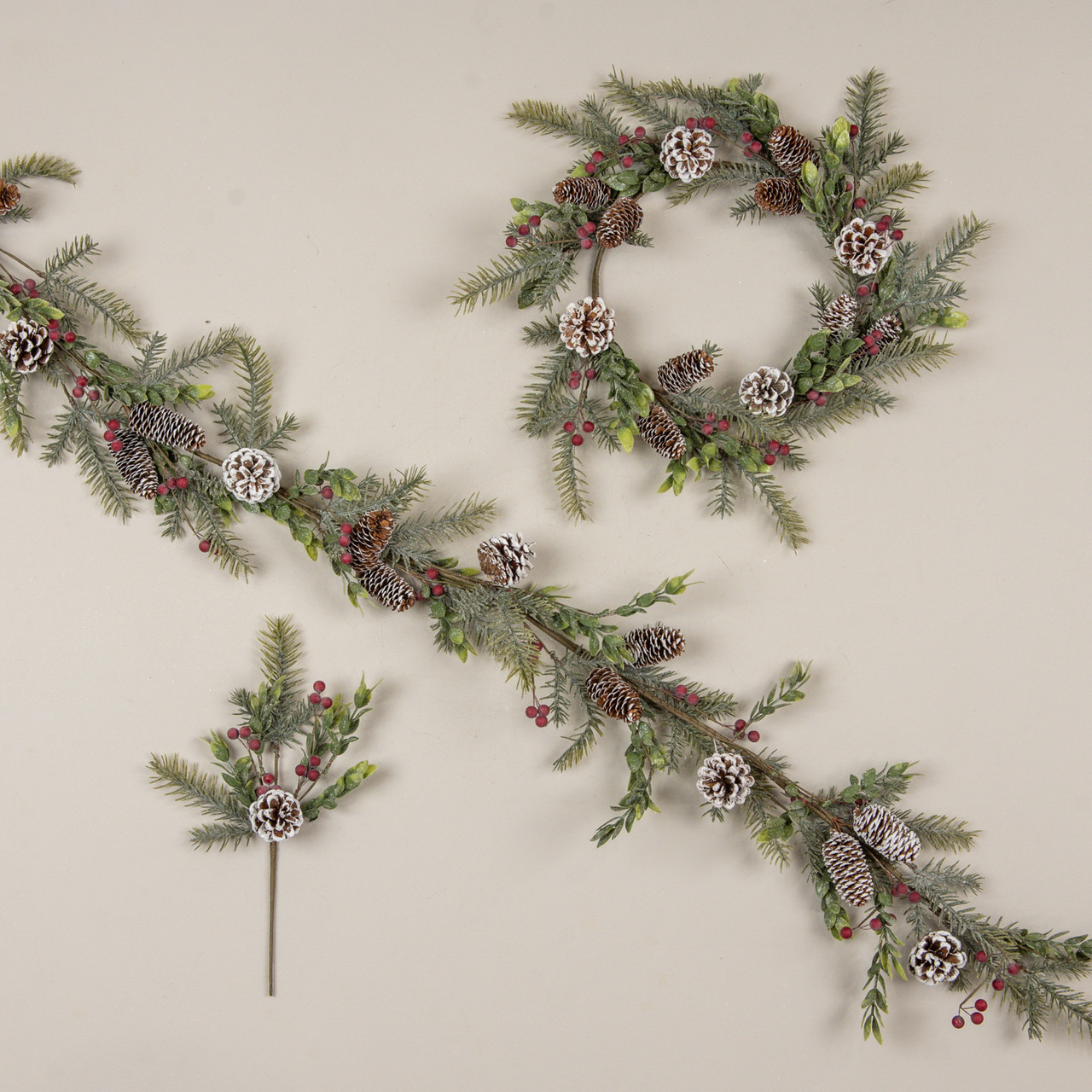
Clusters of artificial or preserved berries break up the brown tones and add small pops of color that read well from the street. The berries sit on short wire stems that push into the wreath base between pinecones. Spacing them evenly keeps the arrangement from looking lopsided after hanging.
Berry accents work best on wreaths sized 20 inches or larger so the color dots do not overwhelm the pinecone texture. Choose matte berries rather than shiny plastic versions for a more natural outdoor appearance. Replace berry clusters every other season if they sit in full sun.
Rustic Branch Pinecone Wreath
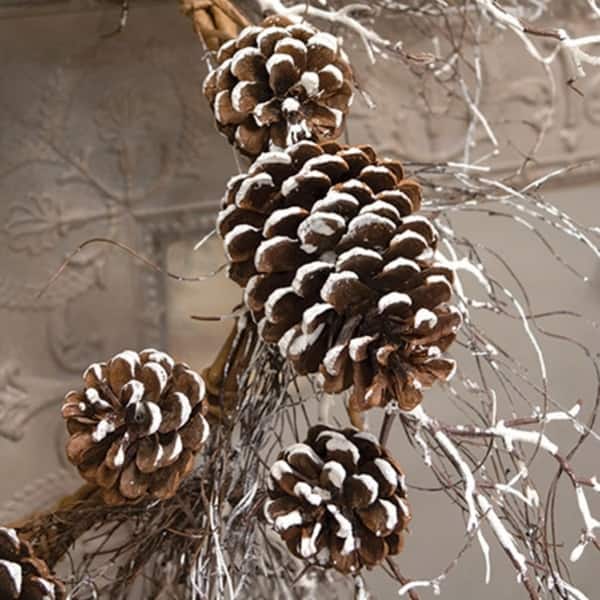
Thin twigs or grapevine pieces form the base instead of a foam ring, giving the wreath an irregular outline that feels gathered from the woods. Pinecones wire onto the branches at varying angles so the finished piece looks less uniform. The branches themselves provide extra depth when viewed straight on.
This construction holds up better on exposed porches because the open twig structure allows air to circulate and reduces trapped moisture. Collect twigs of similar thickness so the base remains sturdy once the heavier pinecones attach. Trim any protruding ends after assembly to maintain a tidy circle.
Satin Ribbon Pinecone Wreath
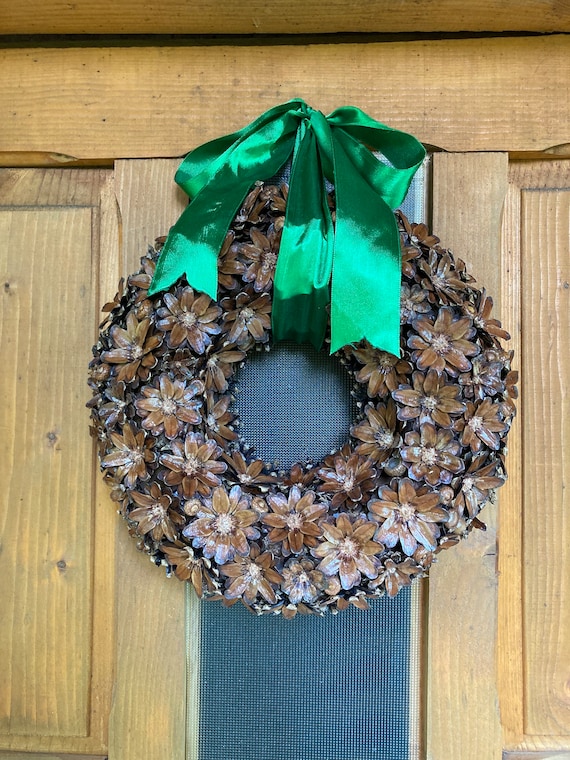
Wide satin ribbon weaves through the pinecones to create soft color bands that coordinate with door hardware or seasonal planters nearby. The ribbon loops around the wreath form before pinecones cover most of the surface, leaving only narrow stripes visible. Choose a ribbon width that matches the scale of the cones so it does not disappear.
Ribbon in muted gold or deep burgundy adds subtle shine that catches morning light without looking flashy. Secure the ribbon ends with floral wire hidden behind cones rather than glue so seasonal changes remain easy. Store the wreath flat in a dry box between seasons to prevent ribbon creasing.
Acorn and Pinecone Combination Wreath
Whole acorns fill gaps between larger pinecones and add another layer of woodland texture. The acorns attach with hot glue at their caps so they sit flush against the base. Mixing acorn sizes prevents the filler areas from looking too repetitive.
This combination stays lightweight enough for storm doors that open and close frequently. Gather acorns in advance and bake them briefly to discourage insects before use. A quick spray of matte sealant keeps the caps from splitting once the wreath hangs outdoors.
Mini Pinecone Door Wreath
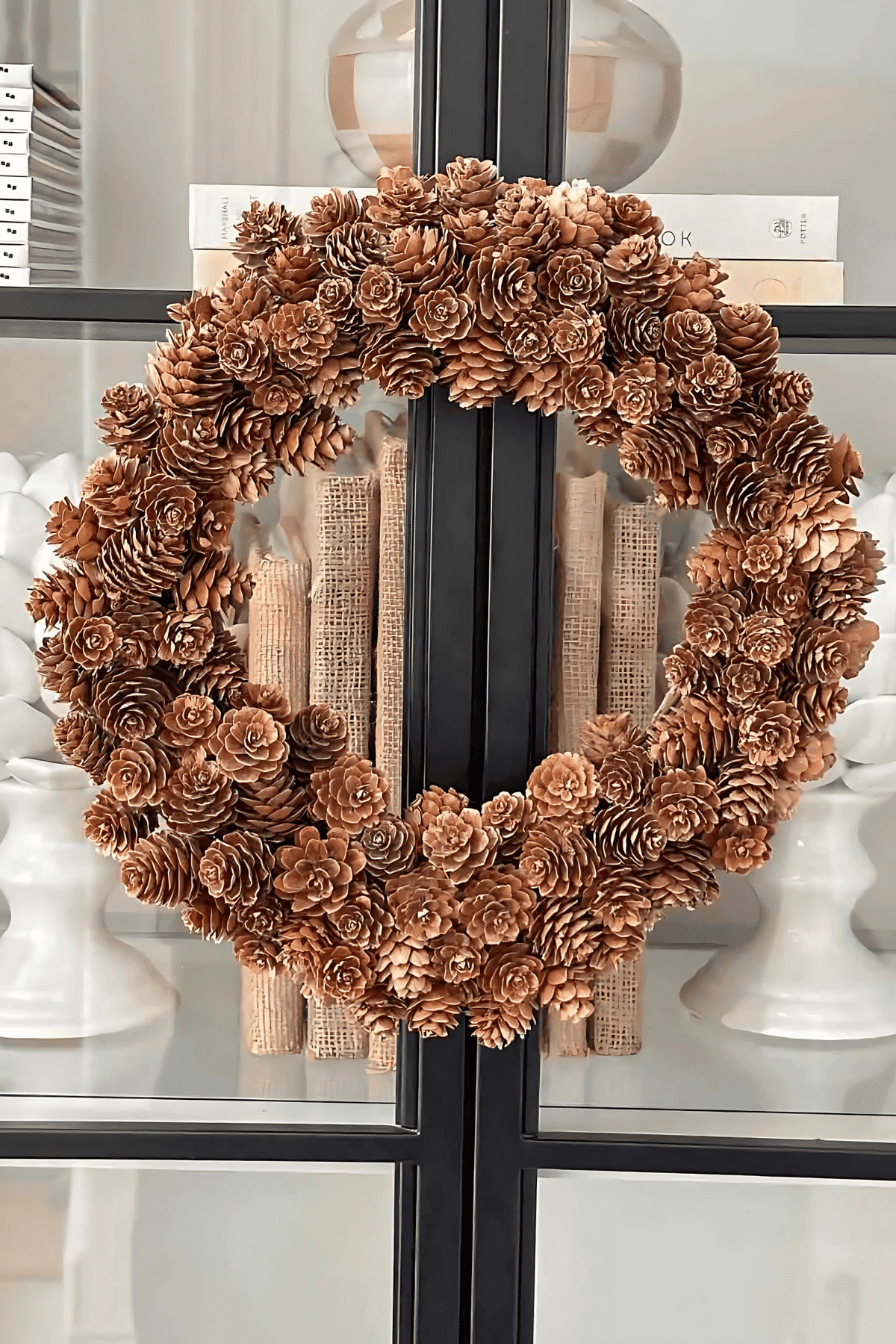
Smaller 10- to 12-inch versions fit narrow sidelights or sit inside a larger existing wreath for layered interest. The same attachment methods apply but with fewer pinecones so the scale stays balanced. Mini wreaths also work well hung from a single hook rather than centered on the main door.
These compact sizes travel easily if the wreath needs to move between a front door and a covered porch. Use a thinner wreath form so the finished piece does not overwhelm the smaller cone count. Check the hanging hardware strength because even small wreaths gain weight once fully assembled.
Large Scale Pinecone Wreath
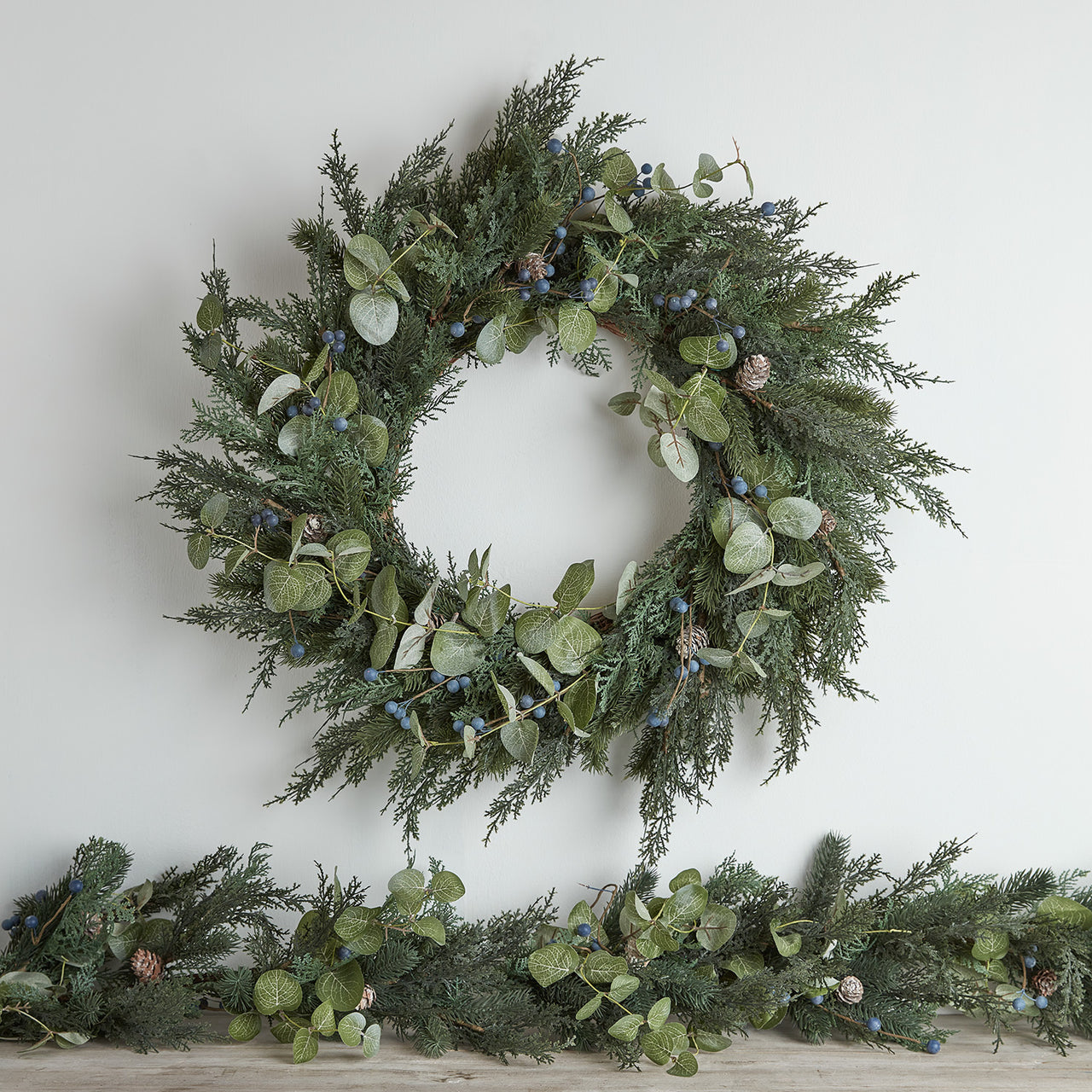
Wreaths 30 inches or wider make a strong statement on tall or double doors. Extra pinecones layer in two depths so the center stays full rather than hollow. The larger diameter requires a sturdy base such as a wire frame instead of foam to support the added weight.
Large wreaths benefit from two hanging points spaced several inches apart to keep the piece level. Weigh the finished wreath before hanging so the chosen hook or nail can handle the load safely. Position the wreath higher than eye level on very tall doors to maintain proportion.
Dried Flower Pinecone Wreath
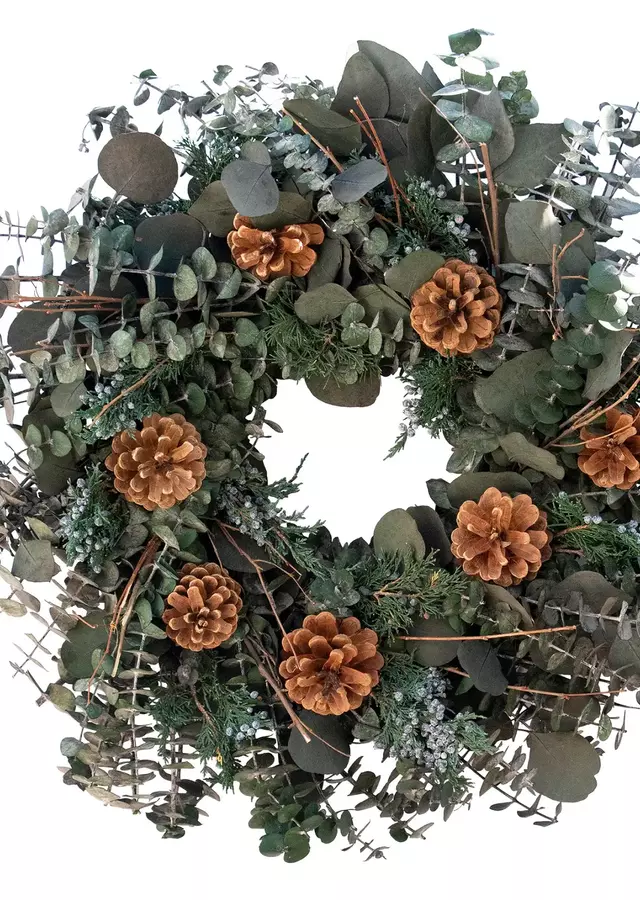
Small clusters of dried strawflower or statice add muted color without introducing fresh moisture that could affect the pinecones. Flowers wire onto the base first, then pinecones fill around them. The dried material keeps its shape once the wreath moves outdoors.
This style pairs especially well with homes that already use dried arrangements in window boxes. Keep the flower clusters small so they read as accents rather than the main feature. Replace any faded blooms at the start of each new season.
Monogram Initial Pinecone Wreath

A wooden letter centered in the wreath creates a personalized touch that still reads as seasonal. The letter attaches after the pinecones are in place so its edges remain clean. Paint or stain the letter to match nearby hardware or leave it natural for contrast.
The monogram works best on wreaths that hang on single solid doors rather than glass inserts. Choose a letter size that fills roughly one-third of the wreath diameter. Secure the letter with two small screws from the back of the wreath form for lasting hold.
Mini Pumpkin Pinecone Wreath
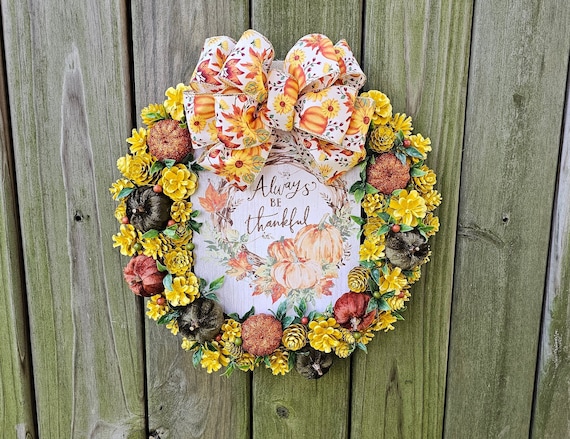
Tiny artificial pumpkins nestle among the pinecones to reinforce the harvest theme. The pumpkins sit on short skewers pushed into the wreath base so they stay level. Limit the pumpkin count to three or four so the arrangement does not feel crowded.
These accents coordinate easily with pumpkin displays already on the porch steps. Select matte-finished pumpkins rather than glossy ones for better outdoor blending. Remove the pumpkins before storing the wreath to avoid crushing them.
Moss Covered Pinecone Wreath
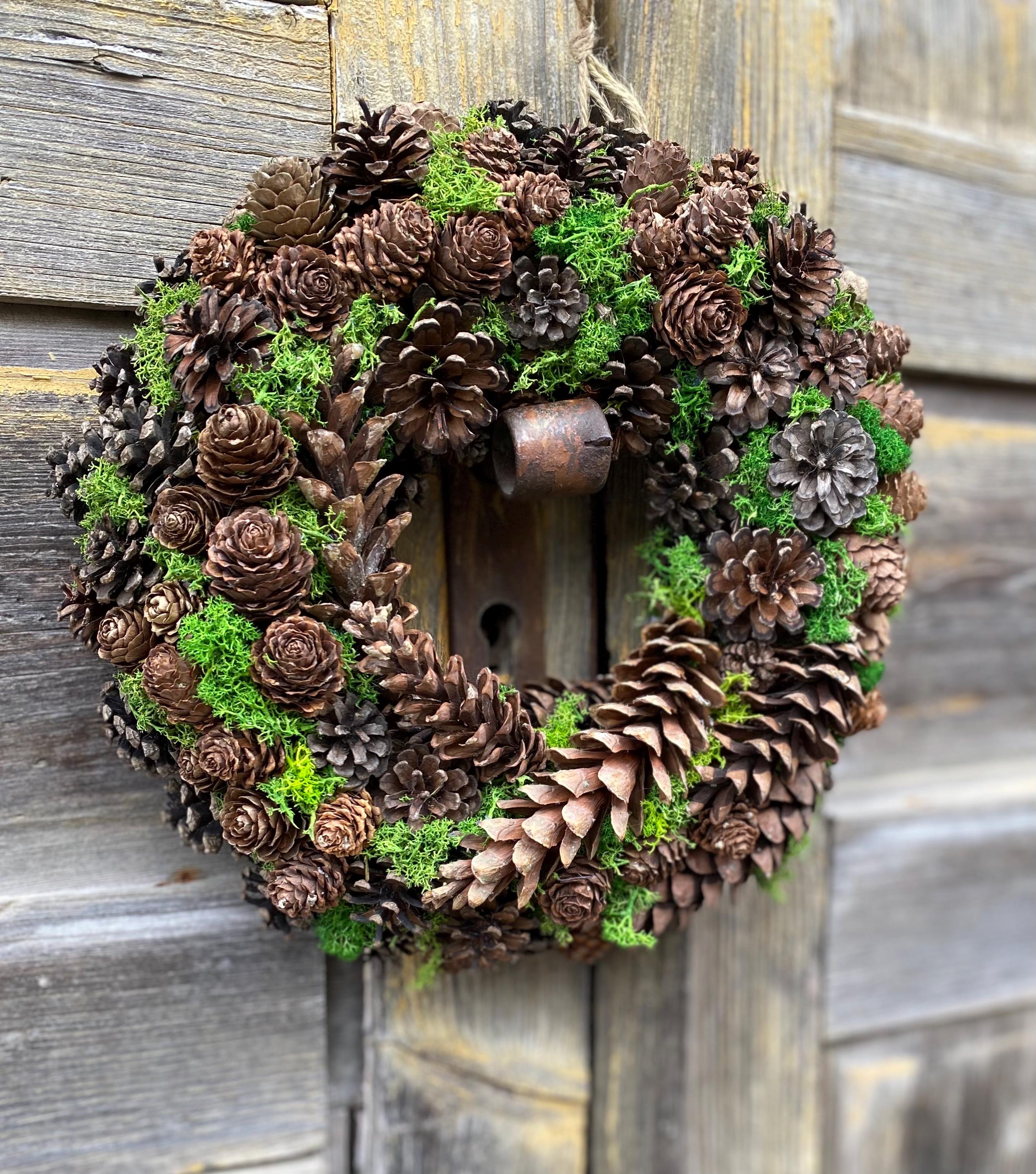
Sheet moss wraps sections of the wreath base before pinecones attach, adding a soft green layer that contrasts the brown cones. The moss stays in place with floral pins hidden under the cones. This approach gives the wreath a slightly aged, forest-floor appearance.
Moss works well in shaded entryways where it retains color longer. Mist the moss lightly once a month during dry spells to keep it from turning brittle. Avoid direct afternoon sun that can bleach the green tones quickly.
Pinecones gathered in late summer hold their scales tighter than those collected after heavy rain, reducing gaps in the finished wreath.
A single coat of outdoor polyurethane on the back of the wreath form prevents hidden moisture from reaching the door paint over time.
| Wreath Size | Best Door Type | Weight Consideration | Hanging Hardware |
|---|---|---|---|
| 10–12 inches | Sidelights or narrow doors | Light | Single small hook |
| 18–22 inches | Standard single door | Medium | One sturdy nail or screw |
| 30+ inches | Double doors or tall entries | Heavy | Two spaced hooks or wire |
- Choose pinecones of similar overall size for even coverage on smaller wreaths.
- Mix three different cone varieties when building larger pieces to add natural variation in scale.
- Spray the finished wreath with an outdoor protectant rated for UV exposure before hanging.
FAQ
How long does a pinecone wreath typically last outdoors? A well-sealed pinecone wreath can remain on a covered porch for an entire fall season and often into early winter before the cones begin to loosen or fade. Direct sun and repeated heavy rain shorten that time, so moving the wreath under shelter during storms helps extend its life. Reapplying a clear sealer each year keeps the cones and any added elements looking fresh.
What type of base works best for a heavy pinecone wreath? A wire or grapevine frame supports more weight than foam without bending or breaking under the load of dozens of cones. The open structure also allows air flow that reduces trapped moisture against the door surface. Foam bases work only for lighter, smaller wreaths where weight stays minimal.
Can pinecone wreaths be stored and reused for multiple years? Proper storage in a dry, flat container prevents crushing and keeps the shape intact between seasons. Avoid stacking heavy items on top of the wreath. A quick inspection each fall catches any loose cones or faded accents before rehanging.
How do you keep squirrels from damaging a pinecone wreath? Spraying the finished wreath with a light coating of bitter apple repellent discourages chewing without affecting appearance. Placing the wreath higher on the door also reduces easy access for animals. Checking the wreath weekly during peak squirrel activity helps catch any early damage.
A pinecone wreath adds lasting texture to the front door when the rest of the landscape begins to quiet down for winter. Simple material choices and thoughtful placement keep each version looking intentional rather than temporary.
Leave a Reply