
Transforming your living space doesn’t require a four-figure investment in a designer showroom.
With a bit of sweat equity and some creative upcycling, you can create a custom sofa that reflects your personal style while staying well within a modest budget.
Whether you are repurposing industrial pallets, breathing new life into a thrift store find, or building a minimalist frame from scratch, DIY sofa projects offer the perfect blend of functionality and artistic expression.
1. The Industrial Pallet Sectional
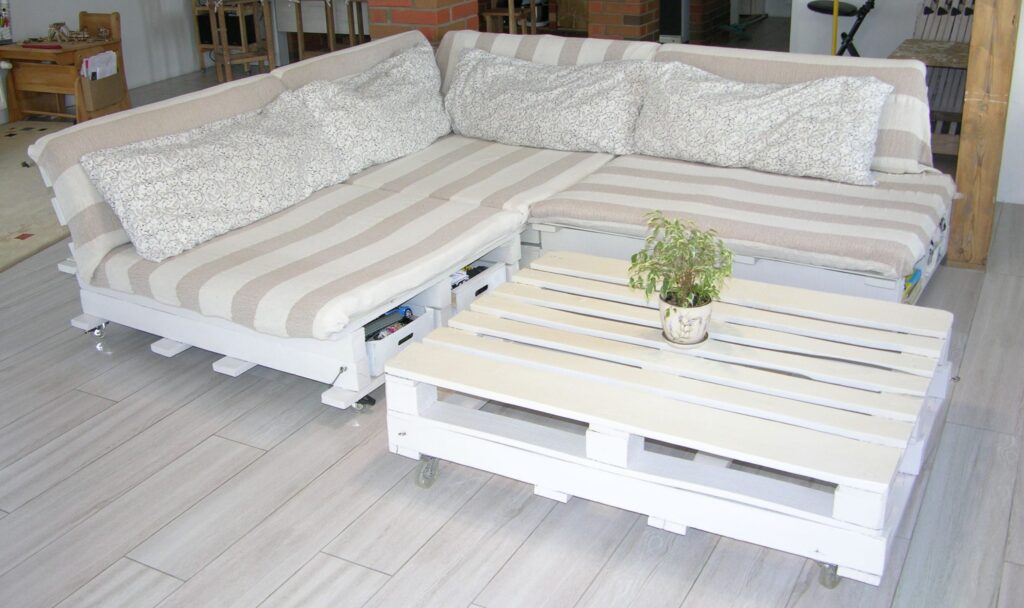
The pallet sofa is the gold standard of budget DIY furniture. Using reclaimed shipping pallets, you can create a modular seating arrangement that fits perfectly into corner spaces or large patios.
The key to making this look high-end rather than warehouse lies in the finishing.
- ✓Materials: 4–6 Heat-Treated (HT) pallets, orbital sander, wood stain or outdoor paint, and heavy-duty casters.
- ✓The Process: Start by thoroughly sanding the pallets to remove splinters. Stack two pallets for the base to achieve a standard seating height. For the backrest, strip the boards from a third pallet and screw them vertically or at a slight angle.
- ✓Pro Tip: Always look for the HT stamp on pallets, which indicates they were heat-treated rather than chemically treated, making them safe for indoor use.
2. Minimalist Plywood Box Sofa
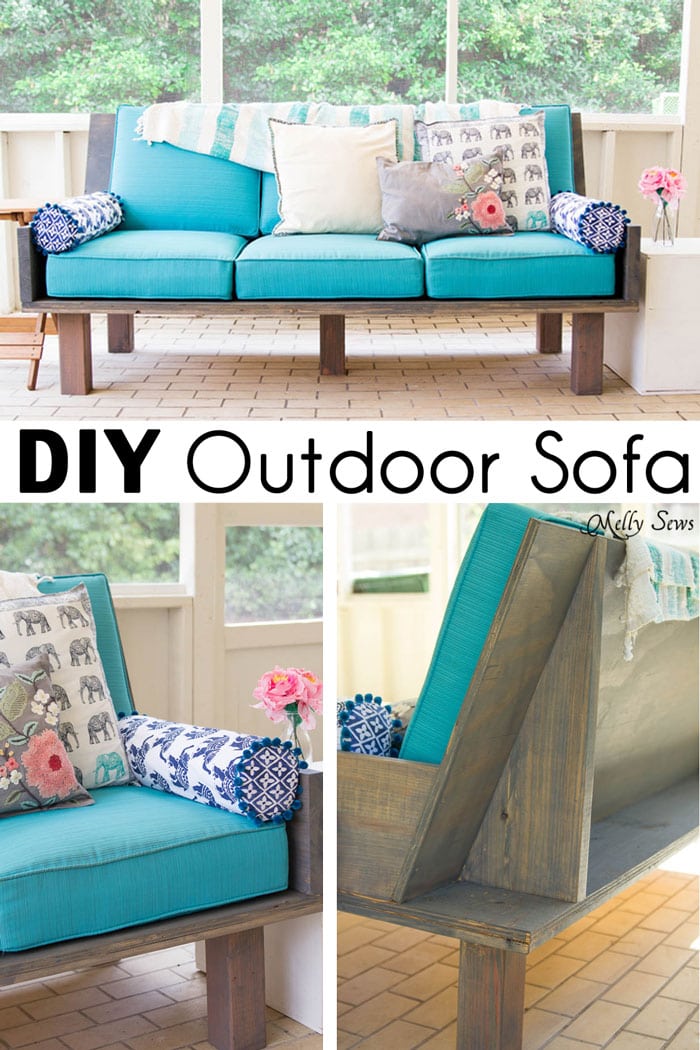
For lovers of Scandinavian or Mid-Century Modern design, a plywood box sofa offers clean lines and an architectural feel.
This project relies on the beauty of the wood grain and the simplicity of geometric shapes.
- ✓Design Concept: This involves building a sturdy rectangular frame using 3/4-inch Baltic Birch plywood. The box serves as both the frame and the decorative exterior.
- ✓Construction: Use pocket hole joinery to keep screws invisible. You can leave the bottom open for storage baskets or add short tapered legs for a more elevated look.
- ✓Finishing: Apply a clear water-based polyurethane to protect the wood while keeping that light, airy aesthetic.
3. The Thrift Store Reupholstery Project
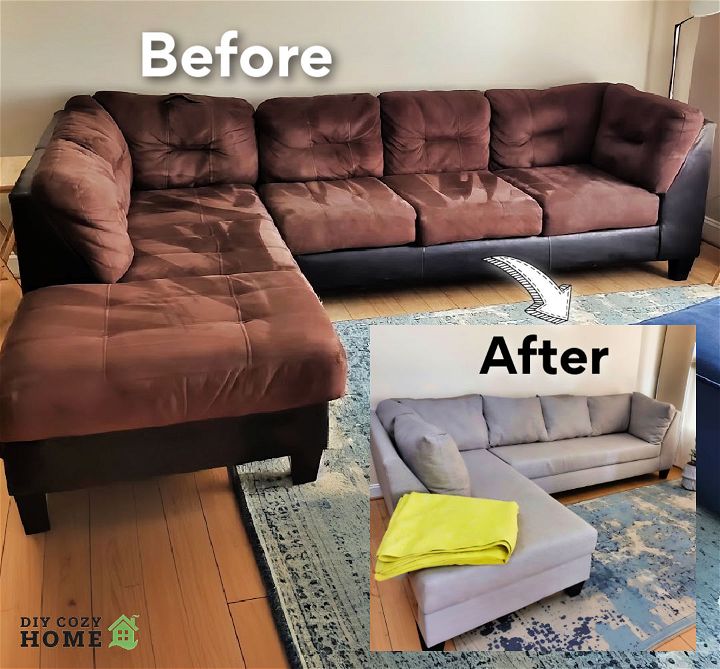
Sometimes the best DIY sofa is one that already exists but needs a glow-up.
Finding a high-quality vintage sofa with good bones at a thrift store is a win, but outdated fabric can be a dealbreaker.
- ✓Technique: Instead of a full professional reupholstery (which is expensive), try the staple-over method. Remove the old trim, pull new heavy-duty fabric (like velvet or duck canvas) tight over the existing structure, and staple it into the underside of the frame.
- ✓Customization: Replace old, saggy foam with high-density upholstery foam to make the sofa feel brand new.
4. Bohemian Floor Cushion Lounge
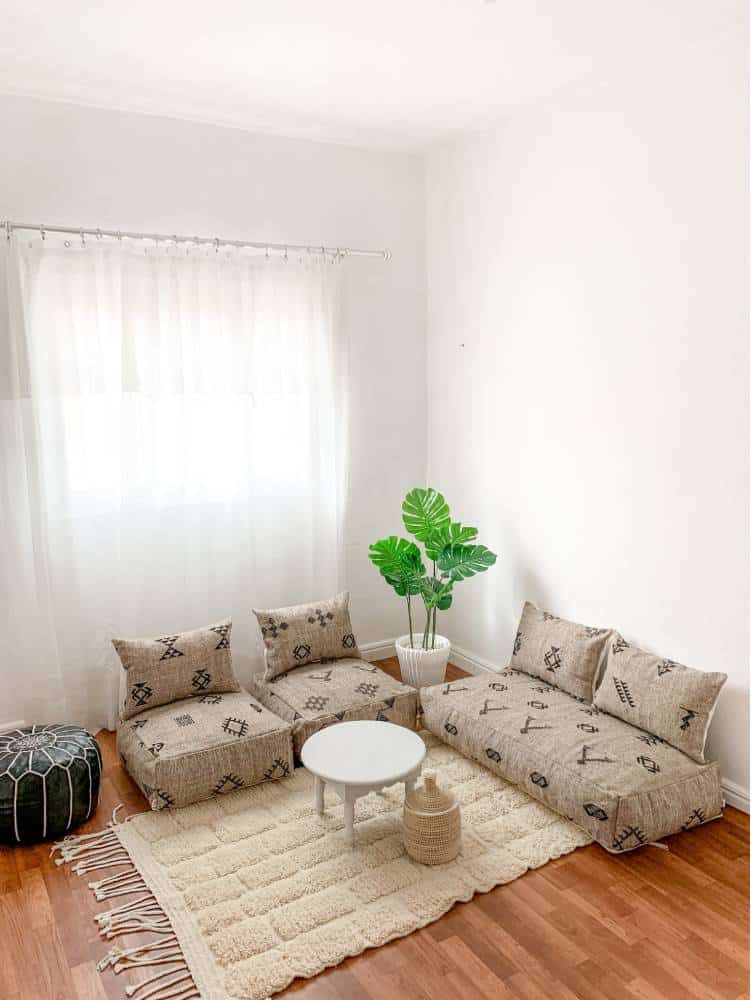
If you prefer a relaxed, low-profile vibe, a floor cushion lounge is the easiest and most affordable DIY option.
This is perfect for sunrooms, playrooms, or chill zones.
- ✓The Build: You don’t necessarily need a wooden frame. Instead, use a low-profile wooden platform or even just a thick rug as the base.
- ✓The Cushions: Layer oversized French mattress-style cushions. You can sew these yourself using heavy linen and tufting them with large needles and twine to create that signature puffy look.
- ✓Styling: Mix and match patterns—think mudcloth, kilim, and solid linens—to achieve a curated boho aesthetic.
5. Repurposed Crib-to-Sofa Conversion
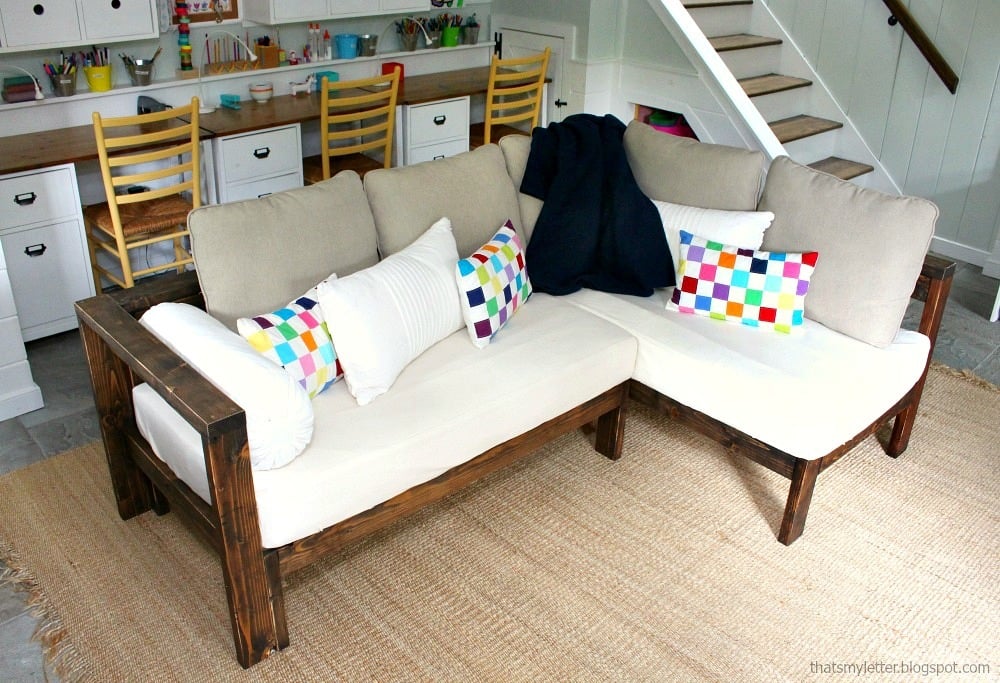
When children outgrow their cribs, the high-quality wood often ends up in landfills.
However, a standard crib is the perfect size for a small settee or a nursery daybed.
- ✓Modification: Remove one of the long side rails of the crib. Reinforce the mattress support with extra slats if it’s going to be used by adults.
- ✓Comfort: Use the original crib mattress but wrap it in a custom fabric cover that looks less like bedding and more like upholstery. Add several large toss pillows to act as the backrest.
6. Concrete and Timber Outdoor Sofa
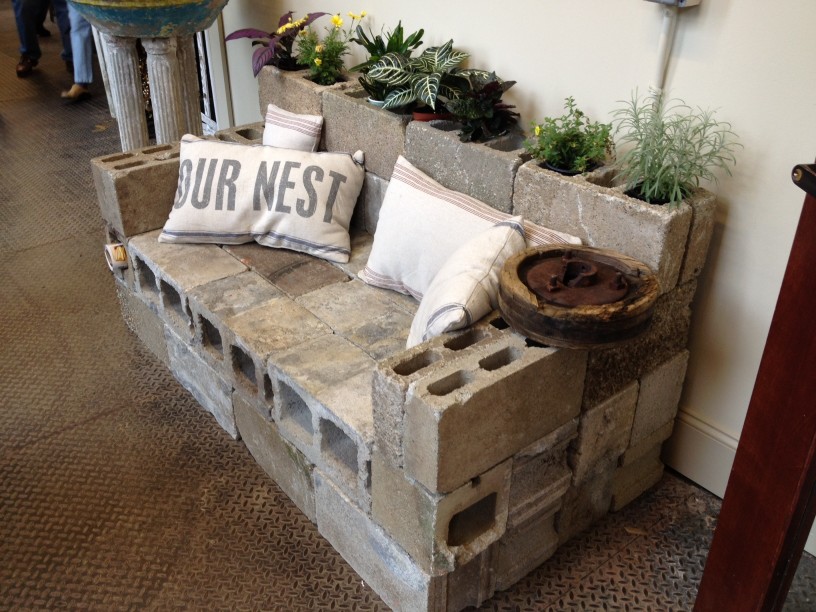
For a modern, industrial look that can withstand the elements, look no further than cinder blocks and 4×4 timber beams.
This no-tools (or low-tools) assembly is incredibly sturdy.
- ✓Materials: 12–16 cinder blocks, four 4×4 pressure-treated wood beams, and construction adhesive.
- ✓Assembly: Stack the cinder blocks to create two end pillars. The holes in the blocks act as sockets for the timber beams. Slide the beams through the holes to create the seating surface.
- ✓The Finish: Paint the cinder blocks a matte black or charcoal grey for a sophisticated look that contrasts beautifully with the natural wood beams.
7. The Great Door Daybed
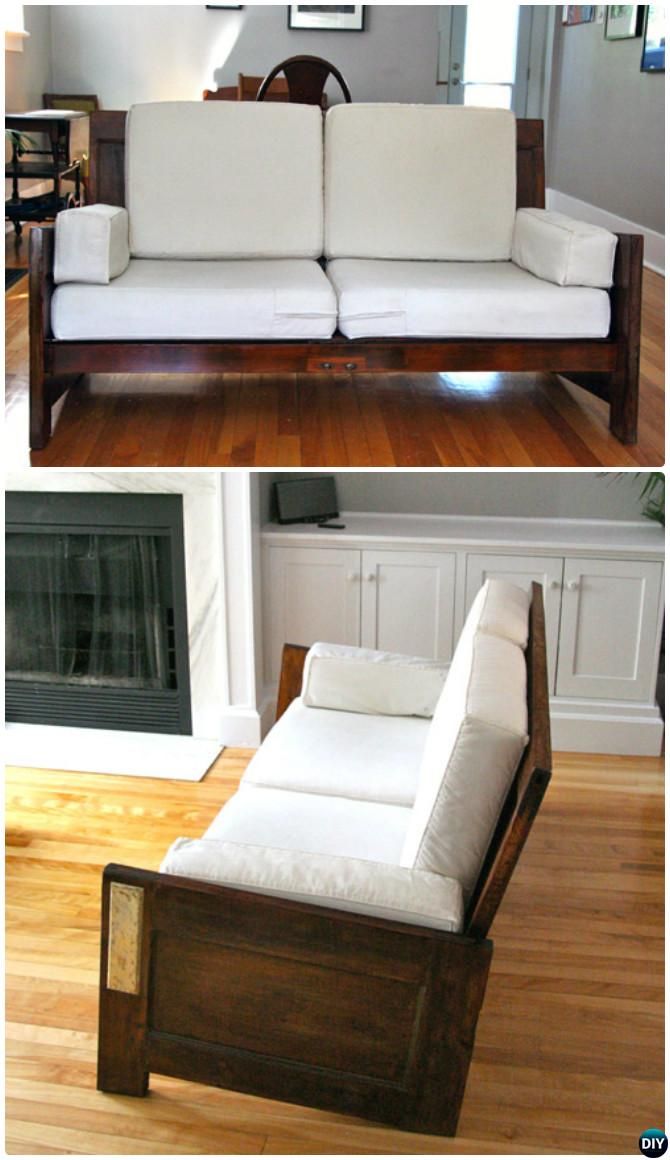
Old solid-wood doors are frequently found at architectural salvage yards.
Their length and width make them ideal candidates for a deep, comfortable daybed.
- ✓The Base: Use the door as the main seating platform. For legs, you can use heavy-duty hairpins, turned wooden legs, or even stacks of vintage books (for a non-moving decorative piece).
- ✓The Backrest: Use the remaining portion of a second door or a simple wall-mounted headboard to provide back support.
- ✓Vibe: This works exceptionally well in farmhouse or shabby chic interiors where the weathered patina of the door adds character.
8. Mid-Century Modern Leg Swap & Paint
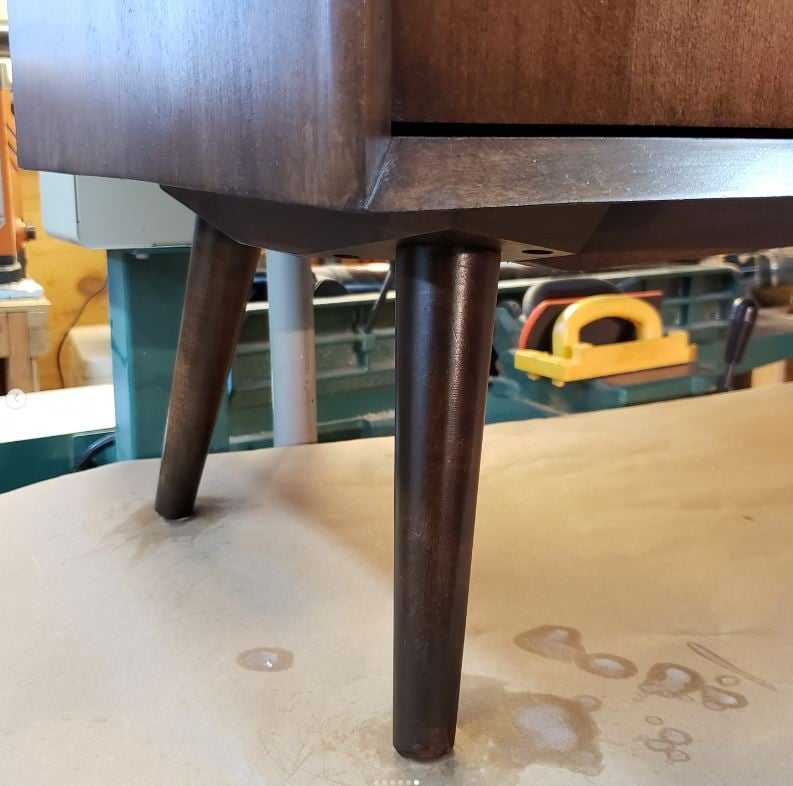
Sometimes a sofa doesn’t need a total rebuild—it just needs a change in silhouette.
This is the ultimate lazy DIY that yields professional results.
- ✓The Hack: Take a basic, blocky IKEA-style sofa. Remove the chunky plastic legs. Replace them with angled, 6-inch tapered wooden legs with brass ferrules.
- ✓The Detail: If the sofa is fabric, use fabric paint or a specialized dye to change the color from a boring beige to a deep navy or forest green. Adding tufting by sewing buttons through the back cushions can also instantly elevate the look.
9. The Bathtub Sofa (The Holly Golightly)
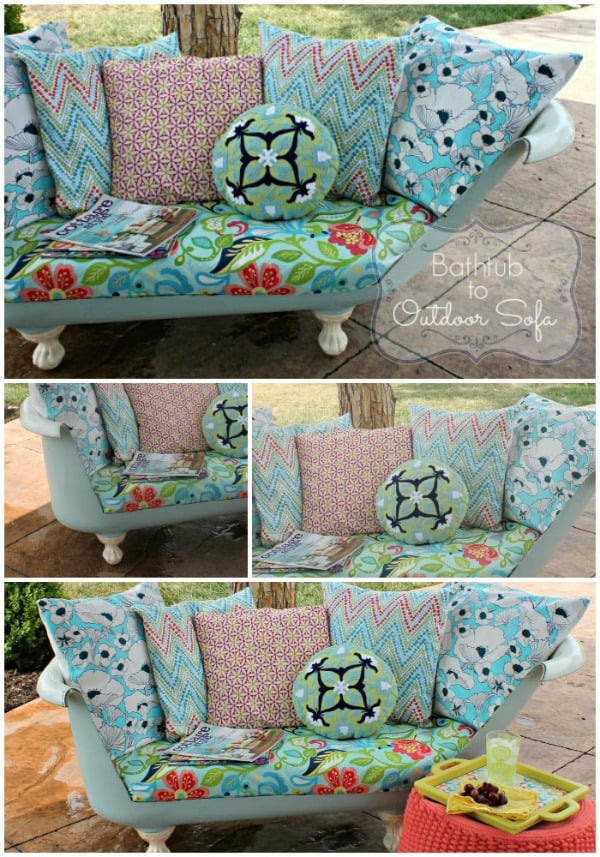
Inspired by the classic film *Breakfast at Tiffany’s*, this is a high-effort, high-reward upcycling project.
It involves cutting an old cast-iron or acrylic clawfoot tub.
- ✓The Cut: Using an angle grinder, one side of the tub is cut away to create an opening for seating.
- ✓Safety First: The edges must be sanded smooth and finished with a rubber trim or heavy enamel paint to prevent injury.
- ✓The Seating: A custom-cut foam cushion is placed in the bottom of the tub. This becomes a statement piece that doubles as a conversation starter.
10. The Pipe Frame Sofa
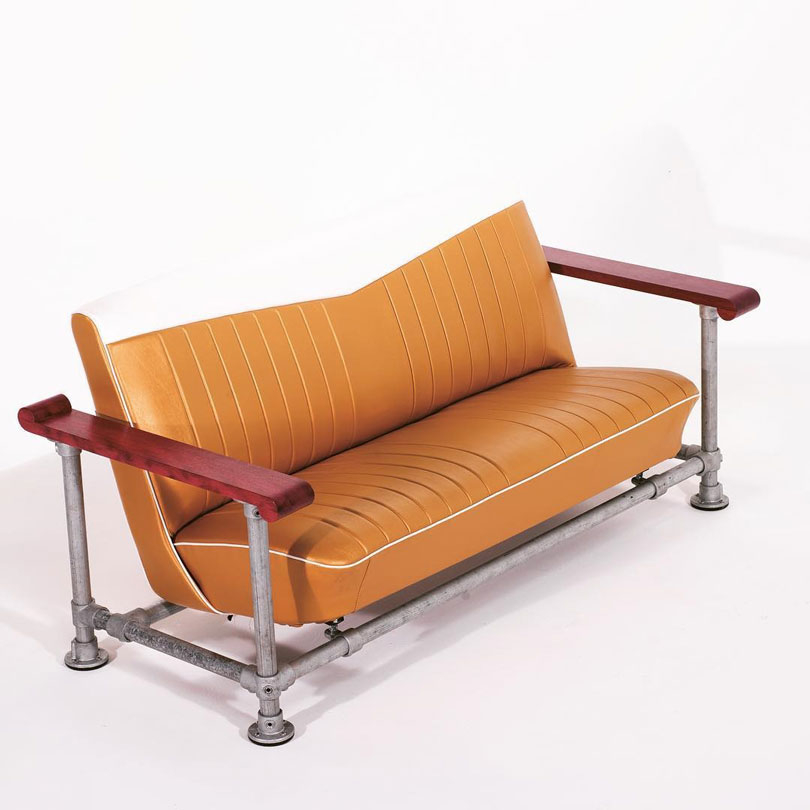
Using galvanized or black iron pipes from the plumbing aisle, you can build a sofa frame that is virtually indestructible and fits perfectly into an urban loft aesthetic.
- ✓Construction: Use a series of pipes, flanges, and elbows to create a frame. The beauty of this system is that it’s entirely screw-together, requiring no welding.
- ✓Support: Use a piece of finished plywood or stretched canvas as the seat support across the pipe frame.
- ✓Aesthetic: Pair the dark metal pipes with cognac-colored leather cushions for a high-end masculine look.
Comparison of DIY Sofa Projects
| Project Idea | Difficulty Level | Estimated Cost | Best Style Match |
|---|---|---|---|
| Pallet Sectional | Easy | $50 – $150 | Rustic / Outdoor |
| Plywood Box | Medium | $150 – $300 | Minimalist / Scandi |
| Reupholstery | Hard | $100 – $400 | Traditional / Vintage |
| Cinder Block | Very Easy | $40 – $100 | Industrial / Modern |
| Bathtub Sofa | Very Hard | $200 – $500 | Eclectic / Glam |
Step-by-Step Tutorial: Building a Basic Pallet Sofa
If you’re new to furniture building, the pallet sofa is the best place to start. Follow these steps for a professional finish.
Phase 1: Preparation
- 1Source Pallets: Ensure they are marked HT. Avoid MB (Methyl Bromide) pallets.
- 2Clean: Scrub them with soapy water and a bit of bleach to remove dirt and bacteria.
- 3Sand: This is the most important step. Use 80-grit sandpaper first, then finish with 120-grit for a smooth touch.
Phase 2: Assembly
- 4Stacking: Place two pallets on top of each other. Secure them using 3-inch wood screws at the corners and center.
- 5The Backrest: Take a third pallet. You may need to trim it down with a circular saw so it isn’t too tall. Lean it against the back of the stack.
- 6Secure: Use metal L-brackets to attach the backrest to the base. This provides the structural integrity needed for leaning back.
Phase 3: Comfort & Aesthetics
- 7Paint/Stain: Apply your choice of finish. A dark walnut stain looks expensive, while white paint looks beachy.
- 8Cushions: Don’t skimp here. Buy proper outdoor sofa cushions or a twin-sized memory foam mattress topper cut to size.
- 9Mobility: Attach four heavy-duty locking casters to the bottom corners so you can easily move the sofa for cleaning.
FAQ: DIY Sofa Makeovers
Q: Is it really cheaper to build a sofa than to buy one?
A: Yes, significantly. A mid-range sofa costs between $800 and $1,500. Most of the projects listed above can be completed for under $200, especially if you source materials like pallets or old doors for free.
Q: What is the best fabric for a DIY sofa?
A: For durability, look for Performance Fabrics. If you are on a budget, heavy-duty cotton duck canvas or even drop cloths (bleached and softened) work remarkably well and are easy to wash.
Q: How do I ensure my DIY sofa is comfortable?
A: Comfort comes down to the foam. Avoid craft foam and look for High-Density Upholstery Foam with a thickness of at least 4 inches. Adding a layer of batting over the foam before putting on the fabric cover will give it a professional, rounded look.
Q: Can I make a DIY sofa without power tools?
A: Yes! The Cinder Block Sofa (Idea #6) and the Floor Cushion Lounge (Idea #4) require virtually no power tools. The Pipe Frame Sofa (Idea #10) only requires a wrench.
Conclusion
A sofa is more than just a piece of furniture; it is the anchor of your living room.
By choosing to DIY your next sofa, you aren’t just saving money—you are creating a bespoke piece that tells a story.
From the rugged charm of reclaimed pallets to the sleek sophistication of plywood, these ten ideas prove that high style doesn’t have to come with a high price tag.
Start small with a leg swap or go big with a bathtub conversion; either way, the satisfaction of sitting on something you built yourself is the ultimate home decor reward.
Leave a Reply